RO Water Purifiers

According to a World Bank report, “water quality in India has deteriorated as a result of an uncontrolled discharge of raw domestic and industrial waste-water”. Indian cities are lagging behind in providing reliable, sustainable, and affordable water supply. Due to these disturbing trends, people are finding RO purifiers as the best option for drinking safe water.

What is RO Purification?

Discovered by Dean Spatz, Reverse Osmosis (RO) refers to a technique that uses a semi-permeable membrane in order to remove ions, molecules, dissolved salts, and larger impurities from drinking water. There are other types of membranes for water purification also, but the RO membrane provides the most effective & reliable water purification.

How Does RO Work?

When an artificial pressure pushes water through a fine RO membrane, the impurities present in the water get filtered out. The size of the pores of the RO membrane is very, very small. These pores allow only water molecules to pass through while preventing other contaminants.

RO purification is capable of filtering out up to 99% of over 60 different contaminants including lead, arsenic, mercury, fluoride, chlorine, etc.

When to Use an RO Purifier?

  • TDS level of water is greater than 500 PPM.
  • TDS level of water is less than 500 PPM but the water contains harmful heavy metals like lead, arsenic, etc.

Useful Articles

RO+UV Water Purifiers

According to The Hindu (March 2010), “Polluted drinking water claim more lives than all forms of violence, including war”. Therefore, it is a crying need of the hour to utilize an effective purification technology in the form of RO and UV that removes harmful impurities as well as deadly germs from the water we drink.

What is RO+UV Purification?

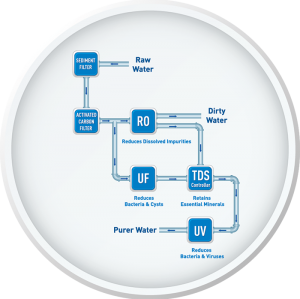
The RO+UV water purifiers employ both RO and UV technologies that give the safest water. Reverse osmosis is used for removing ions, molecules, and larger particles from drinking water. UV purification, on the other hand, is a disinfection technique that kills or inactivates microorganisms.

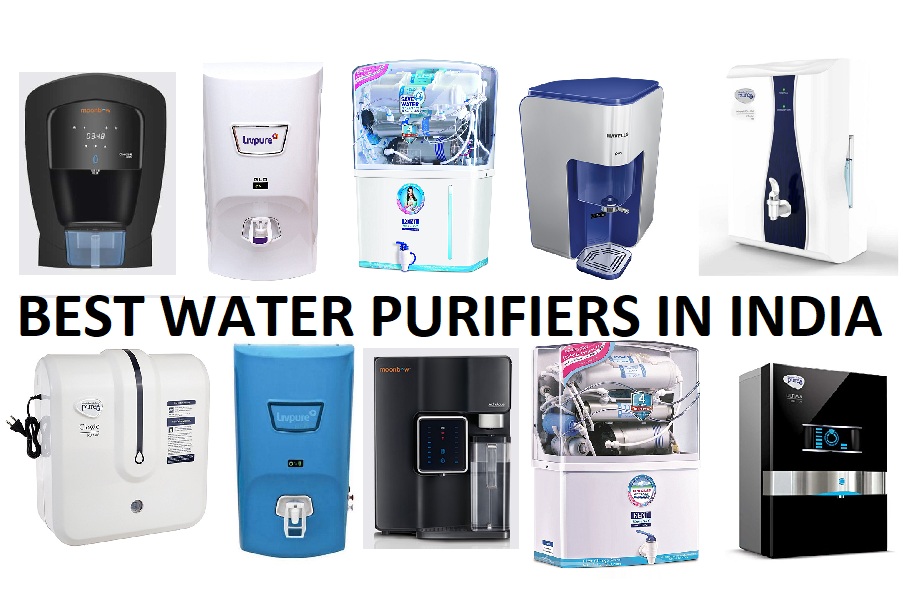
Top Selling RO+UV Water Purifiers in India

How does (RO+UV) work?

Reverse osmosis is the process that utilizes a semi permeable membrane, which allows pure water to pass through it, while stopping contaminants and impurities on one side. RO purification system is immensely helpful in removing all dissolved solids and bacteria.

Some of the RO systems use a process called Cross Flow, which helps the semi-permeable membrane to continuously clean itself. RO purification requires the application of pressure that pushes the fluid through the membrane. A residential RO water purification system uses an average pressure of 40psi. After RO purification, the water is allowed to go through UV system, which uses high frequency ultraviolet light to irradiate water through a glass element. Now, when the water is passed through the glass element, it becomes exposed to UV light. As a result, all bacteria and microorganisms get killed.

When to use RO+UV water purifiers?

The most important factor to consider before choosing an RO+UV water purifier is the water quality that is coming to our homes. If the water has large quantities of germs, chemicals, pesticides, fertilizers, herbicides, and heavy metals, then RO+UV water purifiers should be used.

The next factor to consider is TDS level. If the level of total dissolved solids in your water supply is 400-1500ppm, then RO+UV purifiers are recommended.

Usually, in India the borewell water contains TDS level of 300-500ppm, so these water purifiers might as well be used in those households that drink borewell water. RO+UV is the best combination of techniques utilized for water purification. Although, all the RO+UV systems run on electricity, but a high storage capacity allows them to store purified water in case of electricity outages.

Check out some top RO+UV water purifiers from brands like LivPure, HUL, and Nasaka.

How to Check TDS Level & Ideal TDS for Drinking Water

Have you been hearing a lot about the TDS level in drinking water?

You must have.

Because that is what all the water purifier companies are talking about. That is one measure even consumers are talking about the most.

But, what exactly is this “TDS” and what is the ideal TDS for drinking water?

If you have no clue about what is the meaning of TDS in water, then you must read this post.

This post will provide you with all the details about

  • What is the TDS level in water?
  • How you can measure the TDS level?
  • What is the ideal TDS level of drinking water?

TDS of Water Full Form

The full form of TDS in drinking water is “Total Dissolved Solids”.

What is TDS Level?

TDS level of water is the measure of all inorganic and organic substances that are dissolved in water.

The most common inorganic substances that are found in water are magnesium, calcium, and potassium.

To a certain degree, the presence of these minerals in the water is actually healthy, but when the level becomes too much, it is a cause of worry.

Most common constituents of TDS levels, like calcium, magnesium, etc., are generally harmless. But heavy metals like lead, mercury, arsenic, and fluoride can be really dangerous for your health.

Why Do You Need to Check TDS Level?

A study conducted by IIT Kharagpur revealed that almost 20% of India’s total land area has toxic levels of arsenic in its groundwater.

A significant number of Indians are drinking toxic water.

This is also evident from the data released by Ministry of Jal Shakti in the reply to a question asked in Rajya Sabha on 1st August, 2022. It was revealed that:

  • Arsenic was found in around 209 districts in 25 states and UTs
  • Uranium was found in parts of 152 districts across 18 states
  • Lead found in parts of 176 districts in 21 states.
  • Iron found in parts of 491 districts in 29 states and UTs
  • Cadmium in parts of 29 districts in 11 states
  • Chromium in parts of 62 districts in 16 states

Although TDS level does not tell you anything about the presence or absence of any of the contaminants that make up the TDS level.

But it definitely gives you an initial idea of the overall quality of your drinking water.

And the best part is measuring TDS level is very easy, as you’ll see below. So, there are no excuses to not know the TDS level of the water your family drinks.

A high TDS level (above 500 mg/l) indicates that the water quality is not good and you should not drink such water without purification.

It is important to note here that while the TDS level of water provides you with a quick idea of water quality, it is not the final benchmark of water quality.

Apart from the TDS level, there are around 50 other individual contaminants.

A thorough investigation of drinking water quality is only possible at a drinking water testing lab.

What is the Ideal TDS Level of Drinking Water?

World Health Organization (WHO) report on TDS in drinking water points out that reliable data on possible health effects associated with TDS in drinking water is not available.

Useful Link

Planning to buy a new water purifier? You may also want to check out our detailed water purifier buying guide or the top list of best water purifiers in India.

No health-based guideline value is proposed for the ideal TDS of drinking water. Because TDS in water can be high because of many factors, in areas where the TDS content of the water supply is very high, the individual constituents should be identified.

The presence of dissolved solids in water may affect its taste. The palatability (acceptable taste) of drinking water has been rated by panels of tasters in relation to its TDS level as follows:

TDS Level (mg/l) Rating
Less than 300 Excellent
300-600 Good
600-900 Fair
900-1200 Poor
Above 1200 Unacceptable
WHO Standards for TDS of Drinking Water According to Taste

What is the maximum TDS level advised by the Indian Authorities?

The Bureau of Indian Standards (BIS) has set the acceptable limit of TDS in drinking water at 500 mg/L.


PPM (Parts Per Million) and mg/L are one and the same thing. You can use them interchangeably for TDS level measurement.

However, the standard also mentions that in case no alternative source of drinking water is available, then this acceptable limit can be relaxed to 2,000 mg/L.

The BIS water quality standards also mention that if the drinking water TDS is higher than 500 mg/L then this may result in a decrease in palatability (acceptable taste) and may cause gastrointestinal irritation.

Whether you get your water from a borewell, water tanker, or municipal tap, you must make sure that it meets the BIS water quality standards. If your drinking water’s TDS level exceeds 500 mg/L, we suggest that you do not drink that water.

Important Note

This acceptable TDS limit applies to only normal freshwater, if the water contains toxic impurities like arsenic or fluoride then other special BIS standards will be applicable.

Minimum TDS Level for Drinking Water

It is important to note that some of the dissolved minerals in water are useful for human health and therefore very low or zero TDS is also not recommended.

Reducing the TDS level to a very low value also affects the pH level of the water, which BIS specifies should be in the range of 6.5-8.5. Water with very low TDS will taste dull.

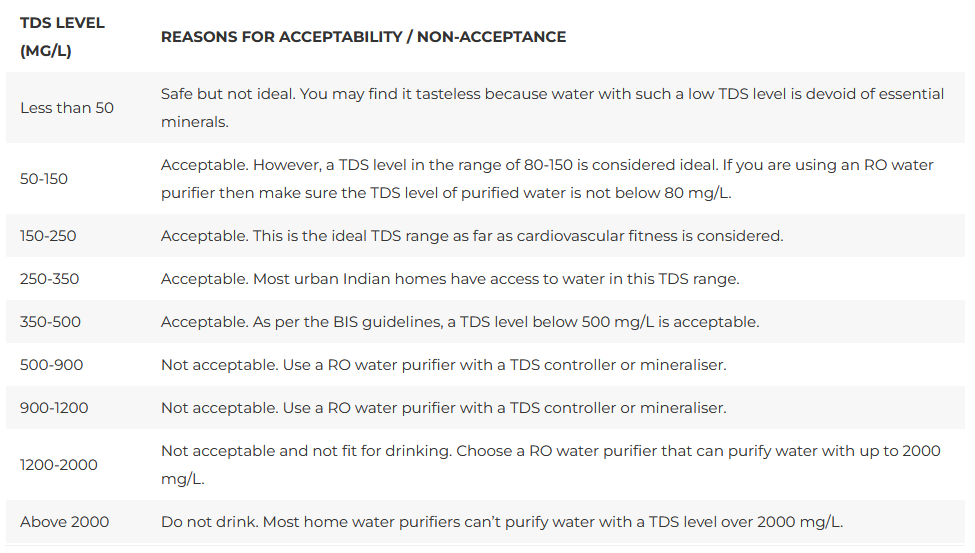
There is no official minimum TDS level for drinking water, but a TDS of at least 50-150 ppm is the accepted minimum level.

TDS Level (mg/l) Reasons for Acceptability/Non-acceptance
Less than 50 Not acceptable. Because water with such a low TDS level does not contain the essential minerals.
50-150 Acceptable. However, the TDS level in the range of 80-150 is considered ideal. If you are using an RO water purifier then make sure the TDS level of purified water is not below 80 mg/L.
150-250 Acceptable. This is the ideal TDS range as far as cardiovascular fitness is considered.
250-350 Acceptable. Most urban Indian homes have access to water in this TDS range.
350-500 Acceptable. As per the BIS guidelines, a TDS level below 500 mg/L is acceptable.
500-900 Not acceptable. Use a RO water purifier with a TDS controller or mineralizer.
900-1200 Not acceptable. Use a RO water purifier with a TDS controller or mineralizer.
1200-2000 Not acceptable and not fit for drinking. Choose a RO water purifier that can purify water with up to 2000 mg/L.
Above 2000 Do not drink. Most home water purifiers can’t purify water with a TDS level over 2000 mg/L.

Check out the following link if you would like to learn more about how Total Dissolved Solids come in water and what is the effect of low or high TDS on your health.

How to Check the TDS Level in Water at Home?

There are a number of methods by which you can measure the TDS level in the water. We have compiled some of the most common methods that you can use at your home to know whether or not you are drinking safe water.

Method 1: Using Digital TDS Meter

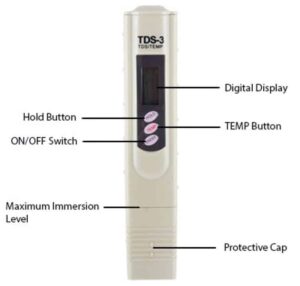
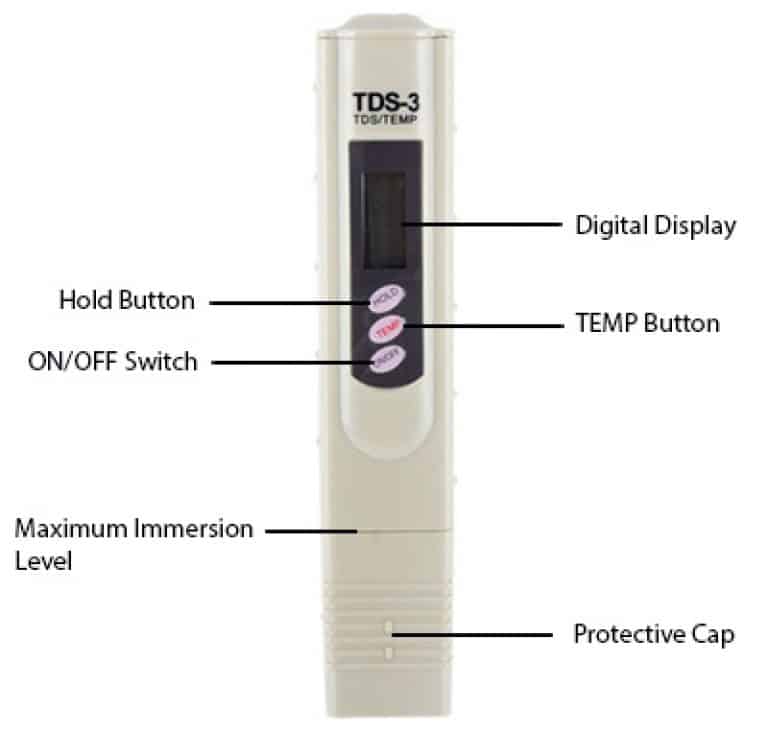
This is a state-of-the-art digital TDS meter tester that you can use to check the performance of your water filter, test the quality of filter water, check for hardness and make sure that you are drinking clean water.


Digital TDS Meter

Digital TDS meters are widely available in all the leading online stores in India and you can easily buy a quality Digital TDS Meter from Amazon.in for a few hundred rupees.

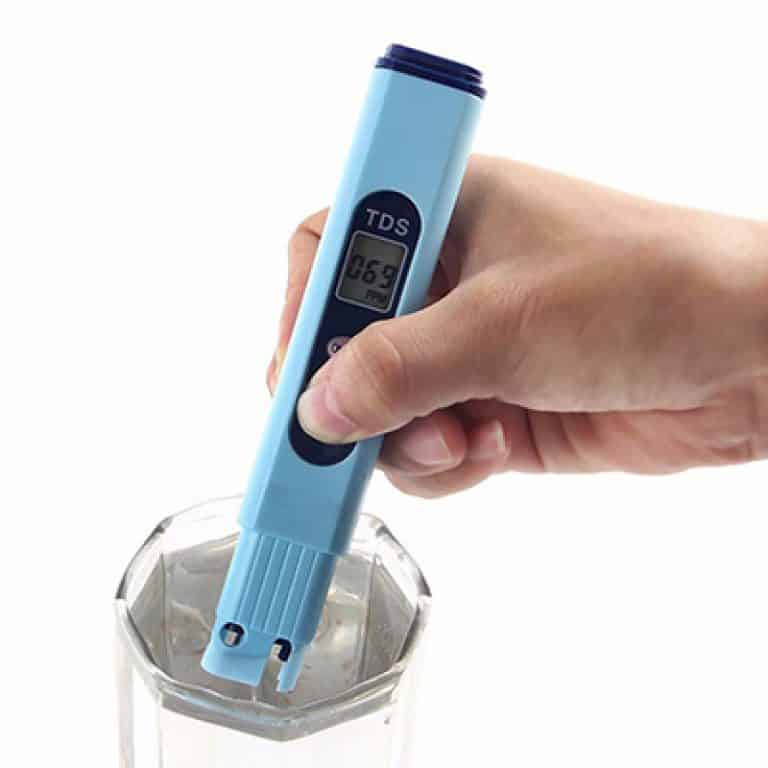
Using a digital TDS meter to measure the TDS level of water

Follow the given steps to measure the TDS Level of water using a digital TDS Meter:

  • Remove the protective cap.
  • Turn the TDS meter on. You will find the ON/OFF switch is on the panel.
  • Immerse the meter into the water up to the maximum immersion level (2 inches).
  • Gently stir the meter to dislodge any air bubbles.
  • Wait till the reading stabilizes (approximately, 10 seconds).
  • Press the HOLD button and take it out of the water to view the reading.
  • If the meter displays the ‘x10’ symbol, it means that you have to multiply the reading by 10.
  • After use, shake off the excess water from your meter and replace the cap.

Watch this video on how to measure the TDS level in drinking water.

Video: Step-By-Step Guide on Measuring TDS Level Using a TDS Meter

Precaution:

  1. Do not dip the meter beyond 2 inches because the meter is not watertight.
  2. Do not store the meter in places of high temperature or where direct sunlight comes.

Method 2: Using Filter Paper and a Scale

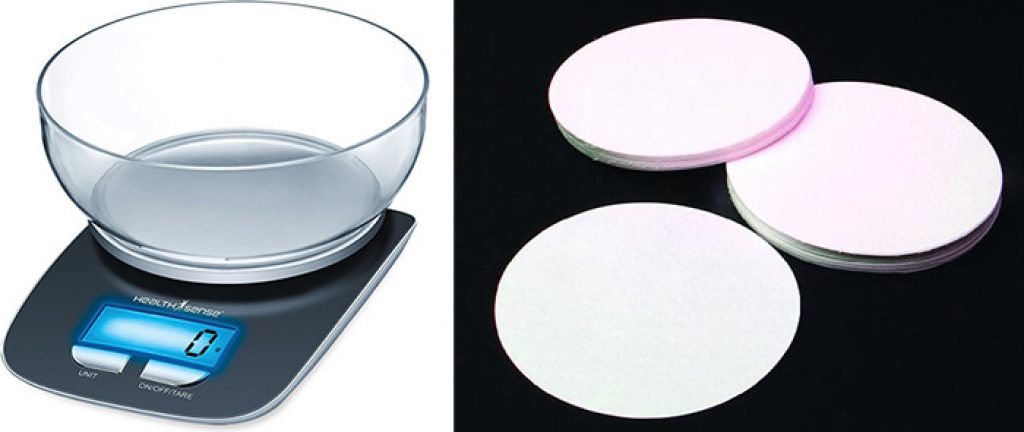
This is a conventional method that you can easily use in your home to measure the level of TDS in your drinking water. For this, you do not need any TDS meter, but very simple everyday things.

What are the things that you need?

  • A sterilized beaker.
  • A sample of water (tap water or rainwater) in the beaker.
  • Filter paper.
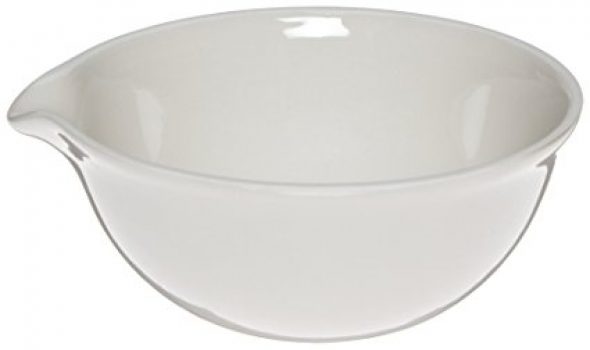
  • An evaporating dish.

  • A stirring stick.
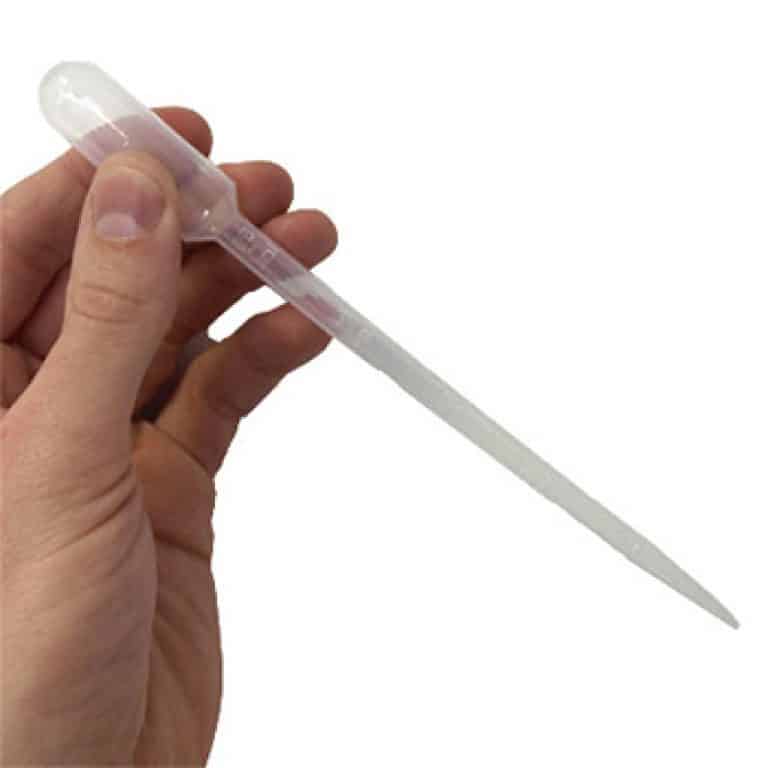
  • A pipette that is large enough to collect a water sample of 50ml.

  • A scale to measure.

Now, follow the instructions:

Step 1 – Weigh the evaporating dish in milligrams and make sure that the dish is completely empty, and free from any kind of particles. Note this measurement as “A” and come back to it after all the steps have been completed.

Step 2 – Take the stirring stick and vigorously stir the sample of water in the sterilized beaker. You need to agitate the liquid so that the particulate matter present in the beaker gets evenly distributed.

Step 3 – Take the pipette and collect 50ml of the stirred water. Please note that even while collecting the water, you have to continue stirring the liquid.

Step 4 – Extract water from the pipette and pass it on to the filter paper 3 times. There will be some sediment left behind in the filter paper.

Step 5 – If you see any particles in the filter paper, transfer them to the evaporating dish.

Step 6 – Wait for the filtrate (particles) to completely dry.

Step 7 – Once the filtrate on the evaporating dish is dry, weigh the evaporating dish again (with the filtrate) and call it “B”.

Step 8 – Measure the TDS level by subtracting B from A.

To check TDS level, use the formula: TDS = [(A-B)*1000]/ml

In this formula, A stands for the weight of the evaporating dish + filtrate, and B stands for the weight of the evaporating dish. Since 50ml was the quantity that you took in the pipette, the value of “ml” in this case is going to be 50. The final value of the dissolved solid is going to be measured in mg/L.

Precaution:

  1. Carefully weigh the evaporating dish and also, the weight of the evaporating dish with the filtrate.
  2. Wait for the filtrate or particles to completely dry before proceeding.

Most people often confuse the TDS level with water hardness. High TDS levels do not always mean that the water is hard. If you want to find out the hardness level of water then you should perform a water hardness test.

TDS Level in Drinking Water – FAQs

Does a high TDS level always mean the water is unfit for consumption?

Always remember that a high TDS does not always necessarily mean that the water is unsafe for consumption. Sometimes it means that it may be a bit odd in terms of taste, color, or smell. Ideally, the TDS for drinking water should be below 300 mg/liter and the maximum limit that is considered safe is 500 mg/liter.

If you are eager to find out how good or bad your drinking water is, then you should get your drinking water tested.

How do you reduce the TDS level in drinking water?

Water purifiers that come with reverse osmosis (RO) technology are a great solution to reduce high TDS levels in the water. These purifiers are built with cutting-edge technology to ensure that the TDs levels in water are reduced and that the water is safe for drinking. If you are planning to buy one, then you can check the latest range of RO water purifiers.

With the help of a TDS meter, you can even check the longevity and functionality of the RO membrane and replace it, if need be.

Share this information with your friends and family to equip them with the knowledge needed for checking the TDS level in drinking water. If you know of any other way to measure TDS levels, please feel free to comment.

Livpure Water Purifiers

Livpure has become a leading brand in the water purifier industry in a very short period.

Livpure, a part of SAR Group, is a company that is well known for its quality appliances like water purifiers and air purifiers. Livpure offers water purification solutions for both home and commercial use.

Livpure now offers a complete range of water purifiers starting from basic gravity-based water purifiers to high-end multi-stage RO water purifiers with advanced features like touch control and Bluetooth.

Good features, quality purification, great prices, and reliable installation and service support are the main reasons why Livpure has become a trusted name in the water purifier market.

Livpure is also among the best-selling water purifier brands on all the leading online stores like Amazon and Flipkart.

Livpure is the first leading brand of water purifiers to offer RO on rent through its Livpure Smart RO Subscription service.

Here is the best-selling Livpure water purifier price list updated on: October 17th, 2025.

Why Choose Livpure RO Purifiers?

There are various models and different price ranges of Livpure water purifiers in the Indian market.

Livpure’s advanced purification mechanism ensures that dirt, parasites, bacteria, viruses, dissolved solids, and other harmful substances are effectively removed from the water.

Livpure has a wide range of purifiers to match the varying water purification needs of Indian customers. If you are looking for a portable non-electric water purifier then you can choose from Livpure’s gravity-based water purifiers and if you are looking for advanced purification then Livpure’s range of UV and RO purifiers is all you need.

Unique Features of Livpure Water Purifiers

  • Attractive and affordable prices
  • Advanced & reliable purification
  • Clean and intelligent design
  • Huge nationwide sales & support system
  • Full range of water purifiers
  • Customer-friendly and reliable service support

Livpure Customer Services

Livpure has a country-wide presence with more than 10000 retail partners and 300 distributors. Livpure is also exporting its world-class water purifiers to over 15 countries across the globe. Livpure offers strong nationwide support with its 46 special hubs, 1450 service centers, and over 450 service engineers across the country.

Livpure’s on-ground customer support is really good and has been appreciated by customers.

Livpure Customer Care Number

Make a call on the Toll-Free customer service number – 1800 – 419 – 9399

Write an e-mail to customer care support – customercare@livpure.com

Aquaguard Water Purifiers

Aquaguard is one of the oldest and most popular water purifier brands in India.

Aquaguard is the flagship water purifier brand of Eureka Forbes and has around 36 years of research and understanding of Indian water conditions and the best water purification technologies.

Aquaguard water purifiers are manufactured in ISO 9001 and 14001 certified manufacturing plants. Aquaguard is also one of the few water purifier brands that have 18 water labs that constantly test the water samples across the country.

Not all types of water can be purified using any one technology and therefore Aquaguard has developed around 21 different water purification technologies to address 21 different water conditions.

Aquaguard water purifiers are tested and certified by over 135 laboratories across the globe and are also endorsed by Indian Medical Association.

The brand has won several prestigious awards including the Golden Peacock Award, UNESCO Water Digest Awards, RED Dot Design Awards, and several others.

Here, you can check and compare Aquaguard water purifiers, their reviews, features, and prices in India.

Here is the best-selling Aquaguard RO water purifier price list that was last updated on: October 17th, 2025.

Eureka Forbes offers four distinct ranges of water purifiers under the brand name Aquaguard, Dr. Aquaguard, AquaSure, and AquaSoft.

Aquaguard offers UV, UV+UF, RO, and RO+UV water purifiers in the mid-price range. Aquaguard offers on-the-go water purification products that start from as low as Rs. 595 to fully-packed water purifiers prices as high as Rs. 35,000.

Dr. Aquaguard is a premium range of water purifiers equipped with Universal, RO, and UV technology, Mineral Guard, and Biotron cartridges. Dr. Aquaguard RO water purifiers feature ultramodern designs and bold colors that make them look very attractive.

Why Should You Buy Aquaguard RO Purifier?

When you buy any water purifier from Aquaguard or Dr. Aquaguard you can be sure of two most important things, product quality and impeccable after-sales service.

We always recommend buying water purifiers from brands that have reliable customer support and after-sales service and Aquaguard is definitely one such brand.

Aquaguard RO water purifiers come with various other smart features like intel e-boiling, a taste enhancer, and Electronic membrane life enhancer. The TDS regulator and Mineral Guard feature help in retaining essential minerals in the purified water.

Aquaguard Customer Care Numbers

Aquaguard has the largest sales and service network with a presence in more than 36 countries and across 800 towns in India.

Aquaguard has the largest service network in India and you can find an authorized service center every 5 km. The brand also operates multiple call centers for quick response.

If you want to raise any complaint or service request you can call Aquaguard customer care toll-free number: 1860 266 1177.

You can also write an e-mail to Eureka Forbes Aquaguard at the below-given e-mail ids:
Online Sales: onlineshopping@eurekaforbes.com
Service: deepa.customercare@eurekaforbes.com


RO vs UV vs UF vs MF

Planning to buy a new water purifier for your home? Confused between all the technical terms?

You are not alone.

Most brands suffer from ‘I am the best’ syndrome and they focus more on marketing than providing actionable information.

This has given birth to all the confusion that you have in your mind right now.

Now that you have done all the hard work of landing on this page, let us do the rest.

This post will explain the difference between RO, UV, UF and MF in simple terms.

Choosing the right water purifier for your home is extremely important in order to ensure good health. And the first step in choosing the right purifier is understanding the quality of water and selecting the suitable water purification technology.

We’ve already covered a detailed guide on how to choose the right water purifier for your home.

In this previous post, we’ve covered detailed information on identifying commonly found impurities in water and mapping the right water purification technologies according to the water quality.

This post will try to explain all the common water purification technologies like RO (Reverse Osmosis, UV (Ultraviolet), UF (Ultra Filtration) and MF (Micro Filtration), and the difference between them.

Knowing the difference between the RO, UV, UF and MF water purification technologies will further help you in choosing the best water purifier that is most suitable for your home or office.

Another popular terminology used with water purifiers is TDS, you can learn all about the TDS level of water in our previous post.

What is the Full Form of RO UV UF and MF

  • RO Full Form – Reverse Osmosis
  • UV Full Form – Ultraviolet
  • UF Full Form – Ultra Filtration
  • MF Full Form – Micro Filtration


RO vs UV vs UF vs MF – Difference Between the Main Water Purification Technologies


RO Purification UV Purification UF Purification MF Purification
Needs electricity for purification Needs electricity for purification Does not need electricity Does not need electricity
Filters out all the Bacteria and Viruses from the Water Kills all bacteria and viruses but their dead bodies remain in the water Filters out all the Bacteria and Viruses from the Water Filters out only bacteria
Requires high water pressure. Therefore an extra water pump is used in all RO purifiers Works with Normal Tap Water Pressure Works with Normal Tap Water Pressure Works with Normal Tap Water Pressure
Removes dissolved salts and harmful metals Cannot remove dissolved salts harmful metals Cannot remove dissolved salts harmful metals Cannot remove dissolved salts harmful metals
Filters out all the suspended and visible impurities like mud, rust, dirt, sand etc. No filtering Filters out all the suspended and visible impurities like mud, rust, dirt, sand etc. Filters out all the suspended and visible impurities like mud, rust, dirt, sand etc.
Size of membrane: 0.0001 Micron No membrane Size of membrane: 0.01 Micron Size of membrane: 0.1 Micron
90% TDS reduction 0% TDS reduction 0% TDS reduction 0% TDS reduction
Wastes a lot of water No wastage of water No wastage of water No wastage of water


The below image visually depicts the filtration/purification characteristics and capabilities of MF, UF and RO membrane.

Looking at the image above, one would naturally think, if RO alone can remove all impurities then what is the need of other purification methods like UV, UF and MF?

We will get to this in a second.

If you look at the comparison of purification technologies above, none of the UV, UF, MF offer complete protection against all commonly found impurities. So, it is quite clear that none of these three purification technologies can alone provide trustworthy purification.

Now, coming back to the RO purification.

The pores of the RO membrane are extremely small (0.0001 micron) and RO membrane is prone to damage and choking if appropriate pre-filtration is not used. This is why you see most RO purifiers using 2-4 pre-filters like pre-sediment filter, sediment filter, Pre Carbon Filter etc.

RO water purifiers also need appropriate post-treatment like UV column, post-carbon filter and mineralizer etc. All these post RO filtrations and water treatment are usually added to be 100% sure of the purification and to remove any organic and inorganic impurities still left in the water. RO membrane can also change the taste of water and make it taste bitter and unnatural. Because of this post-RO activated carbon filter, taste enhancer or mineralizer cartridges are used.

Know the Best Time to Change RO Membrane.

So what we are trying to bring out here is, for reliable purification and pure water what is needed is a combination of multiple purification technologies.

We would not like to unnecessarily stretch this post long and would like to end with our final thoughts with this.

Final Thoughts

It is not advisable to rely on any single purification technology as every purification technology has its pros and cons. What is needed is a multi-stage purification approach that uses multiple purification methods.

That is why we recommend water purifiers which feature a combination of RO, UV, UF with TDS controller/modulator or Mineralizer. These water purifiers are suitable for most Indian homes.

Hope you found this detailed explanation, of difference Between RO, UV, UF and MF water purifiers, useful.

If you still have any queries or would need some more information then please post them in the comments section below, and we’ll be happy to answer 🙂

Kent Grand Plus 8-Litre Mineral RO + UV/UF with TDS Controller Water Purifier

Review of Kent Grand Plus

Kent Grand Plus is fully automatic and a feature-packed water purifier from Kent RO. It employs an extensive RO+UV+UF purification mechanism with TDS control, which ensures that your family is getting the safest drinking water all the time. Its high-end features, effective performance, and 4 years of free service are a great value for your money.

Kent Grand Plus employs the double treatment of RO and UV purification, which naturally makes it one of the most sought-after purifiers in India.

Top Features of Kent Grand Plus RO Water Purifier

  • Purification Technology: RO+UF+UV+TDS Controller. Double purification of RO/UF+UV removes harmful bacteria and dissolved impurities, making water 100% pure
  • Storage Capacity: 8 litres
  • Applications: Suitable for purifying brackish / tap water and municipal corporation water
  • Purification Capacity: Up to 20 litres per hour
  • Save Water Technology: Recovers more than 50% water as purified water and stores the rejected water in a separate tank for reuse of RO waste water
  • Alert Mechanism: Computer controlled operation with Filter Change and UV Fail alarms
  • UV Lamp: 11 Watt UV lamp for deactivating harmful bacteria and microorganisms
  • Filter Cartridges: Sediment, Carbon block filter, UF, and Post-carbon
  • Material: ABS Food Grade Plastic
  • Automatic: Fully automatic with auto-on and auto-off function
  • Mounting: Wall mounted
  • TDS Control Valve: It allows the user to control the content of natural minerals in the purified water
  • Extra Accessories: Push-fit components for leak-proof performance, User manual, Warranty card and Service center details
  • Indication: Purified water level indicator
  • Power Supply: Operates on electricity with built-in SMPS for frequent power fluctuations
  • Certifications: WQA (USA & India), NSF (USA) and ISI (India)
  • Installation: Free of cost at customer’s premises
  • Warranty: 1-year warranty + 3 years free service

Filtration Process of Kent Grand Plus RO + UV/UF+TDS

The Kent Grand Plus purifies water in 7 advanced stages:

Stage 1 – Sediment Filter

The sediment filter is used in the first stage of purification where input water is allowed to pass through it. This process of filtration effectively filters out all the impurities, dirt, particulate matter and suspended solids.

Stage 2 – Activated Carbon Filter

The water thus filtered from sediment filter is then fed into the activated carbon filter. This stage is very crucial in filtering out chlorine, organic compounds, bad odor as well as unpleasant taste from the water. Carbon is highly capable of blocking all the unwanted impurities and the water received at the end of this process is much purer.

Stage 3 – RO Filtration

This is the most crucial stage of purification in which a semi-permeable membrane is used. The RO filtration removes all the dissolved organic salts and other harmful contaminants. The reverse osmosis process of filtration requires an optimum pressure close to 30-40 psi to be applied to the water. It makes water molecules pass through the membrane while leaving behind the suspended impurities. In addition to the dissolved salts, RO filtration removes heavy metals like lead, pesticides, nitrates, and sulfates.

Stage 4 – Ultrafiltration

This is the fourth stage of purification in which water from the previous stage is allowed to pass through ultra-filtration. The UF membrane acts as a powerful line of defense in which macromolecules are trapped and removed. Sometimes much smaller and invisible impurities remain in the water. Even these impurities are filtered out due to the extremely small pore size of the UF membrane, which is 0.01 micron. This technology uses fine threads of fibers and also removes extra-hardness from the water.

Stage 5 – TDS Controller

This stage of filtration employs a TDS controller that helps in controlling total dissolved solids in the water coming out of the Kent RO membrane. The RO process along with reducing the hardness of the water also removes essential natural minerals. Thus, the TDS controller makes sure that these minerals are retained in the water. The output water from the TDS controller is safer, healthier, purer and enriched with minerals.

Stage 6 – Ultraviolet Filtration

It is the next step of filtration in which UV technology is utilized which effectively kills bacteria, viruses, and disease-causing germs. The UV filtration uses an 11 watt UV lamp from which ultraviolet radiations are spread in the water. It deactivates all the microorganisms to make water safe and free from germs.

Stage 7 – Post Carbon Filter

It is added to bring up the flavor of the water and enhance the taste as well.

https://www.youtube.com/channel/UCkV-GcSEokhTnXQJCGpNEMg

Review of Other Features of Kent Grand+ Water Purifier

Elegant Design

The attractive design and the transparent cover of Kent Grand Plus look great at any place in your home. Its convenient usage makes it a perfect machine for any kitchen, restaurant, or hostel. You can see all the components functioning inside the upper cabinet, while the water level indicator of the storage tank allows you to know the level of water inside.

TDS Controller

The TDS control valve serves a very significant function which results in the reduction of TDS levels up to 90 percent. This feature is not available in any other water purifiers. This function also makes sure that natural minerals in the purified water are intact. TDS control ensures healthier and better-tasting water.

Global Certifications

Kent Grand Plus is tested and certified by distinguished laboratories and important quality centers around the country. It has won NSF and WQA Gold Seal in the United States. Therefore, this fact reflects that this water purifier is extremely reliable. It is also CE and RoHS certified.

Leak Proof Design

Kent uses high-end design technology which makes leak-proof and its push-fit components take care of leakage and wastage of water. These fittings come with rubber O rings that are built in to provide additional protection against leakages. It is made of ABS plastic and its food grade quality makes it safe, durable and highly reliable.

Save Water Technology

In conventional RO Technology, about 80% of water gets wasted and only 20% of water is recovered as purified water. This means you needed 10 Litres of input water for every 2 litres of purified water. KENT Grand Plus employs Save Water Technology which recovers more than 50% water as purified water. And the best part is, unlike other RO purifiers, the rejected water is stored in a separate tank. And that waste water can be utilized for other home tasks like gardening, mopping, washing, etc. Thus Kent Grand+ resulting in less to no water wastage.

Kent Grand Plus Specifications
Model Name Grand Plus
Storage Capacity 8 L
Purifying Technology RO+UV+UF
Filtration Capacity 20 L/Hr
Filter Cartridges Sediment, Carbon Block Filter, UF & Post Carbon
Maximum Duty Cycle 100 Litres/Day
Power Consumption 60 Watt
Membrane Type Thin Film Composite RO
Booster Pump Voltage 24 V DC
Inlet Water Pressure/Temp (min) 0.3 Kg/cm2 or 4.3psi / 10°C
Inlet Water Pressure/Temp (max) 3 Kg/cm2 or 42.7psi / 35°C
Membrane Housing Spin-welded RO membrane housing
Width 25.5 cm
Height 53.5 cm
Length 39 cm
Weight 9.4 kg

Found this review for Kent Grand Plus Water Purifier useful?

Please leave a comment below or share your love by connecting with us on Facebook. And, check top offers on water purifier from Amazon and Flipkart and save money on your water purifier.

What is TDS in Water, it’s Health Effects and How to Reduce the TDS Level?

TDS (Total Dissolved Solids) represents the total concentration of all the dissolved substances in water.

TDS in water comprises inorganic salts and a small amount of organic matter.

Common inorganic salts that can be found in water include calcium, magnesium, sodium, and potassium, which are all cations, carbonates, bicarbonates, chlorides, nitrates, and sulfates, which are all anions. Cations are positively charged ions and anions are negatively charged ions.

The most important thing to note here is that the impurities, like dust, dirt, mud, and rust, do not constitute Total Dissolved Solids. This is because these impurities remain suspended (or settle at the bottom) in water and do not dissolve.

Dissolved solids can easily pass through a filter with 2-micrometer (or smaller) pores. But the suspended/settleable solids can be easily filtered out with such a filter.

From Where Do these Dissolved Solids Come in Water?

TDS in water supplies can originate from both natural sources and as a result of human activities. Sewage, agricultural and urban run-off, and industrial wastewater are the most common sources of Total Dissolved Solids in water.

Rivers flowing through mountains contain water with high levels of dissolved solids because the water flows through rocks that have mineral deposits and high salt content.

The most common dissolved solids are calcium, magnesium, phosphates, nitrates, sodium, potassium, and chloride. Mostly found in groundwater and river water, these are naturally occurring and are harmless for the human body.

However, some constituents of TDS like pesticides, lead, arsenic, and fluoride can be very harmful to human health. These constituents enter water as a result of human activities like sewage, agricultural and urban run-off, and industrial wastewater.

Why Do you Need to Measure Total Dissolved Solids?

Because testing the level of TDS in your water is the easiest way to analyze the overall quality of your drinking water.

Although there is no proof of any negative health effect of high or low TDS levels, it is used as an indicator of the presence of a broad array of chemical contaminants.

The Bureau of Indian Standards (BIS) has set the acceptable limit of TDS in drinking water at 500 mg/L.

Drinking water, with TDS levels higher than 1000 mg/L, is generally considered unfit for human consumption. A high level of TDS is also a direct indicator of potential concerns and calls for a thorough analysis.

Mostly high levels of TDS in drinking water are a result of the high concentration of minerals like calcium and magnesium. These minerals have little or no short-term health effects. But harmful and toxic contaminants like lead, arsenic, cadmium, nitrate, and others, have a serious effect on your health.

If you are living near highly polluting industrial zones and agricultural regions with a long history of using chemical fertilizers and pesticides, then there is a very high probability of these toxic contaminants mixing with the water source.

In such a case, apart from testing the TDS level of the water, you should also get your water tested in a laboratory for finding the presence of any harmful or toxic contaminants.
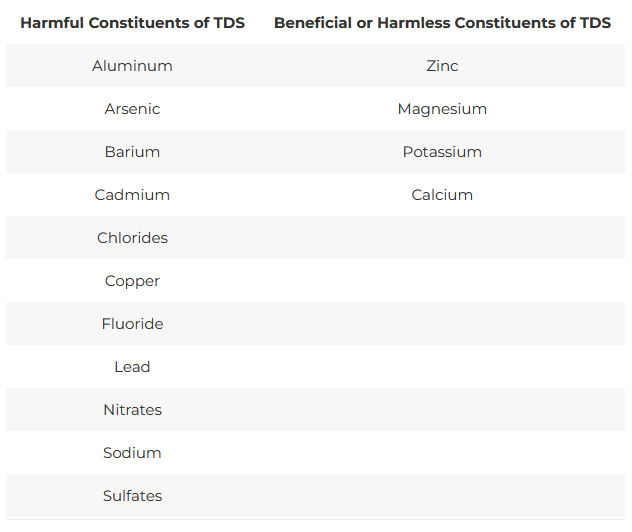
In areas where the TDS content of the water supply is very high, the individual constituents should be identified and the local public health authorities consulted.

What Happens to the Water When TDS is High?

a) The high concentration of dissolved solids in water causes water filters to wear out sooner. If the water at your home has high levels of TDS then you will have to replace the filters and membranes more frequently as compared to homes that have low TDS water.

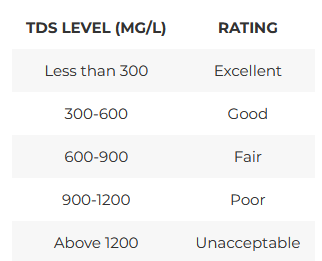
b) A high level of TDS in water makes the water taste bitter and salty. In a study conducted by the World Health Organization (WHO), the palatability (acceptable taste) of drinking water has been rated by panels of tasters in relation to its TDS level as follows:
c) Bathing with high TDS water makes your skin rough and dry. It also damages your hair making them rough and dry, causing dandruff and hair fall.

d) Calcium and magnesium, two minerals commonly found in TDS, can cause water hardness, scale formation, and staining. High levels of minerals in water lead to scaling on bath fittings, water pipes, water heaters, and household appliances.

e) The high TDS level makes water hard. Apart from drinking, hard water poses several other challenges like soaps and detergents do not produce as much lather.

Are you worried about the excessive dryness of skin and sudden hair fall or dandruff? Chances are it is because of the calcium and magnesium minerals that make your water hard. Changing your soap or shampoo is not the solution. The solution is quite simple, you need to use a hard water softener for your bathroom. Hard water softeners are small, affordable, and easily fit on any tap or showerhead. We have written a detailed post on how hard water softeners can bring back the softness and shine of your skin and hair. This post also covers the best water softeners reviewed by our experts.

Health Effects of High TDS in Drinking Water

It is a widely known fact that high levels of TDS in drinking water can give water a bitter or salty taste, but it is not harmful to your health. In fact, minerals like calcium and magnesium, which are often the reason behind high TDS levels, are actually beneficial to your health.

However, if the TDS level of your drinking is above 500 PPM then it is recommended that you get the water tested for harmful impurities like lead, arsenic, mercury, fluoride, etc.

A high TDS level is usually not a health hazard as long as the dissolved solids are essential minerals and not harmful heavy metals and chemicals.

No health-based guideline value is proposed for TDS. However, drinking-water guidelines are available for some of its constituents, including lead, arsenic, cadmium, fluoride, nitrate, etc.

If you suspect or if the laboratory tests point to the presence of lead, arsenic, mercury, fluoride or other harmful impurities then you should use a multi-stage RO water purifier.

You may want to look at the top RO water purifiers for purifying high TDS water.

Is Low TDS Water Harmful?

Water with an extremely low level of TDS is undesirable for most consumers because of its flat, dull taste.

Also, demineralized or very low TDS water is not suitable for athletes and people with highly active lifestyles. But for most people, drinking water with a low TDS value doesn’t pose any health concern.


Useful read – Is 25 TDS Safe for Drinking Water?

Water is not the only source of essential minerals like calcium and magnesium. The food that you eat also contains these minerals. Your body’s mineral requirement can be easily fulfilled by the food that you eat.

Apart from the dull taste, water with excessively low TDS is more corrosive and can leach harmful metals such as lead or copper from plumbing pipes and hardware.

Drinking water with moderate amounts of TDS is the best. Water with moderate TDS tastes better than water with very low or very high TDS levels.

What are the Guidelines for TDS in Drinking Water in India?

World Health Organization (WHO) report on TDS in drinking water points out that reliable data on possible health effects associated with TDS in drinking water is not available.

No health-based guideline value is proposed for the ideal TDS of drinking water. Because TDS in water can be high because of many factors so, in areas where the TDS content of the water supply is very high, the individual constituents should be identified.

The Bureau of Indian Standards (BIS), the organization that defines the drinking water quality guidelines in India, has set the acceptable limit of TDS in drinking water at 500 mg/L. However, the guidelines also mention that in case no alternative source of drinking water is available, then this acceptable limit can be relaxed to 2,000 mg/L. The BIS report also mentions that if the TDS level of the drinking water is higher than 500 mg/L then this may result in a decrease in palatability (acceptable taste) and may cause gastrointestinal irritation.
How is TDS Measured?

There are two methods of measuring Total Dissolved Solids in water: gravimetric analysis and conductivity.

Gravimetric Method

The gravimetric method is the most accurate but it is time-consuming. In this method, the liquid solvent or water is evaporated and the weight of the remaining residue is measured to calculate the TDS level. This method is ideal in case of high TDS concentrations and if inorganic salts constitute the majority of TDS.

Electrical Conductivity

Electrical Conductivity is the most popular and also the easiest method to find out the TDS of drinking water. The electrical conductivity of water is directly related to the concentration of dissolved ionized solids in the water. TDS meters work on the same principle of conductivity. Although this method is not accurate as the gravimetric method, it is definitely the quickest and easiest way to find out an approximate value for the TDS level in the water.

You may like to check our detailed post on how to check the TDS level of water at home.

How to Reduce or Remove TDS in Water?

There are 3 major ways to reduce or remove TDS in water:

Reverse Osmosis (RO)

Reverse Osmosis or RO purification is the most popular water purification technology to get rid of excessive dissolved solids in the water. RO process removes virtually all dissolved impurities, including essential minerals and harmful heavy metals like lead and arsenic.

The process uses specially designed RO membranes with a pore size as small as 0.0001 microns. The small pore size only allows water molecules to pass through and filters out every other impurity. Most RO membranes reduce the TDS level by up to 90-99%.

Distillation

Distillation removes contaminants through the same process used in nature, evaporation. The process involves boiling water to produce steam or water vapor. As water is boiled, water evaporates in form of steam but the dissolved solids are unable to evaporate. The steam rises to a cool surface, and once the steam cools down it condenses back into the liquid form.

Deionization

The Deionization process removes total dissolved solids through ion exchange. The process uses specially manufactured ion-exchange resins to exchange water ions with charged ions or dissolved solids. Deionization produces highly pure water that is very similar to distilled water. The advantage of deionization over distillation is that the process is quicker and does not result in scale build-up.

For homes, Reverse Osmosis (RO) is the most often used technique for tackling the problem of high TDS in water.

Conclusion

Whether the TDS level is a cause of worry or not depends on the kind of minerals, metals, and chemicals that make up total dissolved solids in your water supply. Unfortunately, this is not as easy as finding the TDS level as it requires more advanced testing.

TDS is not the only indicator of how pure or contaminated your drinking water is. TDS is only one of several indicators of the purity of water. Water may contain a whole lot of contaminants like mud, dust, rust, sand, bacteria, viruses, cysts, and more.

The water purification technology you use depends on the source and quality of the water. For more details on how to find the best water purifier for your home, you should check the water purifier buying guide.
Top 6 Innovative Ways to Re-Use the Waste Water from RO Water Purifiers

Most Indian homes use RO water purifiers, but very few know about the side effects of using one.

This isn’t surprising. RO water purifiers provide reliable water purification, but they often lead to unnecessary wastage of water.

Should you stop using RO water purifiers?

OR

Stop worrying about the wastage of water?

Out of all the water purifier technologies, RO water purification is the most reliable. And if your home/office has high TDS water then you have no choice but to use an RO water purifier.

What if we tell you something that lets you enjoy the trustworthy RO purification without having to worry about the wastage of water?

You just need to know about some easy ways to re-use RO waste water, and then take action.

In this guide, we’ll go through six actionable ways to re-use RO waste/reject water to reduce water wastage.

But first, let’s go over the basics.

Why Re-Use RO Waste Water?

Using RO water purifiers not only gives us safe, clean and tasty water but also protects us from life-threatening waterborne diseases.

But there is one big drawback of using RO water purifiers i.e. the excessive wastage of water. An average RO purifier wastes approximately 3 litres of water for every 1 litre of purified water. That means only 25% of water is purified and 75% of water comes out as waste.

Wondering why so much water is wasted? Reverse Osmosis (RO) purifiers use membrane technology to filter dissolved impurities, the impure water is filtered out and is often called waste water or reject water. The percentage of waste water varies according to the RO purifier being used.

Because of the high level of impurities and dissolved solids, this reject water is not fit for drinking or bathing.

However, the RO waste water can be used in various ways to avoid the overall wastage of water in your home or office.

Before we check out how you can use this waste water, let’s look at some things to be kept in mind beforehand.

Things to Keep in Mind Before Using the RO Waste Water

It is best to determine the TDS level

To be 100% sure, if possible, the waste water should also be tested for the presence of inorganic and chemical impurities like Sodium.

In addition to the TDS level, a few websites and several videos on YouTube also suggest checking the pH value of the RO reject water. But there would hardly be any difference in the pH value of the input water and the RO reject water. So you need not worry about the pH value of the Reverse Osmosis waste water.

How to Store the RO Waste Water?

The easiest way would be to drop the reject pipe in a bucket. But if your daily drinking water requirement is 20 litres then on an average your RO water purifier would generate around 60 litres of waste water.

Assuming you are using a bucket of 15 litres, you would need to empty the bucket 4 times in a day. And the biggest pain is keeping a check on the bucket, so it does not overflow.

This may not be practical for a lot of users.

If you are one of those then worry not because we have a better solution for people like you.

You can extend the RO waste pipe and drop it in a big tank placed outside your kitchen. This stored water can later be re-used for one of the several ways listed below.

You can use a small submersible pump (like the ones used in water coolers) for taking water from this tank. All you have to do is drop the submersible pump in the tank and connect it to a power source.

You can then use a water pipe connected to the outlet of the pump to draw water from the tank without using any bucket or container. A bigger tank also means that you do not have to worry about the water overflow, as would be the case if you were using a bucket in place of a big tank.

The bucket, container or tank used for storing Reverse Osmosis waste water should have a wide opening so you can easily clean the deposits at regular intervals.

in the reject water before deciding to reuse for other purposes.

If the TDS level of the RO waste water is too high, then it might not be suitable for re-use in most of the applications given below.

6 Easy Ways to Re-use RO Reject Water

1. Wash Your Car

A single car wash could consume anywhere between 14 litres (for car wash using a bucket) to 75 litres (for car wash using a hosepipe) of water. Keeping in mind the scarcity of drinking water, using so much potable water for car wash seems unreasonable and no lesser than a crime.

We believe, washing cars every day not only wastes a lot of water but is unnecessary. If you are using an RO water purifier at your home or office then you can simply store the waste water in some tank or bucket and reuse it for washing your car. Water with a TDS level of 1200 – 1500 PPM can be safely used for car washing. If the TDS level of waste water is high you can mix tap water to dilute it. This should lower down the TDS level.

2. Watering Your Plants or Home Garden

If you are someone who loves gardening or have planted some plants in pots, the wastewater can be used for watering your plants to keep your indoor or terrace garden green. This tip is particularly useful for people living in urban areas as the TDS level in municipal water tends to be lower.

To be on the safer side, you can start with a few plants. Use the RO waste water for 15-20 days and check its effect on the growth of your plants. Each plant will respond to this change differently, which will give you a clear understanding of which plants are responding better to RO waste water. For gardening/irrigation use, a TDS level of up to 2100 PPM is permissible. You should also check out the percentage of Sodium, it should be less than 60 % ( 1.e. Na / Na + Ca + Mg). High Sodium content causes loss of soil porosity and therefore harmful to soil fertility in the long run.

3. Wash Your Utensils

Another useful application for Reverse Osmosis waste water is to wash your utensils. Simply store the waste water in bucket or tank, make sure you place the bucket for collecting RO waste water near your kitchen sink so it can be used easily when you clean your utensils.

We found this useful YouTube video that shows you how you can easily re-use the RO waste water in your kitchen for washing utensils.

4. Floor Mopping

Using the RO waste water for mopping the floor is easy and will definitely save tens of litres of clean water every day. If you have a bigger house then the savings could be in hundreds of litres every single day. If the TDS level of waste water is high (over 2000 ppm):

  • Dilute waste RO water with an equal quantity of tap water. Because plain Reverse Osmosis waste water with high TDS may stain or leave salt particles on the floor.
  • Use the RO waste water for floor mopping on alternate days. This will reduce the chances of any stains or salt deposits.

5. Pre-rinsing Laundry

You can use the RO waste water for daily laundry as well, but please keep in mind that using high TDS water might not be suitable for some delicate fabrics. Most of the Indian homes now use washing machines, though washing machines save a lot of time and effort but also result in a lot of wastage of water. You can create an overhead tank that collects the RO waste water and use the waste water from this tank directly in your washing machine (do keep in mind the fact about delicate fabrics)? This tip works best for semi-automatic & twin tub washing machines.

6. Cleaning and Flushing Your Toilets

Another big source of clean water wastage in modern homes is the use of toilet flush. Every single flush sends approximately 5 to 7 litres of potable water down the drain.RO waste water can be used effectively to reduce this wastage of clean water by using it to flush your toilets. When you start, always monitor your toilet seats for any discoloration on porcelain surfaces after a few days. With a periodical cleanup using common toilet cleaners, the chances of discoloration and salt deposits can be avoided.


Looking for an RO purifier that produces very little or no waste water? Check out KENT RO Water Purifiers. These purifiers use Save Water Technology which recovers up to 50% pure water and stores the rejected water in a separate tank.


Every year we read and listen to the news of farmers committing suicide because of droughts. And there are thousands and lakhs of families in our country who have to travel for miles every day to collect drinking water. If you are fortunate enough to be blessed with sufficient water supply, think of it as a privilege.

Do your bit by saving every drop of water. These small measures can really make a lot of difference because EVERY DROP COUNTS.

Top Proven Benefits of Drinking Right Amount of Water Daily

Water is the most easily available compound and is absolutely essential for bare survival. A human being can go without food for long periods of time but gives up within a week if left without water. So it is imperative to have water in the correct amount. Pure drinking water is the healthiest fluid you have access to pretty much all day long if you have a good water purifier at home and work.

Listed below are some of the basic but important advantages which show that water is the healthiest drink one can have.

Pure Water is the World’s First and Foremost Medicine. – Slovakian Proverb

Helps Prevent Cancer

Water has been found to help decrease the risks of cancer by a wide margin. For example, it helps reduce breast cancer, colon cancer (by around 45%) and bladder cancer (by 50%).

Clears Your Head

While the reasons are not known exactly, a study in London found that there is a link between students bringing water to the exam hall and better grades. Water has also been found to have a direct effect on moods, with dehydration leading one to become more grumpy and depressed and disoriented.

Helps You Perform Better

Water forms as much as 75% of our muscle tissues. This means that not drinking enough water can mess with the electrolyte balance, resulting in muscle fatigue. You should also stay hydrated during exercising. The American College of Sports Medicine recommends consuming 17 ounces of liquid up to 2 hours before you begin exercising. And always take care to replace the body fluid lost by sweating as dehydration during exercising can form blood clots.

Makes You Lose Weight

While water doesn’t contribute directly to weight loss, it is an ideal substitute against beverages with high-calorie content. Drinking water at regular intervals helps in decreasing cravings. Also, eating food containing a lot of water actually is a great way to reduce weight as such food items are usually voluminous, require more chewing and the body takes a long time to absorb them.

Lessens Joint Pain

Drinking a good amount of water helps in keeping the cartilage hydrated and lubricated. This is the principle on which glucosamine works – it helps the cartilages in absorbing water, meaning that you should also increase your water intake once you start taking it.

Flushes Out Toxins

Bloody fluids are the medium for transporting waste products away from the cells to your kidneys. The main body toxin, blood urea nitrogen or BUN, is a water-soluble compound that is eliminated through urine. Drinking the right amount of water relieves the stress on kidneys and helps your urine remain colorless, odorless and less concentrated. Drinking enough water is all the more important in warm climates in order to prevent kidney stones.

Makes Your Skin Glow

Water hydrates the skin, meaning that it can act as a fix for regular wear and tears. It also works wonders when dealing with tired skin cells. However, don’t expect over-hydration to act as a magic fix for ageing effects. Water helps in the regeneration of skin cells and helps maintain the color and texture of the largest organ in our body. This is one of the best drinking facts about water for many beautiful girls out there.

Helps Improve Circulation

Water is essential for the proper distribution of nutrients as it is the biggest component of body fluids. Water also helps in the proper distribution of temperature in the body. Water happens to be helpful in digestion as it keeps things moist in the stomach, aiding gastrointestinal movements. An inadequate amount of water would make the colon absorb water from the excretory mass in your stomach, making you constipated.

How to Ensure the Intake of an Adequate Amount of Water?

While the good effects of water are evident, it often becomes difficult to have enough water during the course of the day. The most common reasons for this are laziness and neglect, busy schedules, and the general tendency to give in to more attractive fluid options. So, here are listed some ways to help you with drinking the right amount of water daily:

  • Always carry water with you. In that way, you won’t be ignoring your thirst. Be it on your office desk, your car or the water bottle holder of your gym machine or bicycle, keep a tumbler or a bottle handy.
  • Think of your wallet next time you have the urge of spending some bucks on that awesome mocktail. Water is your basic right and happens to be one of the cheapest things that you can lay your hands on. Besides, not all drinks would relieve you of your thirst. If you find it too bland, you can add a basic flavoring agent to your bottle of water.
  • Get some food with high moisture content. It can be soup, fruits like watermelons and lemons, celery, etc.
  • Use one among the many apps available to motivate you to take the correct amount of water at the right time. You can also make use of natural motivators like having something spicy at regular intervals.

However, keep in mind that while maintaining the correct amount of water intake can be a challenge for most of us, some health junkies have been known to overdo it. It is best not to have more than 2 litres of water per day. Excess water can lead to electrolyte imbalances, water poisoning, and other serious and sometimes fatal problems.