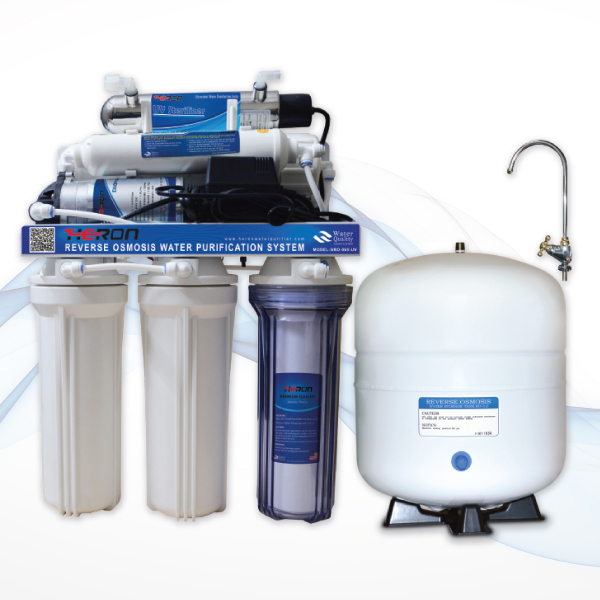
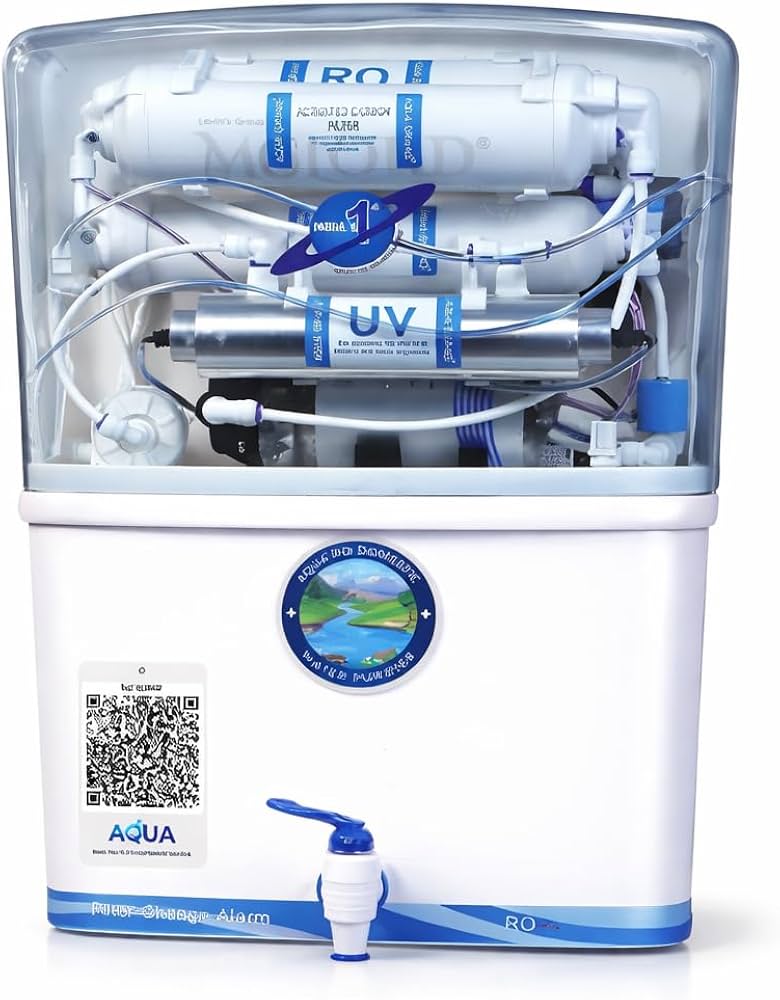
RO Water Purifiers

According to a World Bank report, “water quality in India has deteriorated as a result of an uncontrolled discharge of raw domestic and industrial waste-water”. Indian cities are lagging behind in providing reliable, sustainable, and affordable water supply. Due to these disturbing trends, people are finding RO purifiers as the best option for drinking safe water.

What is RO Purification?

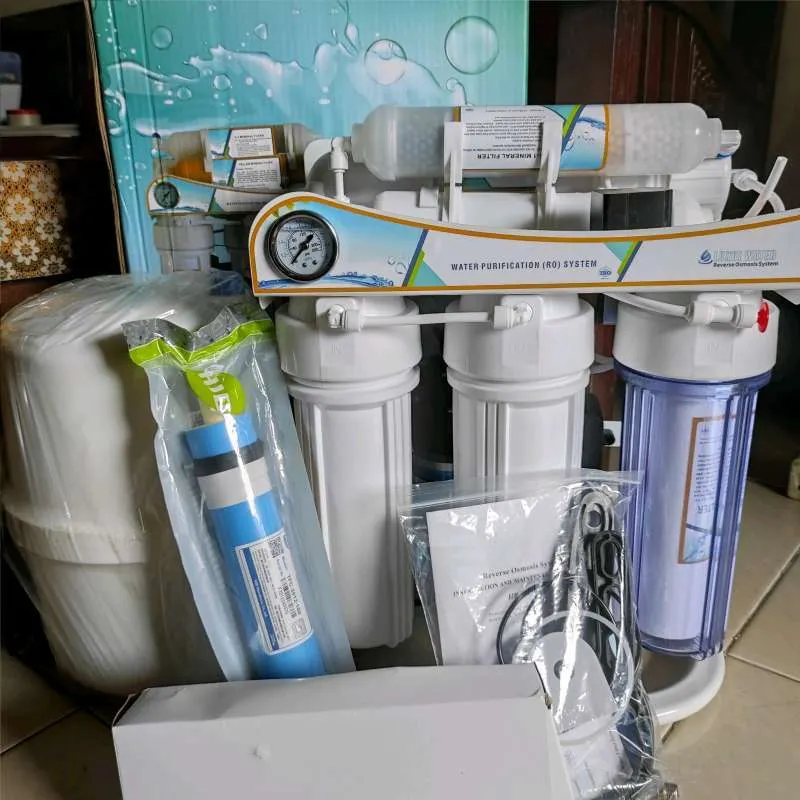
Discovered by Dean Spatz, Reverse Osmosis (RO) refers to a technique that uses a semi-permeable membrane in order to remove ions, molecules, dissolved salts, and larger impurities from drinking water. There are other types of membranes for water purification also, but the RO membrane provides the most effective & reliable water purification.

How Does RO Work?

When an artificial pressure pushes water through a fine RO membrane, the impurities present in the water get filtered out. The size of the pores of the RO membrane is very, very small. These pores allow only water molecules to pass through while preventing other contaminants.

RO purification is capable of filtering out up to 99% of over 60 different contaminants including lead, arsenic, mercury, fluoride, chlorine, etc.

When to Use an RO Purifier?

  • TDS level of water is greater than 500 PPM.
  • TDS level of water is less than 500 PPM but the water contains harmful heavy metals like lead, arsenic, etc.

Useful Articles

RO+UV Water Purifiers

According to The Hindu (March 2010), “Polluted drinking water claim more lives than all forms of violence, including war”. Therefore, it is a crying need of the hour to utilize an effective purification technology in the form of RO and UV that removes harmful impurities as well as deadly germs from the water we drink.

What is RO+UV Purification?

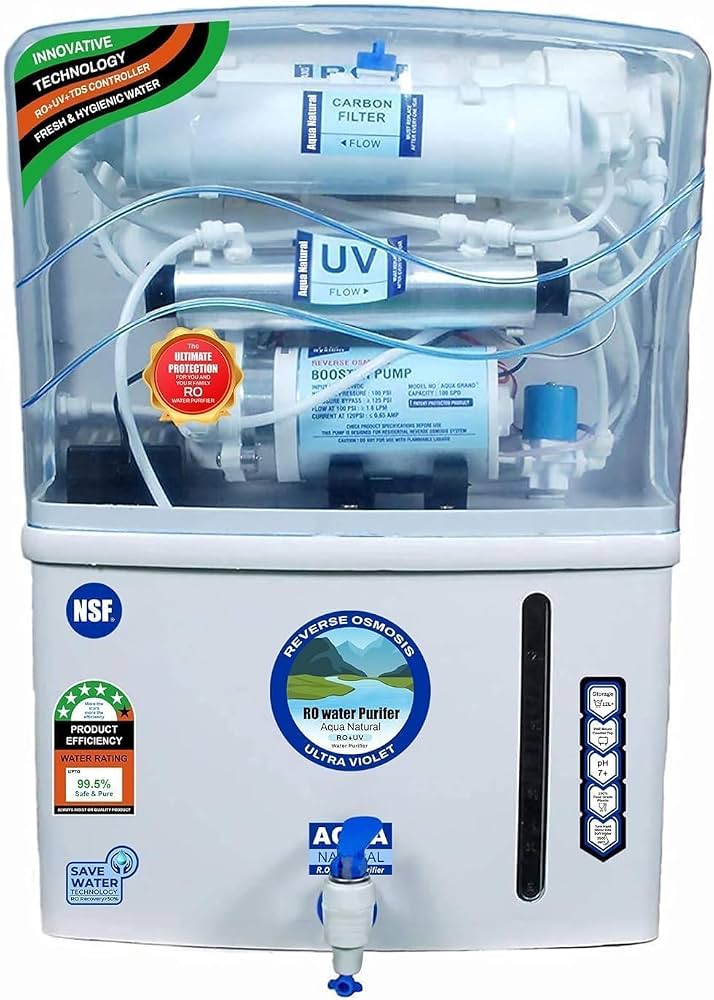
The RO+UV water purifiers employ both RO and UV technologies that give the safest water. Reverse osmosis is used for removing ions, molecules, and larger particles from drinking water. UV purification, on the other hand, is a disinfection technique that kills or inactivates microorganisms.

Top Selling RO+UV Water Purifiers in India

How does (RO+UV) work?

Reverse osmosis is the process that utilizes a semi permeable membrane, which allows pure water to pass through it, while stopping contaminants and impurities on one side. RO purification system is immensely helpful in removing all dissolved solids and bacteria.

Some of the RO systems use a process called Cross Flow, which helps the semi-permeable membrane to continuously clean itself. RO purification requires the application of pressure that pushes the fluid through the membrane. A residential RO water purification system uses an average pressure of 40psi. After RO purification, the water is allowed to go through UV system, which uses high frequency ultraviolet light to irradiate water through a glass element. Now, when the water is passed through the glass element, it becomes exposed to UV light. As a result, all bacteria and microorganisms get killed.

When to use RO+UV water purifiers?

The most important factor to consider before choosing an RO+UV water purifier is the water quality that is coming to our homes. If the water has large quantities of germs, chemicals, pesticides, fertilizers, herbicides, and heavy metals, then RO+UV water purifiers should be used.

The next factor to consider is TDS level. If the level of total dissolved solids in your water supply is 400-1500ppm, then RO+UV purifiers are recommended.

Usually, in India the borewell water contains TDS level of 300-500ppm, so these water purifiers might as well be used in those households that drink borewell water. RO+UV is the best combination of techniques utilized for water purification. Although, all the RO+UV systems run on electricity, but a high storage capacity allows them to store purified water in case of electricity outages.

Check out some top RO+UV water purifiers from brands like LivPure, HUL, and Nasaka.

How to Check TDS Level & Ideal TDS for Drinking Water

Have you been hearing a lot about the TDS level in drinking water?

You must have.

Because that is what all the water purifier companies are talking about. That is one measure even consumers are talking about the most.

But, what exactly is this “TDS” and what is the ideal TDS for drinking water?

If you have no clue about what is the meaning of TDS in water, then you must read this post.

This post will provide you with all the details about

  • What is the TDS level in water?
  • How you can measure the TDS level?
  • What is the ideal TDS level of drinking water?

TDS of Water Full Form

The full form of TDS in drinking water is “Total Dissolved Solids”.

What is TDS Level?

TDS level of water is the measure of all inorganic and organic substances that are dissolved in water.

The most common inorganic substances that are found in water are magnesium, calcium, and potassium.

To a certain degree, the presence of these minerals in the water is actually healthy, but when the level becomes too much, it is a cause of worry.

Most common constituents of TDS levels, like calcium, magnesium, etc., are generally harmless. But heavy metals like lead, mercury, arsenic, and fluoride can be really dangerous for your health.

Why Do You Need to Check TDS Level?

A study conducted by IIT Kharagpur revealed that almost 20% of India’s total land area has toxic levels of arsenic in its groundwater.

A significant number of Indians are drinking toxic water.

This is also evident from the data released by Ministry of Jal Shakti in the reply to a question asked in Rajya Sabha on 1st August, 2022. It was revealed that:

  • Arsenic was found in around 209 districts in 25 states and UTs
  • Uranium was found in parts of 152 districts across 18 states
  • Lead found in parts of 176 districts in 21 states.
  • Iron found in parts of 491 districts in 29 states and UTs
  • Cadmium in parts of 29 districts in 11 states
  • Chromium in parts of 62 districts in 16 states

Although TDS level does not tell you anything about the presence or absence of any of the contaminants that make up the TDS level.

But it definitely gives you an initial idea of the overall quality of your drinking water.

And the best part is measuring TDS level is very easy, as you’ll see below. So, there are no excuses to not know the TDS level of the water your family drinks.

A high TDS level (above 500 mg/l) indicates that the water quality is not good and you should not drink such water without purification.

It is important to note here that while the TDS level of water provides you with a quick idea of water quality, it is not the final benchmark of water quality.

Apart from the TDS level, there are around 50 other individual contaminants.

A thorough investigation of drinking water quality is only possible at a drinking water testing lab.

What is the Ideal TDS Level of Drinking Water?

World Health Organization (WHO) report on TDS in drinking water points out that reliable data on possible health effects associated with TDS in drinking water is not available.

Useful Link

Planning to buy a new water purifier? You may also want to check out our detailed water purifier buying guide or the top list of best water purifiers in India.

No health-based guideline value is proposed for the ideal TDS of drinking water. Because TDS in water can be high because of many factors, in areas where the TDS content of the water supply is very high, the individual constituents should be identified.

The presence of dissolved solids in water may affect its taste. The palatability (acceptable taste) of drinking water has been rated by panels of tasters in relation to its TDS level as follows:

TDS Level (mg/l) Rating
Less than 300 Excellent
300-600 Good
600-900 Fair
900-1200 Poor
Above 1200 Unacceptable
WHO Standards for TDS of Drinking Water According to Taste

What is the maximum TDS level advised by the Indian Authorities?

The Bureau of Indian Standards (BIS) has set the acceptable limit of TDS in drinking water at 500 mg/L.


PPM (Parts Per Million) and mg/L are one and the same thing. You can use them interchangeably for TDS level measurement.

However, the standard also mentions that in case no alternative source of drinking water is available, then this acceptable limit can be relaxed to 2,000 mg/L.

The BIS water quality standards also mention that if the drinking water TDS is higher than 500 mg/L then this may result in a decrease in palatability (acceptable taste) and may cause gastrointestinal irritation.

Whether you get your water from a borewell, water tanker, or municipal tap, you must make sure that it meets the BIS water quality standards. If your drinking water’s TDS level exceeds 500 mg/L, we suggest that you do not drink that water.

Important Note

This acceptable TDS limit applies to only normal freshwater, if the water contains toxic impurities like arsenic or fluoride then other special BIS standards will be applicable.

Minimum TDS Level for Drinking Water

It is important to note that some of the dissolved minerals in water are useful for human health and therefore very low or zero TDS is also not recommended.

Reducing the TDS level to a very low value also affects the pH level of the water, which BIS specifies should be in the range of 6.5-8.5. Water with very low TDS will taste dull.

There is no official minimum TDS level for drinking water, but a TDS of at least 50-150 ppm is the accepted minimum level.

TDS Level (mg/l) Reasons for Acceptability/Non-acceptance
Less than 50 Not acceptable. Because water with such a low TDS level does not contain the essential minerals.
50-150 Acceptable. However, the TDS level in the range of 80-150 is considered ideal. If you are using an RO water purifier then make sure the TDS level of purified water is not below 80 mg/L.
150-250 Acceptable. This is the ideal TDS range as far as cardiovascular fitness is considered.
250-350 Acceptable. Most urban Indian homes have access to water in this TDS range.
350-500 Acceptable. As per the BIS guidelines, a TDS level below 500 mg/L is acceptable.
500-900 Not acceptable. Use a RO water purifier with a TDS controller or mineralizer.
900-1200 Not acceptable. Use a RO water purifier with a TDS controller or mineralizer.
1200-2000 Not acceptable and not fit for drinking. Choose a RO water purifier that can purify water with up to 2000 mg/L.
Above 2000 Do not drink. Most home water purifiers can’t purify water with a TDS level over 2000 mg/L.

Check out the following link if you would like to learn more about how Total Dissolved Solids come in water and what is the effect of low or high TDS on your health.

How to Check the TDS Level in Water at Home?

There are a number of methods by which you can measure the TDS level in the water. We have compiled some of the most common methods that you can use at your home to know whether or not you are drinking safe water.

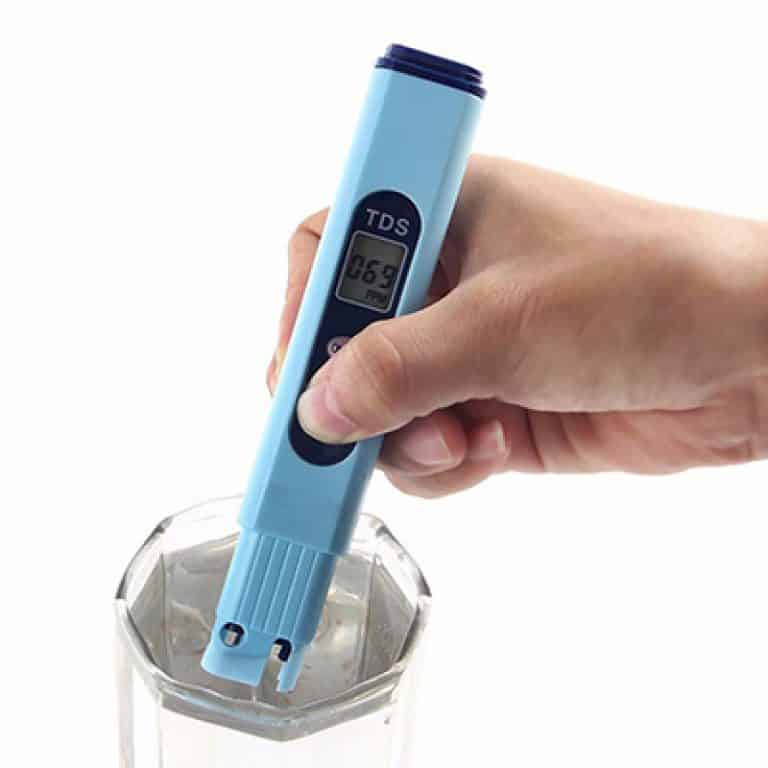
Method 1: Using Digital TDS Meter

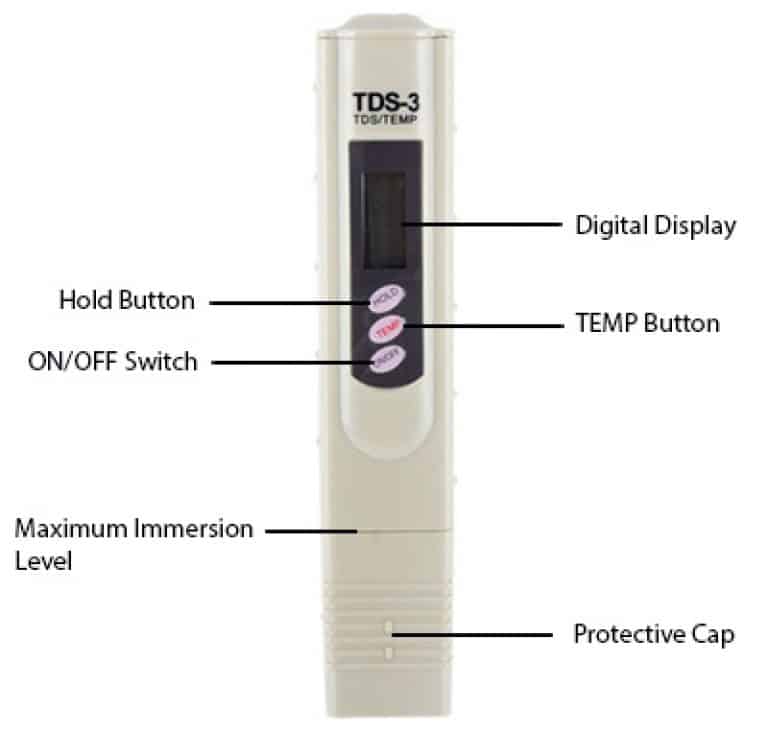
This is a state-of-the-art digital TDS meter tester that you can use to check the performance of your water filter, test the quality of filter water, check for hardness and make sure that you are drinking clean water.


Digital TDS Meter

Digital TDS meters are widely available in all the leading online stores in India and you can easily buy a quality Digital TDS Meter from Amazon.in for a few hundred rupees.

Using a digital TDS meter to measure the TDS level of water

Follow the given steps to measure the TDS Level of water using a digital TDS Meter:

  • Remove the protective cap.
  • Turn the TDS meter on. You will find the ON/OFF switch is on the panel.
  • Immerse the meter into the water up to the maximum immersion level (2 inches).
  • Gently stir the meter to dislodge any air bubbles.
  • Wait till the reading stabilizes (approximately, 10 seconds).
  • Press the HOLD button and take it out of the water to view the reading.
  • If the meter displays the ‘x10’ symbol, it means that you have to multiply the reading by 10.
  • After use, shake off the excess water from your meter and replace the cap.

Watch this video on how to measure the TDS level in drinking water.

Video: Step-By-Step Guide on Measuring TDS Level Using a TDS Meter

Precaution:

  1. Do not dip the meter beyond 2 inches because the meter is not watertight.
  2. Do not store the meter in places of high temperature or where direct sunlight comes.

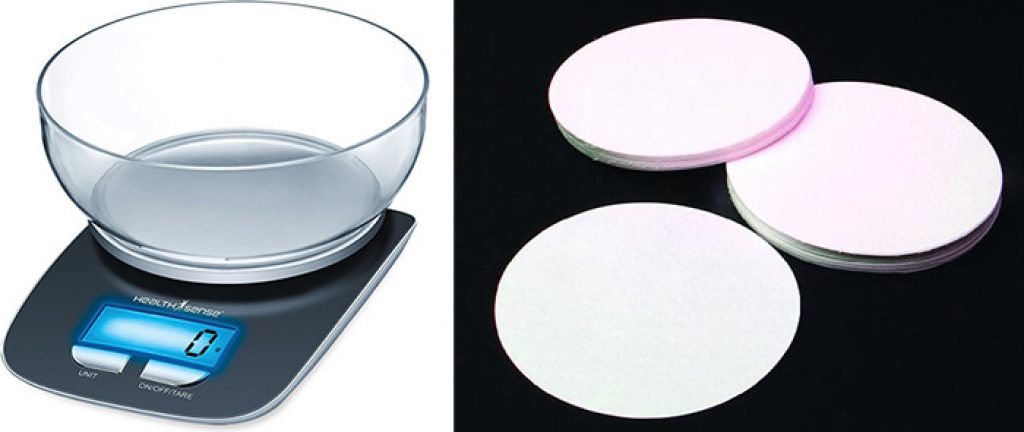
Method 2: Using Filter Paper and a Scale

This is a conventional method that you can easily use in your home to measure the level of TDS in your drinking water. For this, you do not need any TDS meter, but very simple everyday things.

What are the things that you need?

  • A sterilized beaker.
  • A sample of water (tap water or rainwater) in the beaker.
  • Filter paper.
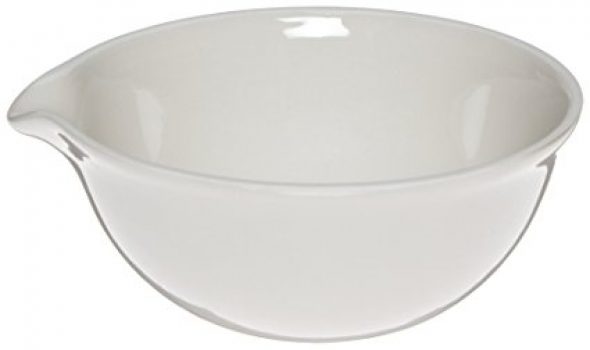
  • An evaporating dish.

  • A stirring stick.
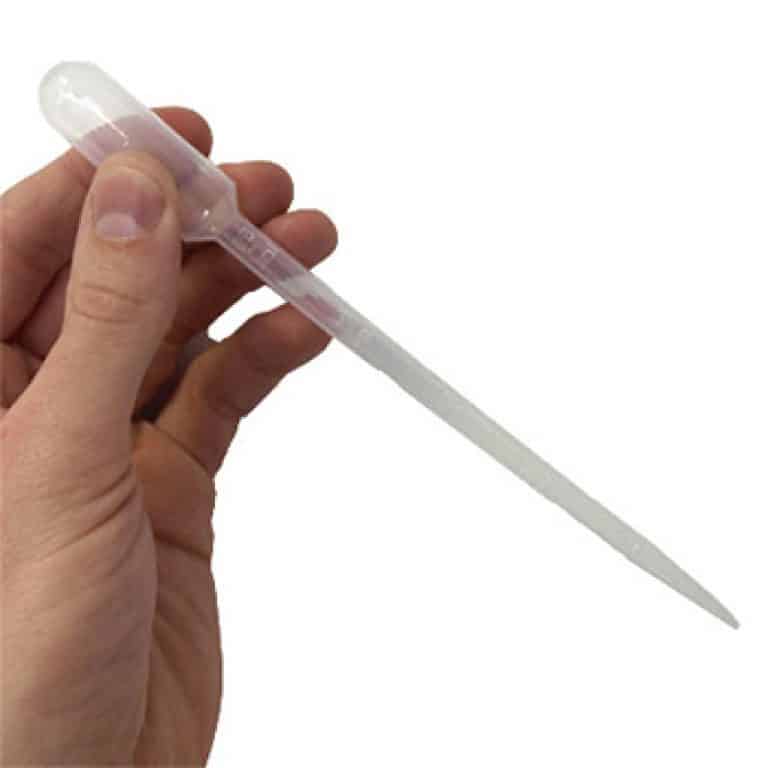
  • A pipette that is large enough to collect a water sample of 50ml.

  • A scale to measure.

Now, follow the instructions:

Step 1 – Weigh the evaporating dish in milligrams and make sure that the dish is completely empty, and free from any kind of particles. Note this measurement as “A” and come back to it after all the steps have been completed.

Step 2 – Take the stirring stick and vigorously stir the sample of water in the sterilized beaker. You need to agitate the liquid so that the particulate matter present in the beaker gets evenly distributed.

Step 3 – Take the pipette and collect 50ml of the stirred water. Please note that even while collecting the water, you have to continue stirring the liquid.

Step 4 – Extract water from the pipette and pass it on to the filter paper 3 times. There will be some sediment left behind in the filter paper.

Step 5 – If you see any particles in the filter paper, transfer them to the evaporating dish.

Step 6 – Wait for the filtrate (particles) to completely dry.

Step 7 – Once the filtrate on the evaporating dish is dry, weigh the evaporating dish again (with the filtrate) and call it “B”.

Step 8 – Measure the TDS level by subtracting B from A.

To check TDS level, use the formula: TDS = [(A-B)*1000]/ml

In this formula, A stands for the weight of the evaporating dish + filtrate, and B stands for the weight of the evaporating dish. Since 50ml was the quantity that you took in the pipette, the value of “ml” in this case is going to be 50. The final value of the dissolved solid is going to be measured in mg/L.

Precaution:

  1. Carefully weigh the evaporating dish and also, the weight of the evaporating dish with the filtrate.
  2. Wait for the filtrate or particles to completely dry before proceeding.

Most people often confuse the TDS level with water hardness. High TDS levels do not always mean that the water is hard. If you want to find out the hardness level of water then you should perform a water hardness test.

TDS Level in Drinking Water – FAQs

Does a high TDS level always mean the water is unfit for consumption?

Always remember that a high TDS does not always necessarily mean that the water is unsafe for consumption. Sometimes it means that it may be a bit odd in terms of taste, color, or smell. Ideally, the TDS for drinking water should be below 300 mg/liter and the maximum limit that is considered safe is 500 mg/liter.

If you are eager to find out how good or bad your drinking water is, then you should get your drinking water tested.

How do you reduce the TDS level in drinking water?

Water purifiers that come with reverse osmosis (RO) technology are a great solution to reduce high TDS levels in the water. These purifiers are built with cutting-edge technology to ensure that the TDs levels in water are reduced and that the water is safe for drinking. If you are planning to buy one, then you can check the latest range of RO water purifiers.

With the help of a TDS meter, you can even check the longevity and functionality of the RO membrane and replace it, if need be.

Share this information with your friends and family to equip them with the knowledge needed for checking the TDS level in drinking water. If you know of any other way to measure TDS levels, please feel free to comment.

Livpure Water Purifiers

Livpure has become a leading brand in the water purifier industry in a very short period.

Livpure, a part of SAR Group, is a company that is well known for its quality appliances like water purifiers and air purifiers. Livpure offers water purification solutions for both home and commercial use.

Livpure now offers a complete range of water purifiers starting from basic gravity-based water purifiers to high-end multi-stage RO water purifiers with advanced features like touch control and Bluetooth.

Good features, quality purification, great prices, and reliable installation and service support are the main reasons why Livpure has become a trusted name in the water purifier market.

Livpure is also among the best-selling water purifier brands on all the leading online stores like Amazon and Flipkart.

Livpure is the first leading brand of water purifiers to offer RO on rent through its Livpure Smart RO Subscription service.

Here is the best-selling Livpure water purifier price list updated on: October 17th, 2025.

Why Choose Livpure RO Purifiers?

There are various models and different price ranges of Livpure water purifiers in the Indian market.

Livpure’s advanced purification mechanism ensures that dirt, parasites, bacteria, viruses, dissolved solids, and other harmful substances are effectively removed from the water.

Livpure has a wide range of purifiers to match the varying water purification needs of Indian customers. If you are looking for a portable non-electric water purifier then you can choose from Livpure’s gravity-based water purifiers and if you are looking for advanced purification then Livpure’s range of UV and RO purifiers is all you need.

Unique Features of Livpure Water Purifiers

  • Attractive and affordable prices
  • Advanced & reliable purification
  • Clean and intelligent design
  • Huge nationwide sales & support system
  • Full range of water purifiers
  • Customer-friendly and reliable service support

Livpure Customer Services

Livpure has a country-wide presence with more than 10000 retail partners and 300 distributors. Livpure is also exporting its world-class water purifiers to over 15 countries across the globe. Livpure offers strong nationwide support with its 46 special hubs, 1450 service centers, and over 450 service engineers across the country.

Livpure’s on-ground customer support is really good and has been appreciated by customers.

Livpure Customer Care Number

Make a call on the Toll-Free customer service number – 1800 – 419 – 9399

Write an e-mail to customer care support – customercare@livpure.com

Aquaguard Water Purifiers

Aquaguard is one of the oldest and most popular water purifier brands in India.

Aquaguard is the flagship water purifier brand of Eureka Forbes and has around 36 years of research and understanding of Indian water conditions and the best water purification technologies.

Aquaguard water purifiers are manufactured in ISO 9001 and 14001 certified manufacturing plants. Aquaguard is also one of the few water purifier brands that have 18 water labs that constantly test the water samples across the country.

Not all types of water can be purified using any one technology and therefore Aquaguard has developed around 21 different water purification technologies to address 21 different water conditions.

Aquaguard water purifiers are tested and certified by over 135 laboratories across the globe and are also endorsed by Indian Medical Association.

The brand has won several prestigious awards including the Golden Peacock Award, UNESCO Water Digest Awards, RED Dot Design Awards, and several others.

Here, you can check and compare Aquaguard water purifiers, their reviews, features, and prices in India.

Here is the best-selling Aquaguard RO water purifier price list that was last updated on: October 17th, 2025.

Eureka Forbes offers four distinct ranges of water purifiers under the brand name Aquaguard, Dr. Aquaguard, AquaSure, and AquaSoft.

Aquaguard offers UV, UV+UF, RO, and RO+UV water purifiers in the mid-price range. Aquaguard offers on-the-go water purification products that start from as low as Rs. 595 to fully-packed water purifiers prices as high as Rs. 35,000.

Dr. Aquaguard is a premium range of water purifiers equipped with Universal, RO, and UV technology, Mineral Guard, and Biotron cartridges. Dr. Aquaguard RO water purifiers feature ultramodern designs and bold colors that make them look very attractive.

Why Should You Buy Aquaguard RO Purifier?

When you buy any water purifier from Aquaguard or Dr. Aquaguard you can be sure of two most important things, product quality and impeccable after-sales service.

We always recommend buying water purifiers from brands that have reliable customer support and after-sales service and Aquaguard is definitely one such brand.

Aquaguard RO water purifiers come with various other smart features like intel e-boiling, a taste enhancer, and Electronic membrane life enhancer. The TDS regulator and Mineral Guard feature help in retaining essential minerals in the purified water.

Aquaguard Customer Care Numbers

Aquaguard has the largest sales and service network with a presence in more than 36 countries and across 800 towns in India.

Aquaguard has the largest service network in India and you can find an authorized service center every 5 km. The brand also operates multiple call centers for quick response.

If you want to raise any complaint or service request you can call Aquaguard customer care toll-free number: 1860 266 1177.

You can also write an e-mail to Eureka Forbes Aquaguard at the below-given e-mail ids:
Online Sales: onlineshopping@eurekaforbes.com
Service: deepa.customercare@eurekaforbes.com


RO vs UV vs UF vs MF

Planning to buy a new water purifier for your home? Confused between all the technical terms?

You are not alone.

Most brands suffer from ‘I am the best’ syndrome and they focus more on marketing than providing actionable information.

This has given birth to all the confusion that you have in your mind right now.

Now that you have done all the hard work of landing on this page, let us do the rest.

This post will explain the difference between RO, UV, UF and MF in simple terms.

Choosing the right water purifier for your home is extremely important in order to ensure good health. And the first step in choosing the right purifier is understanding the quality of water and selecting the suitable water purification technology.

We’ve already covered a detailed guide on how to choose the right water purifier for your home.

In this previous post, we’ve covered detailed information on identifying commonly found impurities in water and mapping the right water purification technologies according to the water quality.

This post will try to explain all the common water purification technologies like RO (Reverse Osmosis, UV (Ultraviolet), UF (Ultra Filtration) and MF (Micro Filtration), and the difference between them.

Knowing the difference between the RO, UV, UF and MF water purification technologies will further help you in choosing the best water purifier that is most suitable for your home or office.

Another popular terminology used with water purifiers is TDS, you can learn all about the TDS level of water in our previous post.

What is the Full Form of RO UV UF and MF

  • RO Full Form – Reverse Osmosis
  • UV Full Form – Ultraviolet
  • UF Full Form – Ultra Filtration
  • MF Full Form – Micro Filtration


RO vs UV vs UF vs MF – Difference Between the Main Water Purification Technologies


RO Purification UV Purification UF Purification MF Purification
Needs electricity for purification Needs electricity for purification Does not need electricity Does not need electricity
Filters out all the Bacteria and Viruses from the Water Kills all bacteria and viruses but their dead bodies remain in the water Filters out all the Bacteria and Viruses from the Water Filters out only bacteria
Requires high water pressure. Therefore an extra water pump is used in all RO purifiers Works with Normal Tap Water Pressure Works with Normal Tap Water Pressure Works with Normal Tap Water Pressure
Removes dissolved salts and harmful metals Cannot remove dissolved salts harmful metals Cannot remove dissolved salts harmful metals Cannot remove dissolved salts harmful metals
Filters out all the suspended and visible impurities like mud, rust, dirt, sand etc. No filtering Filters out all the suspended and visible impurities like mud, rust, dirt, sand etc. Filters out all the suspended and visible impurities like mud, rust, dirt, sand etc.
Size of membrane: 0.0001 Micron No membrane Size of membrane: 0.01 Micron Size of membrane: 0.1 Micron
90% TDS reduction 0% TDS reduction 0% TDS reduction 0% TDS reduction
Wastes a lot of water No wastage of water No wastage of water No wastage of water


The below image visually depicts the filtration/purification characteristics and capabilities of MF, UF and RO membrane.

Looking at the image above, one would naturally think, if RO alone can remove all impurities then what is the need of other purification methods like UV, UF and MF?

We will get to this in a second.

If you look at the comparison of purification technologies above, none of the UV, UF, MF offer complete protection against all commonly found impurities. So, it is quite clear that none of these three purification technologies can alone provide trustworthy purification.

Now, coming back to the RO purification.

The pores of the RO membrane are extremely small (0.0001 micron) and RO membrane is prone to damage and choking if appropriate pre-filtration is not used. This is why you see most RO purifiers using 2-4 pre-filters like pre-sediment filter, sediment filter, Pre Carbon Filter etc.

RO water purifiers also need appropriate post-treatment like UV column, post-carbon filter and mineralizer etc. All these post RO filtrations and water treatment are usually added to be 100% sure of the purification and to remove any organic and inorganic impurities still left in the water. RO membrane can also change the taste of water and make it taste bitter and unnatural. Because of this post-RO activated carbon filter, taste enhancer or mineralizer cartridges are used.

Know the Best Time to Change RO Membrane.

So what we are trying to bring out here is, for reliable purification and pure water what is needed is a combination of multiple purification technologies.

We would not like to unnecessarily stretch this post long and would like to end with our final thoughts with this.

Final Thoughts

It is not advisable to rely on any single purification technology as every purification technology has its pros and cons. What is needed is a multi-stage purification approach that uses multiple purification methods.

That is why we recommend water purifiers which feature a combination of RO, UV, UF with TDS controller/modulator or Mineralizer. These water purifiers are suitable for most Indian homes.

Hope you found this detailed explanation, of difference Between RO, UV, UF and MF water purifiers, useful.

If you still have any queries or would need some more information then please post them in the comments section below, and we’ll be happy to answer 🙂

Kent Grand Plus 8-Litre Mineral RO + UV/UF with TDS Controller Water Purifier

Review of Kent Grand Plus

Kent Grand Plus is fully automatic and a feature-packed water purifier from Kent RO. It employs an extensive RO+UV+UF purification mechanism with TDS control, which ensures that your family is getting the safest drinking water all the time. Its high-end features, effective performance, and 4 years of free service are a great value for your money.

Kent Grand Plus employs the double treatment of RO and UV purification, which naturally makes it one of the most sought-after purifiers in India.

Top Features of Kent Grand Plus RO Water Purifier

  • Purification Technology: RO+UF+UV+TDS Controller. Double purification of RO/UF+UV removes harmful bacteria and dissolved impurities, making water 100% pure
  • Storage Capacity: 8 litres
  • Applications: Suitable for purifying brackish / tap water and municipal corporation water
  • Purification Capacity: Up to 20 litres per hour
  • Save Water Technology: Recovers more than 50% water as purified water and stores the rejected water in a separate tank for reuse of RO waste water
  • Alert Mechanism: Computer controlled operation with Filter Change and UV Fail alarms
  • UV Lamp: 11 Watt UV lamp for deactivating harmful bacteria and microorganisms
  • Filter Cartridges: Sediment, Carbon block filter, UF, and Post-carbon
  • Material: ABS Food Grade Plastic
  • Automatic: Fully automatic with auto-on and auto-off function
  • Mounting: Wall mounted
  • TDS Control Valve: It allows the user to control the content of natural minerals in the purified water
  • Extra Accessories: Push-fit components for leak-proof performance, User manual, Warranty card and Service center details
  • Indication: Purified water level indicator
  • Power Supply: Operates on electricity with built-in SMPS for frequent power fluctuations
  • Certifications: WQA (USA & India), NSF (USA) and ISI (India)
  • Installation: Free of cost at customer’s premises
  • Warranty: 1-year warranty + 3 years free service

Filtration Process of Kent Grand Plus RO + UV/UF+TDS

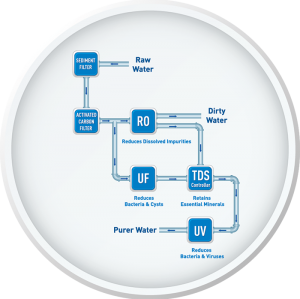
The Kent Grand Plus purifies water in 7 advanced stages:

Stage 1 – Sediment Filter

The sediment filter is used in the first stage of purification where input water is allowed to pass through it. This process of filtration effectively filters out all the impurities, dirt, particulate matter and suspended solids.

Stage 2 – Activated Carbon Filter

The water thus filtered from sediment filter is then fed into the activated carbon filter. This stage is very crucial in filtering out chlorine, organic compounds, bad odor as well as unpleasant taste from the water. Carbon is highly capable of blocking all the unwanted impurities and the water received at the end of this process is much purer.

Stage 3 – RO Filtration

This is the most crucial stage of purification in which a semi-permeable membrane is used. The RO filtration removes all the dissolved organic salts and other harmful contaminants. The reverse osmosis process of filtration requires an optimum pressure close to 30-40 psi to be applied to the water. It makes water molecules pass through the membrane while leaving behind the suspended impurities. In addition to the dissolved salts, RO filtration removes heavy metals like lead, pesticides, nitrates, and sulfates.

Stage 4 – Ultrafiltration

This is the fourth stage of purification in which water from the previous stage is allowed to pass through ultra-filtration. The UF membrane acts as a powerful line of defense in which macromolecules are trapped and removed. Sometimes much smaller and invisible impurities remain in the water. Even these impurities are filtered out due to the extremely small pore size of the UF membrane, which is 0.01 micron. This technology uses fine threads of fibers and also removes extra-hardness from the water.

Stage 5 – TDS Controller

This stage of filtration employs a TDS controller that helps in controlling total dissolved solids in the water coming out of the Kent RO membrane. The RO process along with reducing the hardness of the water also removes essential natural minerals. Thus, the TDS controller makes sure that these minerals are retained in the water. The output water from the TDS controller is safer, healthier, purer and enriched with minerals.

Stage 6 – Ultraviolet Filtration

It is the next step of filtration in which UV technology is utilized which effectively kills bacteria, viruses, and disease-causing germs. The UV filtration uses an 11 watt UV lamp from which ultraviolet radiations are spread in the water. It deactivates all the microorganisms to make water safe and free from germs.

Stage 7 – Post Carbon Filter

It is added to bring up the flavor of the water and enhance the taste as well.

https://www.youtube.com/channel/UCkV-GcSEokhTnXQJCGpNEMg

Review of Other Features of Kent Grand+ Water Purifier

Elegant Design

The attractive design and the transparent cover of Kent Grand Plus look great at any place in your home. Its convenient usage makes it a perfect machine for any kitchen, restaurant, or hostel. You can see all the components functioning inside the upper cabinet, while the water level indicator of the storage tank allows you to know the level of water inside.

TDS Controller

The TDS control valve serves a very significant function which results in the reduction of TDS levels up to 90 percent. This feature is not available in any other water purifiers. This function also makes sure that natural minerals in the purified water are intact. TDS control ensures healthier and better-tasting water.

Global Certifications

Kent Grand Plus is tested and certified by distinguished laboratories and important quality centers around the country. It has won NSF and WQA Gold Seal in the United States. Therefore, this fact reflects that this water purifier is extremely reliable. It is also CE and RoHS certified.

Leak Proof Design

Kent uses high-end design technology which makes leak-proof and its push-fit components take care of leakage and wastage of water. These fittings come with rubber O rings that are built in to provide additional protection against leakages. It is made of ABS plastic and its food grade quality makes it safe, durable and highly reliable.

Save Water Technology

In conventional RO Technology, about 80% of water gets wasted and only 20% of water is recovered as purified water. This means you needed 10 Litres of input water for every 2 litres of purified water. KENT Grand Plus employs Save Water Technology which recovers more than 50% water as purified water. And the best part is, unlike other RO purifiers, the rejected water is stored in a separate tank. And that waste water can be utilized for other home tasks like gardening, mopping, washing, etc. Thus Kent Grand+ resulting in less to no water wastage.

Kent Grand Plus Specifications
Model Name Grand Plus
Storage Capacity 8 L
Purifying Technology RO+UV+UF
Filtration Capacity 20 L/Hr
Filter Cartridges Sediment, Carbon Block Filter, UF & Post Carbon
Maximum Duty Cycle 100 Litres/Day
Power Consumption 60 Watt
Membrane Type Thin Film Composite RO
Booster Pump Voltage 24 V DC
Inlet Water Pressure/Temp (min) 0.3 Kg/cm2 or 4.3psi / 10°C
Inlet Water Pressure/Temp (max) 3 Kg/cm2 or 42.7psi / 35°C
Membrane Housing Spin-welded RO membrane housing
Width 25.5 cm
Height 53.5 cm
Length 39 cm
Weight 9.4 kg

Found this review for Kent Grand Plus Water Purifier useful?

Please leave a comment below or share your love by connecting with us on Facebook. And, check top offers on water purifier from Amazon and Flipkart and save money on your water purifier.

10 Health Benefits of Drinking Copper Water

For ages, our elders have advised us to drink water from the copper vessel to reap health benefits. Perhaps, most of our elders still drink water from the copper vessel, but the younger generation has now switched to plastic or other metallic bottles.

Since our old traditions are making way back to the present, it’s high time to know the benefits of drinking water in a copper vessel. Before focusing on the benefits of drinking water in the copper bottle, let us throw light on the importance of copper for our bodies.

Copper is one of the essential trace minerals which offers numerous health benefits. It helps in making red blood cells and collagen. It also plays a vital role in the production of energy.

Now that you have an idea of the importance of copper in our bodies, let us have a look at the science behind the ancient Indian practice of drinking water in copper vessels.

Table of Contents

The Science Behind the Ancient Indian Practice of Drinking Water from Copper Vessels

The concept of drinking water in a copper vessel is not new. It is something that was always suggested during Ancient times. But now we also have science backing the age-old logic.

A recently published article, in the Journal of Health, Population, and Nutrition, discussed the result of storing water contaminated with harmful bacteria like Salmonella and E.Coli in a copper vessel for 16 hours. Would you believe that no traces of bacteria were found in the water after 16 hours and the quality of the water also improved?

This is just one of the many studies that prove the benefits of drinking water in a copper vessel. Studies have also confirmed that the copper vessel has an inhibitory effect on the bacteria and this, in turn, purifies the water and makes it potable.

There is also a myth that after the water has been stored in a copper jug, the amount of copper in the water increases beyond the permissible limit. It is considered one of the side effects of drinking water from a copper jug but WHO has busted this myth and has revealed in a study that the copper quantity stays within the permissible limit and it is not only safe but healthy to drink water from a copper vessel.

Various other studies have explained the science behind the ancient Indian practice of drinking water from copper vessels and all of them have given a positive conclusion.

If you want to purify your drinking water naturally, just store it in a copper vessel for at least four hours, and you are good to consume the water.

Let us now focus on the health benefits of drinking water from a copper vessel.

10 Health Benefits of Drinking Water from Copper Vessel

1. Helps in Weight Loss

One of the most important benefits of copper water is that it helps the digestive system to perform in a better manner and not only this, but it also breaks down the fat stored in your body. The broken-down fat is then eliminated from the body efficiently. Drinking water from a copper vessel in the morning helps in weight loss. If you want to lose weight efficiently without much exercise, you should drink copper water i.e. the water stored in a copper vessel.

2. Improves Digestion

Copper has anti-bacterial properties, and thus it helps in killing harmful bacteria in the stomach, and in turn, it improves digestion. It is also an excellent remedy for infection and ulcers. You can also drink water stored in a copper vessel for detoxifying your body. The copper mineral gets leached when you store drinking water in a copper vessel. The copper-rich water breaks down the food particles and helps in improving digestion. If you want to improve your digestive system, drinking copper-infused water is one way of doing it.

3. Slows Down Ageing

As we age, fine lines or wrinkles appear on the face. Copper has natural anti-oxidant properties. It also has cell-forming properties. If you want to slow down the aging procedure, you can use copper-infused water for fighting off the free radicals.

4. Good for Heart and Beats Hypertension

The American Cancer Society has discovered that copper helps in regulating blood pressure and heart rate. It is thus, good for the heart. Apart from that it lowers the level of bad cholesterol and beats hypertension effectively.

5. Beats Arthritis And Inflamed Joints

We have already discussed the anti-inflammatory properties of copper. This property of copper can be used effectively for getting relief from pain due to inflamed joints. If you are suffering from arthritis or inflamed joints, drinking water in a copper vessel can be the perfect remedy for you.

6. Beats Anaemia

When the level of copper is low in our bodies, we absorb less iron. This deficiency of iron results in anemia. The iron absorption in the body can be increased naturally with the help of copper. As the copper intake increases in your body, the iron absorption will increase too, and this will help you to beat anemia.

7. Boosts Immunity & Heals Wounds Faster

Copper is known for its anti-inflammatory, anti-bacterial, and anti-viral properties. You can use copper-infused water for healing wounds faster.

Another amazing health benefit of drinking Copper water is the strengthening of the immune system. Copper not only helps in quicker healing of external wounds but it also aids in fighting against any internal infection.

8. Regulates the Working of the Thyroid Gland

Copper is an essential mineral that controls the working of the thyroid gland. Copper energizes the thyroid and prevents too much of excretion from the thyroid gland in the blood. However, there should be a balance in the copper intake for the proper functioning of the thyroid gland. So instead of consuming too much copper, one should consume it in limited quantity, and drinking water from a copper vessel is a perfect way to ensure that.

9. Boosts Skin Health And Melanin Production

Copper can also be used for improving your skin health. It supports the production of melanin which is the pigment responsible for the color of your skin, hair, and eyes. It also prevents the graying of the hair. The copper mineral because of its cell-producing properties helps in skin regeneration. It improves the softness, elasticity, and firmness of the skin.

10. Antimicrobial, Fights Infections

We have already discussed a study in the previous section where it has been proved that copper has antimicrobial properties. It can kill harmful bacteria effectively and helps in fighting against infection rigorously.

Tips on Drinking Water from a Copper Vessel, Correctly and Safely

Drinking water from a copper vessel can be very beneficial as discussed above. But, just drinking water from a copper vessel is not enough; it is essential to drink water from a copper vessel correctly and safely to extract maximum benefits. Here are a few tips for drinking water from a copper vessel correctly.

  • The quality of the copper used in a copper vessel plays an important role. Buy the copper vessel from the authentic copper seller. Also, make sure that the vessel is made of 100% copper.
  • After you purchased a new copper jug or bottle, do not drink water directly from it. Instead, wash or rinse it with a natural acidic solution. You can also use lemon and salt for cleaning the copper vessel.
  • If you want to avail the maximum benefit of water stored in a copper vessel, then store the water in the copper vessel for at least eight hours. You can store the water in a copper vessel at night and then drink it early in the morning.
  • Do not drink water that has been stored in a copper vessel for more than 12 hours.
  • Do not store any liquid other than water.
  • Never deep freeze the copper bottle or jug.

Do not keep drinking water from a copper vessel all day long. Excess of anything is bad, and the same thing is applicable in the case of copper too.

Drinking copper water once a day will help you balance the copper intake.

Myths Around Copper

One prevalent myth is that copper is poisonous to your body. This is not true; in fact, copper is one of the essential elements of the body. It is an important mineral for our enzyme system, and it helps in different kinds of metabolic procedures. Copper is poisonous only if you end up consuming corroded copper. It is therefore essential to buy a copper jug or bottle that is made of 100% copper.

Copper is not produced in our body naturally and therefore; you need an external source. And the best way of doing so is by drinking water from a copper vessel.

Also, just drinking water from a copper vessel is not enough. You have to store water in the copper vessel for eight hours at least and then consume it for gaining maximum benefits. When you allow water to sit for an extended hour, the copper is absorbed by water, and it acquires many valuable properties that can be beneficial for the body.

Are There Any Side Effects of Drinking Water from Copper Jug?

There are no side effects or disadvantages of drinking water in a copper vessel if you consume copper water as recommended.

However, as discussed above, you should not drink copper water all day long. Drinking copper water once daily is more than sufficient.

If you drink copper water in excess quantity then it can cause nausea, vomiting, diarrhoea, gastric (stomach) issues, and headaches. And if you drink excess copper water for far too long then it can also cause serious damage to your liver.

Important Things to Consider While Buying a Copper Jug or Bottle

As discussed above, there are several health benefits of the copper bottle but we should also keep a few important things in mind while buying a copper jug or bottle:

  • Buy only 100% copper vessels. Do not purchase copper vessels which are mixed with other metals.
  • Buy copper vessels that have a big mouth. It is because it is natural for the copper to tarnish with the passage of time and therefore regular cleaning is needed. A close or narrow mouth will make it difficult for you to wash the vessel. A big mouth copper vessel can be washed easily.
  • Sometimes, the adulterated copper vessel is sold as 100% pure. How will you check whether it is pure copper or not? One of the simplest methods to check the purity of copper is to apply some lemon juice on its surface and then rinse it with clean water. The surface should shine like new. This is a sign of pure copper.
  • Always buy from a reliable brand or offline/online store.

Follow these tips to enjoy maximum copper bottle benefits without worrying about any side effects.

Now that you know how to buy a good copper vessel let us shift our focus on the cleaning process of copper vessels.

Recommendation – Copper Bottle and Jug

How to Wash Your Copper Bottle or Jug

The process of washing a copper bottle or jug is different from washing a regular vessel. You have to clean the copper vessel with your hand and do not use the dishwasher. The dishwasher detergent can lead to the oxidization of the copper vessel which will damage it permanently.

Use a solution of lemon juice and salt in equal quantity, dilute it with water and then use this solution for washing the copper vessel. Do not use any scrubber, soap, or detergent for washing the copper vessel. For best cleaning, use hot water in the copper vessels.

You should clean the copper vessel once/twice a week using lemon and salt.

If you want to wash your copper vessel daily, use a soft cleaning liquid or hot water for cleaning it. You can also use the copper shining powder every now and then to keep the copper vessel shining like new.

Water Purifiers with Goodness of Copper

Keeping in mind the several health benefits that Copper-infused drinking water presents, some leading water purifier brands have launched purifiers that add the goodness of copper to the purified water.

If you are someone looking to take advantage of copper-infused water but feel it is too much of a task to use a Copper vessel.

You should consider buying a water purifier with the goodness of Copper.

We have reviewed two such purifiers for you.

Final Thoughts

Both the Ancient Indian practice and today’s science provide us enough reasons to drink water stored overnight in a copper vessel.

But try not to go overboard with drinking copper-infused water. Just drink once or twice a day from the copper vessel to stay healthy naturally.

The drinking water guidelines of the Bureau of Indian Standards specify 0.05 mg/L as an acceptable limit and 1.5 mg/L as the maximum permissible limit (in the absence of an alternate drinking water source) for copper in drinking water.

How to Make Alkaline Water – Health Benefits & Side Effects

A lot of health experts advise that maintaining the right pH balance is very essential for keeping ourselves healthy.

And we also believe the right pH balance is indeed very important because a large number of people nowadays suffer from acidity and problems related to acidity.

In order to understand the complex puzzle of acidic and alkaline nature let us first understand what pH value is.

pH stands for “potential hydrogen”, which is basically a measure of the hydrogen ion concentration.

pH value is a measure of how acidic or basic/alkaline a solution is on a scale of 0 to 14. A pH value of 7 is considered neutral, a pH value less than 7 is considered acidic and a pH greater than 7 is considered basic or alkaline.

E.g. if the level is 1, it means the solution is very acidic and if it is 14, it is very alkaline. Alkaline Water has a pH value generally ranging around 8 or 9.

Table of Contents

What is TDS Controller/MTDS and Mineralizer? Which One to Choose?

If you are planning to buy a new RO water purifier and have done some research online or offline then you must have come across some RO purifiers that come with an extra feature called ‘TDS Controller’ or MTDS.

It is also interesting to note that this same feature is sometimes marketed as a ‘TDS Modulator’ by some water purifier brands.

However, TDS Controller, MTDS, and TDS Modulator are one and the same thing and there is no functional difference between each of them.

Different manufacturers use different terms for the same feature or functionality.

While Kent uses the term ‘TDS Controller”, Aquaguard or Eureka Forbes uses the term MTDS (Manual Total Dissolved Solids Controller).

But they all perform absolutely the same function.

What the heck is this TDS Controller/MTDS?

The following text will answer all your questions about the TDS controller in an easy and user-friendly manner.

Let’s begin then.

What is a TDS Controller or MTDS in Water Purifier?

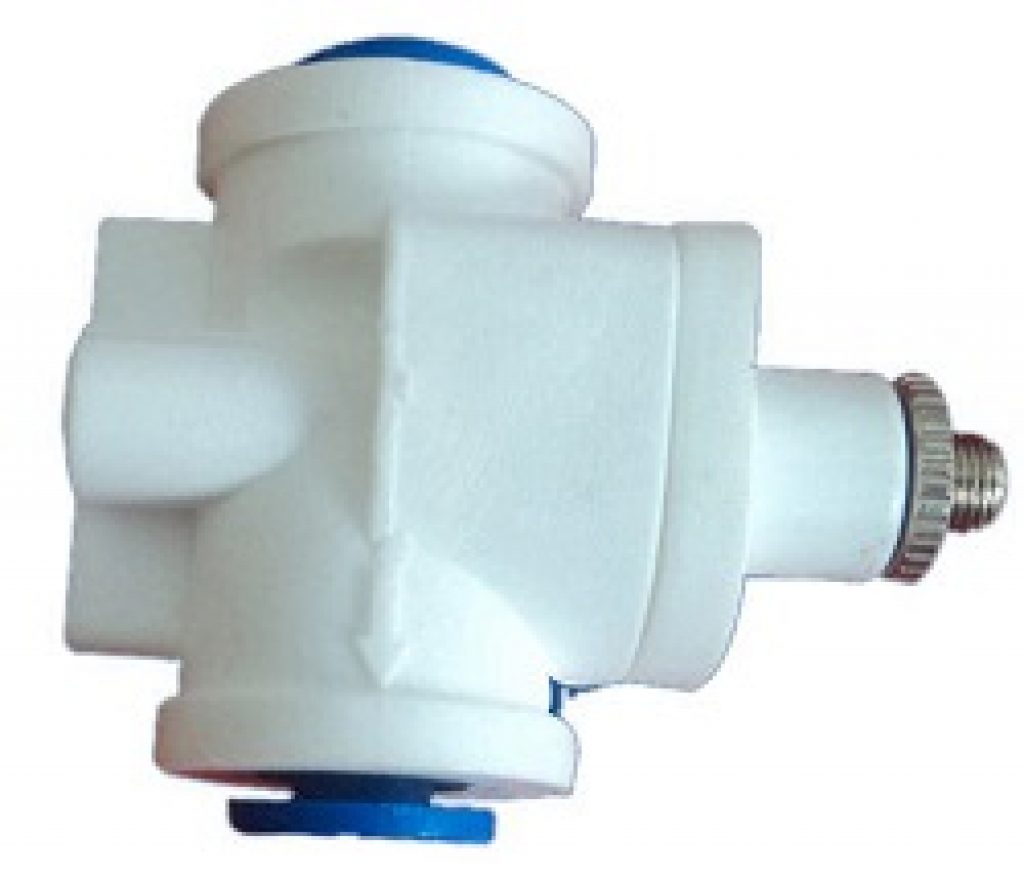
In simple terms, a TDS Controller or MTDS is a device that controls the TDS (Total Dissolved Solids) of water. Unlike the filters, cartridges, and membrane(s), TDS Controller does not filter or purify the water in any way.

The image above shows a typical TDS controller, as you can see this is a small device. This is quite inexpensive and costs roughly around Rs. 50 only.

How TDS Controller Works?

TDS Controller or MTDS is basically a manual device that consists of two water inputs, one water output, and a TDS Control screw.
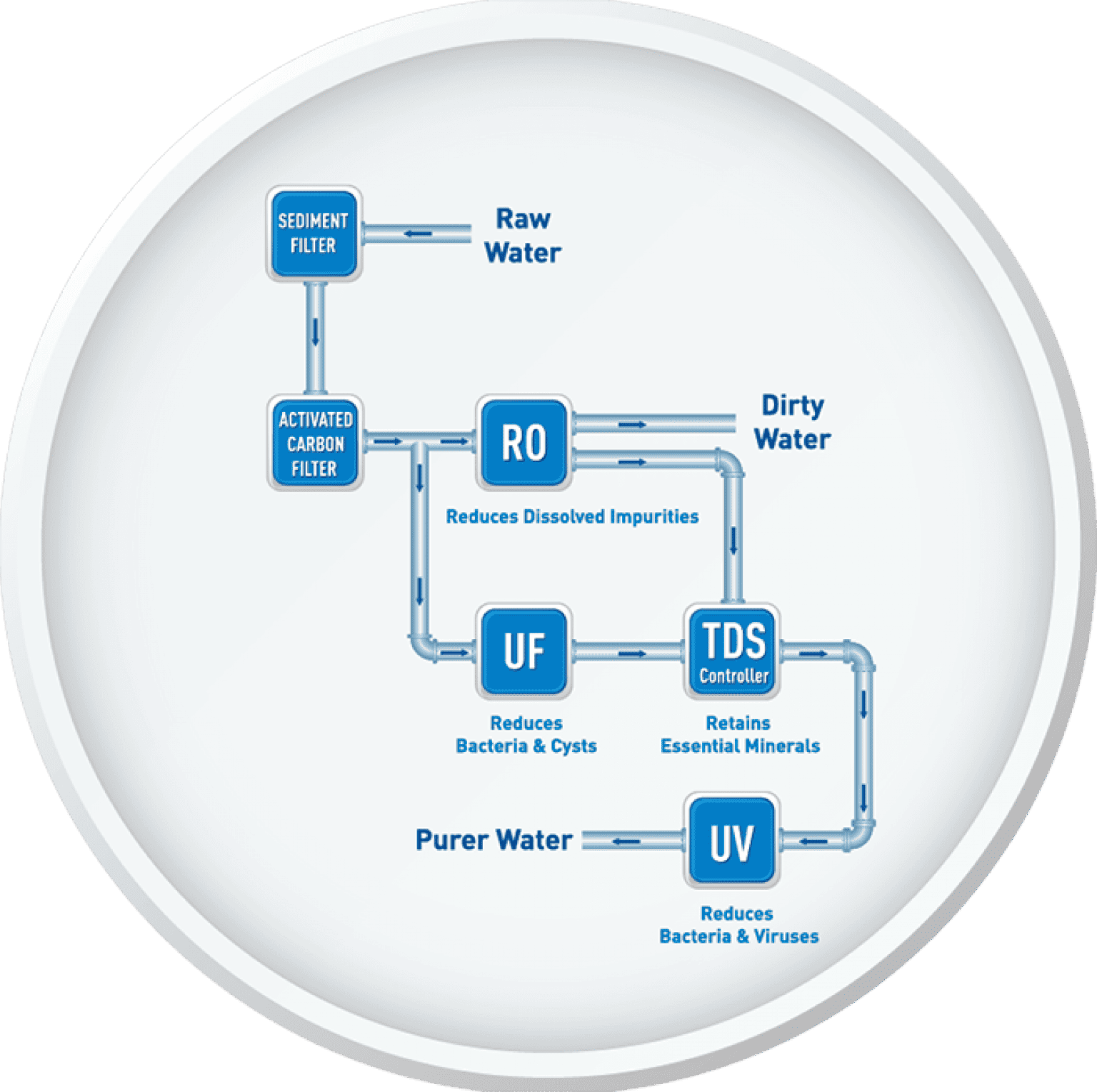
Water Input 1: Purified water output from the RO membrane

Water Input 2:
a) Purified Water from Activated Carbon Filter in case of RO+UV+TDS Controller Water Purifiers

OR

b) Purified Water from UF Membrane in case of RO+UF+UV+TDS Controller or RO+UF+TDS Controller Water Purifiers

Water Output: Mix of two water inputs in the required ratio.

TDS Control Screw: TDS Control screw controls the TDS value in output water by manually adjusting the flow of water from the two water inputs.

I) If TDS needs to be reduced then the flow of input water from the RO membrane is increased and the flow of input water from the Activated Carbon Filter or UF membrane is reduced.

II) If TDS needs to be increased then the flow of input water from the RO membrane is reduced and the flow of input water from the Activated Carbon Filter or UF membrane is increased.

Simply, Turn the screw clockwise to reduce the TDS level or anti-clockwise to increase the TDS level.
Please note, in most RO purifiers, TDS Controller is located inside the assembly along with all other RO parts. So for adjusting the TDS level, you will have to first open the outer cover.

However, if you are not comfortable doing this, we recommend getting this done by a trained professional.

Recommended TDS Level in Drinking Water?

You should adjust the TDS controller such that the TDS level of purified water is between 80 to 150 ppm.

Must Read

Need and Benefits of TDS Controller?

Natural water contains several essential minerals like Calcium, Magnesium and may also contain harmful impurities like heavy metals, fluorides, and arsenic.

These minerals and heavy metals are what constitute ‘Dissolved Solids’ in water. The level or the presence of these Dissolved Solids in water is commonly referred to as the TDS (Total Dissolved Solids) level of water.

The presence of minerals like calcium and magnesium in small quantities is what makes the drinking water healthy and it is very essential that the drinking water contains these minerals.

RO Membranes usually remove around 90% of dissolved solids from the input water, and that includes essential minerals.

What this essentially means is, if the input water does not have high TDS then chances are the RO Membranes will reduce the level of essential minerals to a significantly low level making the water unhealthy and not fit for drinking.

Relevant Link

Worried about the side effects of RO water on your health?

This is where the role of the TDS Controller comes into effect. As detailed above, in such a scenario when theowaterpur TDS level of the input water is not so high, TDS Controller can be used to increase the TDS of purified water to a healthy level.

The TDS Controller is basically used to increase the level of essential minerals in the purified water.

TDS Controller: Can it be Harmful?

In our opinion, the TDS Controller or MTDS is not an ideal way to add essential minerals to purified water. In RO purifiers with a TDS controller, 100% of the input water does not pass through the RO membrane.

Mixing RO purified water with non-RO purified water may result in the presence of several harmful heavy metals like lead and arsenic in the purified water, as these impurities can only be removed by an RO membrane.

Should you Buy an RO with TDS Controller or MTDS?

Keeping all the above discussion in mind, you should only consider buying an RO purifier with TDS Controller or MTDS if:

• The TDS Level of input/raw water is low (lower than 900 ppm).
• Water does not contain heavy metals like lead and arsenic.

If the TDS level of the raw/input water is high (higher than 900 ppm) or if the water contains harmful heavy metals then you should not choose an RO purifier with TDS Controller.

 The above recommendation is given on the basis of the RO membrane reduces the TDS level by 90%. The lower and higher TDS level limits will change if the RO membrane reduces the TDS level by more or less than 90%.

Be sure to check the specifications of the RO membrane before deciding to buy an RO purifier with TDS Controller or without TDS Controller.

Which Water Purifier with TDS Controller to Choose?

Now, if you have zeroed in on buying an RO purifier with TDS Controller then the following table will help you in finding the perfect match for your home.
TDS LEVEL    IS WATER MUDDY?    PRESENCE OF BIOLOGICAL IMPURITIES?    IDEAL CHOICE
500 – 900 ppm    No    No    RO+TDS Controller/Mineralizer
500 – 900 ppm    No    Yes    RO+UV+TDS Controller/Mineralizer
500 – 900 ppm    Yes    No    RO+UF+TDS Controller/Mineralizer or RO+UV+UF+TDS Controller/Mineralizer
500 – 900 ppm    Yes    Yes    RO+UV+UF+TDS Controller/Mineralizer
Over 900 ppm    No    No    RO
Over 900 ppm    No    Yes    RO+UV
Over 900 ppm    Yes     No    RO+UF or RO+UV+UF
Over 900 ppm    Yes     Yes     RO+UV+UF

Is there any Better Alternative to TDS Controller?

There are now better technologies available to add back the essential minerals removed by RO purification.

RO purifiers with Mineralizer cartridges are a much better option as compared to RO purifiers with TDS Controllers. Because in RO purifiers with Mineralizer feature, 100% of the water passes through the RO membrane. This removes any possible chances of harmful dissolved solids and heavy metals accidentally entering your drinking water.

The next section talks about Mineralizer, the difference between TDS Controller and Mineralizer, and which one is better.

What is Mineralizer or Mineral Cartridge?

RO Membrane does not differentiate between the good particles and the bad particles/impurities. And this is one of the disadvantages of using an RO purifier.

RO also removes essential minerals like calcium and magnesium from the water, so we need some way to add back the minerals removed during RO purification.

One way of doing that is by using a TDS Controller/Modulator, we have already discussed this in detail above.

Another, slightly more effective, way to add essential minerals is ‘Mineralizer or Mineral Cartridge’.

Mineralizer or Mineral Cartridge adds back essential minerals like Magnesium and Calcium in the proper concentration and helps in maintaining proper PH and Acid-alkaline balance in the water.

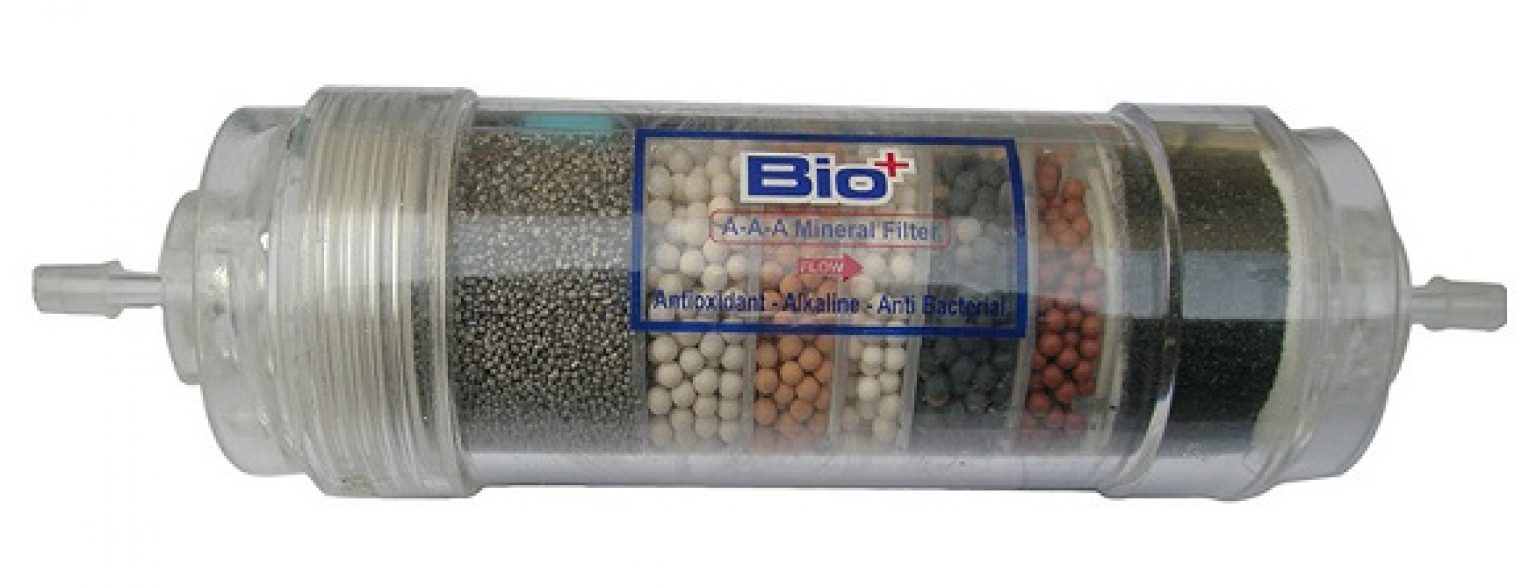
Below is an image of a typical mineral cartridge:

As you can see in the image above, the mineralizer (AKA Mineral Cartridge) consists of several types of particles. Water passes from one end to the other and several essential minerals are added, and the acidic nature of water is reduced by balancing the PH value.

Difference Between TDS Controller and Mineralizer?

TDS CONTROLLER/MTDS:    

  • 100% of the input water is not passed through RO Membrane.
  • Not ideal for water containing harmful heavy metals like lead and arsenic.
  • TDS Levels of purified water can be increased or decreased.
  • Small and costs very little.

MINERALIZER/MINERAL CARTRIDGE:

  • 100% of the input water is purified by RO Membrane.
  • Since 100% water passes through RO purification, heavy metals like lead and arsenic are removed.
  • No option to control the TDS level of purified water.
  • The size is the same as regular filters and cartridges used in RO purifiers, costing over Rs. 500.

Mineralizer or TDS Controller, Which One is Better?

Both Mineralizer and TDS Controller features are quite useful and provide excellent benefits if used appropriately.

If the water supply contains industrial impurities like lead and arsenic then you should avoid buying an RO purifier with TDS Controller. Apart from that, RO purifiers with TDS Controllers work well in most scenarios.

RO purifiers with the Mineralizer feature can be used for water infected with lead and arsenic but these purifiers have no option to adjust the TDS level as per your requirement.

So, the answer to the question ‘Whether to choose an RO purifier with TDS Controller or Mineralizer’ would actually depend on the factors like the presence of industrial impurities and your choice.

However, we feel RO purifiers with the mineralizer feature have a little upper hand as compared to the RO purifiers with the TDS Controller feature.