Singapore Haze Reaches ‘Very Unhealthy’ Category

Air quality in western Singapore deteriorated to the “very unhealthy” category on Tuesday, October 20, 2026, due to transboundary haze from fires in Kalimantan and Sumatra. Singapore’s National Environment Agency (NEA) warned that the risk of severe haze persists, while the pollution index is expected to remain at “unhealthy” to “very unhealthy” levels through Sunday.

NEA data showed the 24-hour Pollutant Standards Index (PSI) ranged from 129 to 212 at 11:00 p.m. The highest readings were recorded in the western region, while hourly PM2.5 readings reached 185 in the west, 113 in the central region, and 133 in the south of Singapore.

For most of Saturday, all three regions were in the “high” category, with PM2.5 concentrations ranging from 151 to 250 micrograms per cubic meter. At 11:00 a.m., only the western region fell into that category, with a reading of 158.
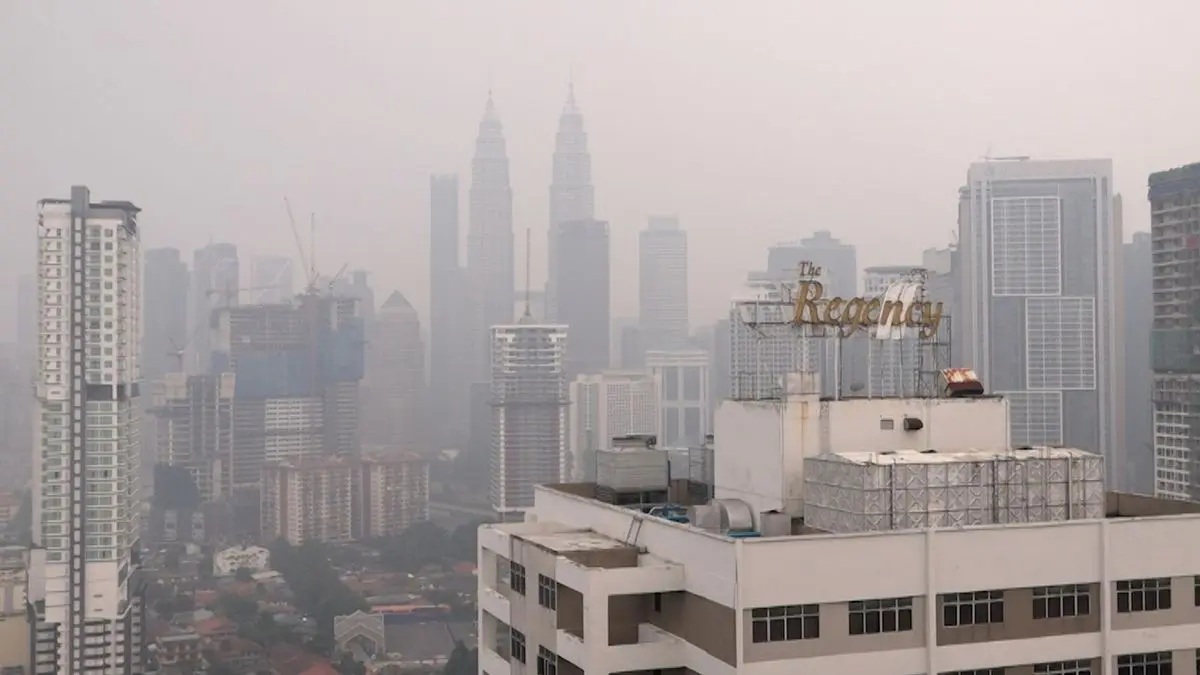
Conditions have improved compared to Friday, when the PSI reached 229—the highest level this year—and entered the “very unhealthy” category. However, the NEA warned that dry weather conditions in parts of the southern ASEAN region could keep the risk of haze high in the coming days.

In its haze update on Saturday night, the NEA stated that winds from the southeast were still carrying smoke from fires in Kalimantan toward Singapore. The agency also observed the presence of haze over Sumatra.
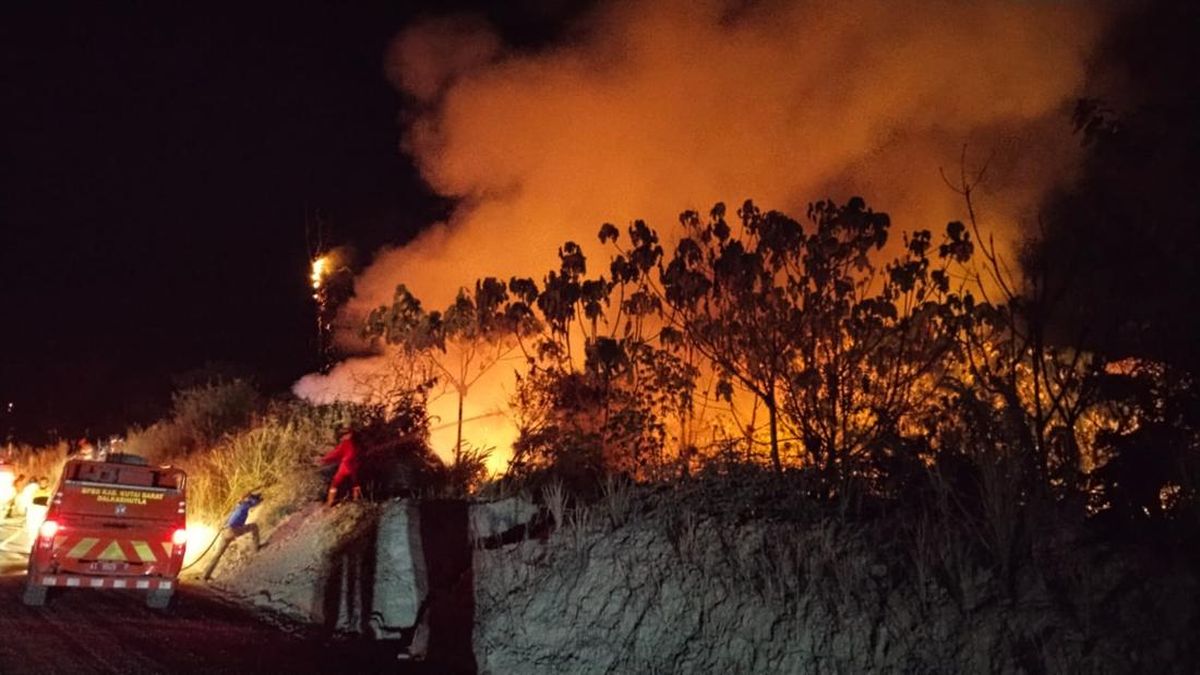
The NEA forecasts that winds on Sunday will shift to blowing from the southeast or south. This change in wind direction has the potential to reduce the movement of haze from Kalimantan, although smoke from Sumatra may still reach Singapore.

Rain is also expected in Singapore and the surrounding areas on Sunday. The NEA noted that additional rain is likely on Monday and Tuesday in Singapore and parts of Kalimantan, while winds are expected to gradually weaken and shift to a southeasterly or southerly direction.

These weather changes are expected to further reduce the movement of smoke from Kalimantan toward Singapore. However, haze from Sumatra could still be carried by the wind to the country.

The haze has also impacted daily activities. All ActiveSG sports facilities resumed operations on Saturday after being closed the previous day due to air quality conditions.

On the other hand, uncertainty surrounding the haze conditions has prompted organizers to cancel or postpone a number of outdoor events. The FA Cup soccer final and third-place match, scheduled for Saturday, were among the events affected.

The Great Eastern Women’s Run, originally scheduled for November 1, has also been canceled. Meanwhile, The Purple Parade, an annual event celebrating the abilities and contributions of people with disabilities, has been postponed until the first half of 2027.

The Singapore Ministry of Health (MOH) advises the public to use hourly PM2.5 readings as a guide to determine the need to wear masks when engaging in outdoor activities. The 24-hour PSI index is not the primary reference for these immediate protection decisions.

MOH advises vulnerable groups—including the elderly, pregnant women, and people with chronic heart or lung conditions—to avoid outdoor activities when hourly PM2.5 levels are in the “high” category, ranging from 151 to 250. If they must go out for urgent matters, they should wear a snug-fitting N95 mask or an equivalent mask to reduce exposure to haze particles.

When PM2.5 levels reach the “very high” category—251 or higher—even healthy individuals are advised to minimize all outdoor activities. The MOH states that N95 masks are generally not required when commuting between home and school or work, or when indoors.
 

Understanding the Science Behind Hydrostatic Water Storage Tanks

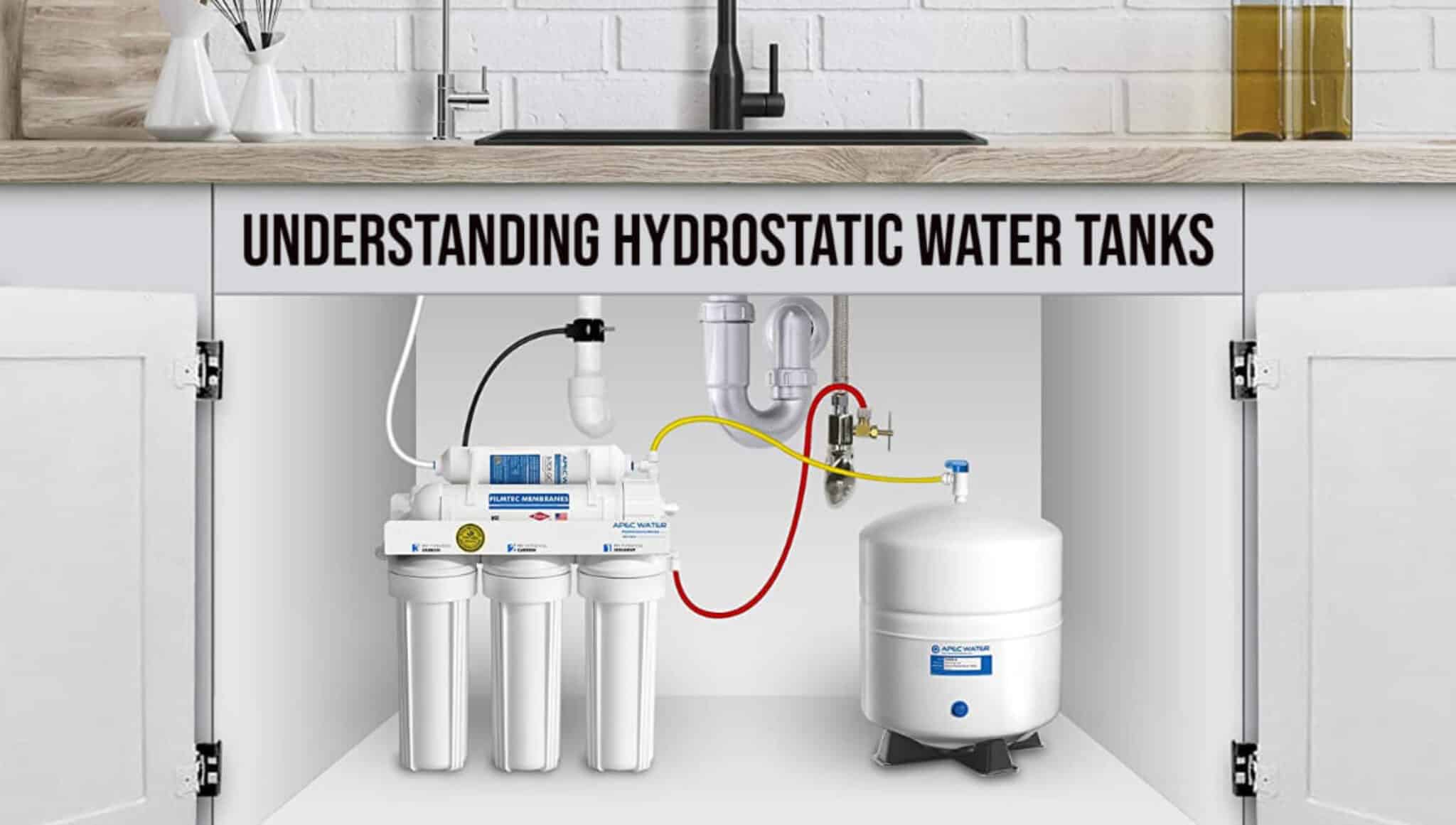
Hydrostatic water storage tanks are unique storage tanks used in under-sink RO water purifiers.

But what exactly is a hydrostatic water storage tank, and how does it work?

In this blog post, you’ll dive deep into the basics of hydrostatic or hydropneumatic water storage tanks and how they operate and explore some of the benefits of using this type of water storage solution in water purifiers.

Whether you’re looking to buy a new under-sink water purifier or currently own one, this post will provide valuable insights and information on hydrostatic water storage tanks.

What is a Hydrostatic Water Tank?

As stated above, hydrostatic water tanks are commonly used in under-sink water purification systems. That’s why they are generally referred to as under-sink RO tanks.

These tanks are typically made of stainless steel or any other corrosion-resistant material and are equipped with a bladder that separates the water from the air inside the tank. The pressurized air in the tank helps to push the water out of the tank and to the faucet.

You’ll see how exactly these under-sink RO tanks work in the following section of the post.

One of the main advantages of using a hydrostatic water tank in a water purification system is that it allows for a consistent flow of purified water.

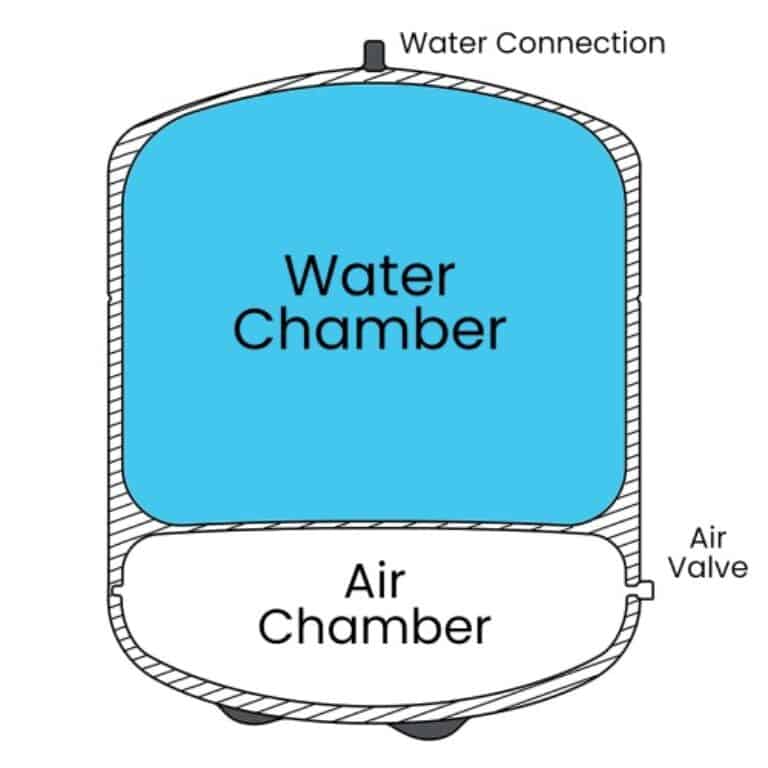
In addition to holding purified water, hydrostatic water tanks also have other features, such as an air valve for repressurizing the tank. These features help to ensure the safety and reliability of your under-sink RO system.

Generally, these storage tanks come in cylindrical shapes. However, they come in varying capacities and sizes. The size of the tank depends on its storage capacity.

How Do Hydrostatic Water Storage Tanks Work?

Hydrostatic water tanks use air pressure to supply purified water stored in the tank to the faucet above your sink.

Hydrostatic tanks have two separate chambers, an air chamber and a water chamber, divided in the center by a bladder or diaphragm.

As the storage tank fills with purified water, the weight of the water pushes this bladder down into the air chamber and compresses that air.

As that air compresses, it increases the pressure inside the tank. This pressure pushes the purified water out of the tank and to your faucet.

Without this air chamber, the tank would fill up, but the water would not reach the faucet. Or we’ll have to install a pressure pump, in which case the water would not come out in absence of electricity.

Hydrostatic water storage tanks provide you with purified water without needing any electricity or a pressure pump.

On the smaller tanks, the water is on the top and the air chamber is on the bottom.

Bigger tanks, on the other hand, have water at the bottom and an air chamber at the top. This is so because of the excessive weight of water.

The tank is equipped with a float valve that helps to maintain the proper water level in the tank. The float valve works by opening and closing the water flow into the tank as the water level in the tank rises and falls.

Did You Know?

Hydrostatic water tanks do not store as much water as claimed.

Yes, that’s true.

The mentioned storage capacity is the total volume of the under-sink storage tank.

But as you have seen above, hydrostatic water tanks have an air chamber.

So,
Tank’s actual water storage capacity= Total Tank Volume – Volume of the Air Chamber

Roughly speaking, an 8 liters storage tank, may only hold around 5 liters of water.

Common Issues with Under-Sink RO Water Tanks and Their Solutions

Why there is No or Very Little Water Coming Out of the Faucet?

There can be two reasons behind this problem –
i) The RO system is not working fine because of which it is producing very little or no purified water.
ii) The hydrostatic tank is not working as it should

But how do you find that?

Finding the problem with your RO system is quite easy. All you have to do is, check the output of water by disconnecting the pipe that goes from the last filter to the storage tank. If there is no flow or water is coming drop by drop, then the issue is with your RO system. Call the service engineer.

If the water output is normal, then it is the hydrostatic tank that is creating the problem.

Over a period of time, the air will naturally leak out from the air chamber, resulting in lower pressure inside the tank. This will reduce the flow of purified water from the faucet.

This is a natural phenomenon, and all tanks will face this issue over time.

How Do You Increase the Air Pressure of the Hydrostatic Tank?

All hydrostatic water tanks feature an air valve, just like the one on your bicycle tyre. And you can fill the air in the tank just like you would inflate your bicycle tyre.

Here is how you do it.

Before you start adding air to the tank, switch off your RO system and open the faucet and run the water until the tank is empty.

Leave the faucet open.

Now remove the cap on the air valve and connect the bicycle pump to the valve. Slowly pump air into the tank. You will notice some water coming out of the faucet.

Close the faucet when the tank is completely empty. Now slowly add air into the tank and check the air pressure with a pressure gauge.

The pressure should be around 7 psi. This is the recommended air pressure for most under-sink purifier tanks.

Please note that the air pressure should not be more than 7 psi.

When Do You Need to Replace Your Hydrostatic Tank?

Hydrostatic tanks used in under-sink RO purifiers are made to last for a very long duration. Most tanks last for as long as 10 years or even more.

But like all equipment, they too can develop problems over time.

If the RO system is working fine but the faucet does not dispense any water even after adding back the air pressure in the tank, then it is a clear sign that the tank needs to be replaced.

Also, if you notice water leaking from the air valve when you refill the air or test the pressure, that is also a clear sign that the bladder separating the water and air chamber within the tank has failed. This cannot be repaired, and you will have to replace the tank.

Do You Need to Clean Under-Sink RO Tanks?

Yes, like all wall-mounted RO purifiers, the hydrostatic tank of your under-sink water purifier also needs to be cleaned.

And you must at least clean the RO tank every 6-12 months. This will clean all the slime that builds up over time and ensures the purity and safety of the water you drink.

Wrapping Up

In conclusion, the ability of hydrostatic tanks to use air pressure to maintain a constant water flow makes them a valuable addition to all under-sink water purifiers. Hydrostatic tanks are as important a part of under-sink water purifiers as an RO membrane.

Hope this post has provided you with all the information about hydrostatic water tanks.

If you have any specific query that is not answered above, please leave a comment below and we’ll be happy to revert back in the next 24 hours.

Thank you for reading.

What is Kent’s Zero Water Wastage RO Technology & How It Works

Did you know conventional RO purifiers can waste as much as 70-80% water?

Shocked?

This is unfortunate but that’s the sad truth.

Saving every drop of water is our collective responsibility and this can’t be ignored at any cost.

In a country like ours, where water shortage is a major problem, there can be no justification for such wastage.

Taking note of the unnecessary use of RO purifiers, the National Green Tribunal (NGT) passed an order, in December 2021, banning the use of RO purifiers in areas where the TDS level is below 500 ppm. The NGT further asked the Government of India to make it mandatory to recover more than 60% of water wherever RO is permitted in the country.

Our View

Reverse Osmosis or RO purification is not bad. There is no study, but this effective water purification technology must have saved millions, from waterborne diseases, across the globe.

RO purification is considered the most effective and safest form of home water purification.

The problem is not the technology but its unnecessary use.

Due to a lack of consumer awareness, RO has become the default water purification choice.

But the truth is, that most Indian homes do not need RO purification. Especially the ones where the source of water is municipal water supply.

RO purifiers should only be used where the TDS level is above 500 ppm or if the water source is known to be contaminated with heavy metals like lead, arsenic, fluoride, etc.

Before the official ban, the NGT, in its order dated May 20, 2019, requested the Ministry of Environment and Forests to not only frame rules for the manufacturing and sale of RO purifiers but also to ban RO use in areas with low TDS levels.

Understanding the gravity of the situation and the impact of the formal ban on their businesses, many brands started working on addressing the problem.


Be inspired and motivate others to save water with these catchy slogans on water conservation.

Some brands have made a lot of progress in addressing the problem of the huge wastage of water by RO systems.

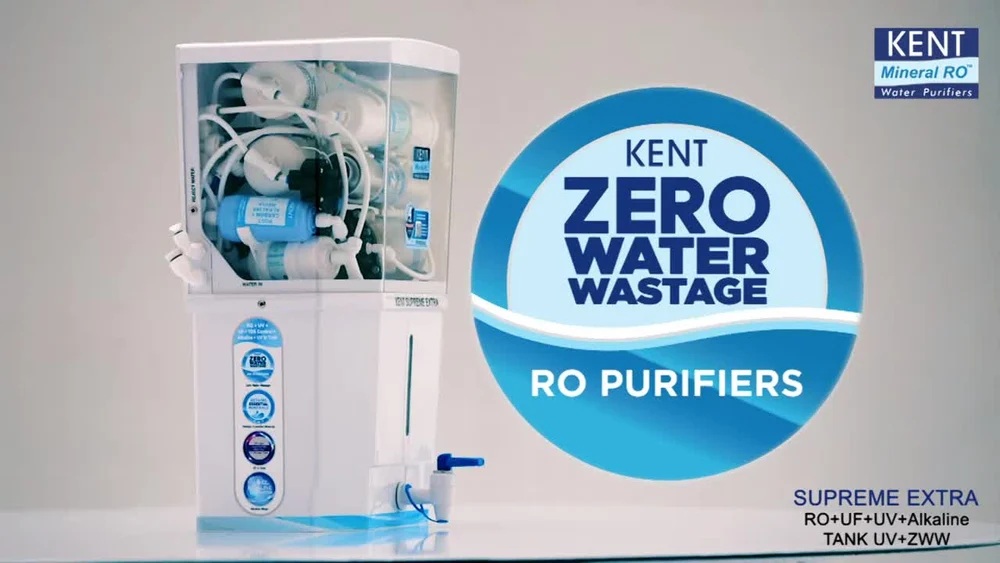
Taking the lead, Kent, the leader of the Indian water purification industry, introduced their first ‘zero water wastage’ RO purifier in December 2019.

What is Kent’s Zero Water Wastage Technology?

Most people, when they first hear about the term ‘zero water wastage’ RO, think that this technology does not produce any RO waste water.

No, that’s not true. Frankly speaking, that is just not possible because of how Reverse Osmosis (RO) technology works.

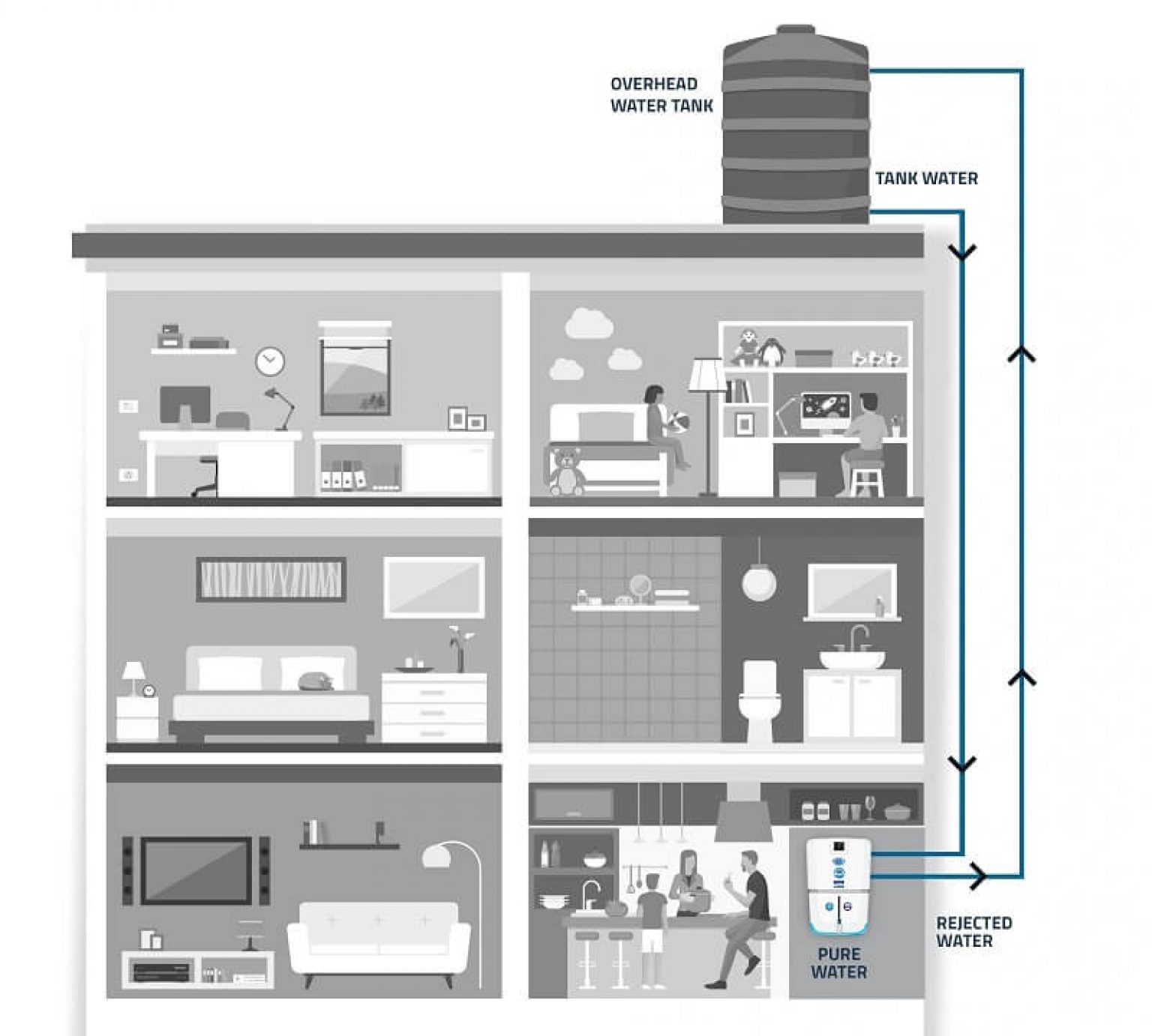
Kent’s zero water wastage technology simply provides you with an easy and automated way to reuse the RO reject water by pushing it back to the overhead tank (Pani ki tanki).

How Kent’s Zero Water Wastage Technology Works

If you have used an RO purifier before then you are already aware that all RO purifiers have a separate pipe for waste or reject water.

In most cases, this wastewater goes down the drain and is wasted.

To find a solution to this problem, Kent came up with an innovative idea.

To save the RO waste water, Kent added an additional pump in their RO purifiers.

This pump sends back the rejected water to the overhead water tank. Instead of sending the reject water down the drain, it gets mixed with water in the overhead tank. This water is reused as normal water for household purposes.

This ensures not a single drop of water is wasted.

Take a look at the image given below for a better understanding of the process.

Zero Water Wastage Process

The internal pump might seem small but it is highly powerful. It can push the wastewater to a height of up to 10 stories.

This technology might not be that practical if you are living in a multi-story apartment building, because such buildings generally have one large common tank. In most cases, for various reasons, you don’t have permission to push the RO reject water back into the tank.

However, this technology will prove very beneficial if you are living in an independent house that has its own overhead water tank.

Myths About Zero Water Wastage Technology

It will increase the TDS level of water in the overhead tank?

No, it won’t.

Depending on the size/capacity of your overhead tank and your daily drinking water requirement, the RO purifier normally uses just 3-7% of the water in your overhead tank.

This means that the RO reject water that goes back to the overhead tank is just 2-5% of the total water in the overhead tank.

The RO reject water gets mixed with overhead tank water. And since the overhead tank gets fresh water supply daily, you won’t notice any significant increase in the TDS level of the overhead tank water.

The RO reject water is much better in quality as compared to the raw water supplied to your home. This is so because the rejected water has already passed through multiple filtration stages like pre-filter, sediment filter, and pre-carbon filter. This means the rejected water is free from all the dust, mud, sand, and chlorine.

It will reduce the life and efficiency of the membrane and filters.

As we have seen above, the zero water wastage technology does not have any significant adverse impact on the quality of water in the overhead tank.

The overhead tank water gets a fresh water supply every day so there will be no negative effect on the life of the membrane and filters of the RO purifiers.

Some Zero Water Wastage RO Purifiers from Kent

  • KENT Supreme Extra
  • Kent Grand Plus
  • Kent Prime Plus

Can this Technology be Used in Existing Kent ROs?

Yes, that’s the best part. To make use of this environment-friendly technology, you don’t need to buy a new Kent RO. Kent offers an upgrade kit using which you can turn your existing RO purifier to ‘Zero Water Wastage’ RO.

Saves Water & Your Money

Bonus Tip

How to Achieve Zero Water Wastage in any RO?

You can achieve zero water wastage with all RO purifiers. You don’t necessarily have to buy a new Kent RO for that.

However, Kent’s new technology makes the process automated and a lot easier.

To achieve zero water wastage, you need to follow two easy steps.

  1. Store – Instead of sending the RO reject water down the drain, store it in a separate storage tank for other uses.      
  2. Re-use – Use this stored water for washing utensils, floor mopping, gardening, cleaning & flushing your toilet, etc. You may want to read our detailed post on reusing RO-reject water.