What is TDS in Water, it’s Health Effects and How to Reduce the TDS Level?

TDS (Total Dissolved Solids) represents the total concentration of all the dissolved substances in water.

TDS in water comprises inorganic salts and a small amount of organic matter.

Common inorganic salts that can be found in water include calcium, magnesium, sodium, and potassium, which are all cations, carbonates, bicarbonates, chlorides, nitrates, and sulfates, which are all anions. Cations are positively charged ions and anions are negatively charged ions.

The most important thing to note here is that the impurities, like dust, dirt, mud, and rust, do not constitute Total Dissolved Solids. This is because these impurities remain suspended (or settle at the bottom) in water and do not dissolve.

Dissolved solids can easily pass through a filter with 2-micrometer (or smaller) pores. But the suspended/settleable solids can be easily filtered out with such a filter.

From Where Do these Dissolved Solids Come in Water?

TDS in water supplies can originate from both natural sources and as a result of human activities. Sewage, agricultural and urban run-off, and industrial wastewater are the most common sources of Total Dissolved Solids in water.

Rivers flowing through mountains contain water with high levels of dissolved solids because the water flows through rocks that have mineral deposits and high salt content.

The most common dissolved solids are calcium, magnesium, phosphates, nitrates, sodium, potassium, and chloride. Mostly found in groundwater and river water, these are naturally occurring and are harmless for the human body.

However, some constituents of TDS like pesticides, lead, arsenic, and fluoride can be very harmful to human health. These constituents enter water as a result of human activities like sewage, agricultural and urban run-off, and industrial wastewater.

Why Do you Need to Measure Total Dissolved Solids?

Because testing the level of TDS in your water is the easiest way to analyze the overall quality of your drinking water.

Although there is no proof of any negative health effect of high or low TDS levels, it is used as an indicator of the presence of a broad array of chemical contaminants.

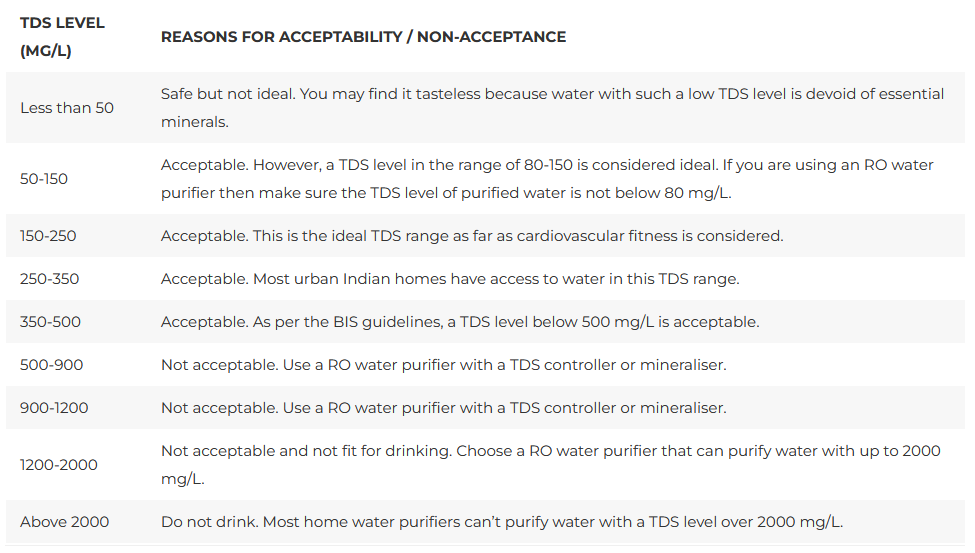
The Bureau of Indian Standards (BIS) has set the acceptable limit of TDS in drinking water at 500 mg/L.

Drinking water, with TDS levels higher than 1000 mg/L, is generally considered unfit for human consumption. A high level of TDS is also a direct indicator of potential concerns and calls for a thorough analysis.

Mostly high levels of TDS in drinking water are a result of the high concentration of minerals like calcium and magnesium. These minerals have little or no short-term health effects. But harmful and toxic contaminants like lead, arsenic, cadmium, nitrate, and others, have a serious effect on your health.

If you are living near highly polluting industrial zones and agricultural regions with a long history of using chemical fertilizers and pesticides, then there is a very high probability of these toxic contaminants mixing with the water source.

In such a case, apart from testing the TDS level of the water, you should also get your water tested in a laboratory for finding the presence of any harmful or toxic contaminants.
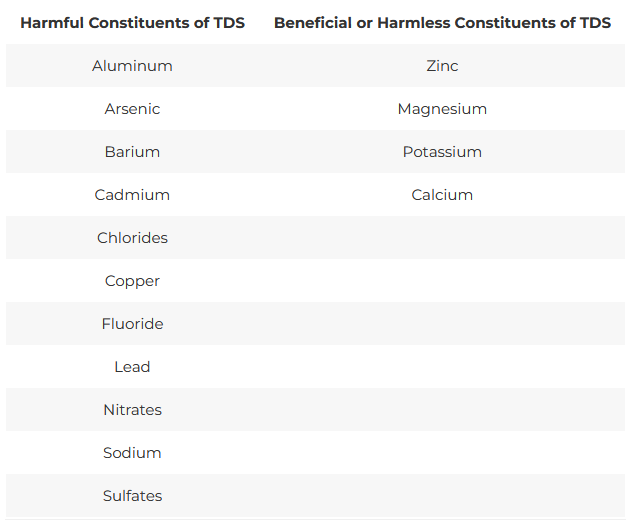
In areas where the TDS content of the water supply is very high, the individual constituents should be identified and the local public health authorities consulted.

What Happens to the Water When TDS is High?

a) The high concentration of dissolved solids in water causes water filters to wear out sooner. If the water at your home has high levels of TDS then you will have to replace the filters and membranes more frequently as compared to homes that have low TDS water.

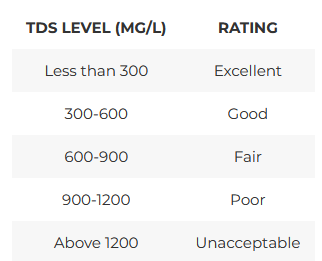
b) A high level of TDS in water makes the water taste bitter and salty. In a study conducted by the World Health Organization (WHO), the palatability (acceptable taste) of drinking water has been rated by panels of tasters in relation to its TDS level as follows:
c) Bathing with high TDS water makes your skin rough and dry. It also damages your hair making them rough and dry, causing dandruff and hair fall.

d) Calcium and magnesium, two minerals commonly found in TDS, can cause water hardness, scale formation, and staining. High levels of minerals in water lead to scaling on bath fittings, water pipes, water heaters, and household appliances.

e) The high TDS level makes water hard. Apart from drinking, hard water poses several other challenges like soaps and detergents do not produce as much lather.

Are you worried about the excessive dryness of skin and sudden hair fall or dandruff? Chances are it is because of the calcium and magnesium minerals that make your water hard. Changing your soap or shampoo is not the solution. The solution is quite simple, you need to use a hard water softener for your bathroom. Hard water softeners are small, affordable, and easily fit on any tap or showerhead. We have written a detailed post on how hard water softeners can bring back the softness and shine of your skin and hair. This post also covers the best water softeners reviewed by our experts.

Health Effects of High TDS in Drinking Water

It is a widely known fact that high levels of TDS in drinking water can give water a bitter or salty taste, but it is not harmful to your health. In fact, minerals like calcium and magnesium, which are often the reason behind high TDS levels, are actually beneficial to your health.

However, if the TDS level of your drinking is above 500 PPM then it is recommended that you get the water tested for harmful impurities like lead, arsenic, mercury, fluoride, etc.

A high TDS level is usually not a health hazard as long as the dissolved solids are essential minerals and not harmful heavy metals and chemicals.

No health-based guideline value is proposed for TDS. However, drinking-water guidelines are available for some of its constituents, including lead, arsenic, cadmium, fluoride, nitrate, etc.

If you suspect or if the laboratory tests point to the presence of lead, arsenic, mercury, fluoride or other harmful impurities then you should use a multi-stage RO water purifier.

You may want to look at the top RO water purifiers for purifying high TDS water.

Is Low TDS Water Harmful?

Water with an extremely low level of TDS is undesirable for most consumers because of its flat, dull taste.

Also, demineralized or very low TDS water is not suitable for athletes and people with highly active lifestyles. But for most people, drinking water with a low TDS value doesn’t pose any health concern.


Useful read – Is 25 TDS Safe for Drinking Water?

Water is not the only source of essential minerals like calcium and magnesium. The food that you eat also contains these minerals. Your body’s mineral requirement can be easily fulfilled by the food that you eat.

Apart from the dull taste, water with excessively low TDS is more corrosive and can leach harmful metals such as lead or copper from plumbing pipes and hardware.

Drinking water with moderate amounts of TDS is the best. Water with moderate TDS tastes better than water with very low or very high TDS levels.

What are the Guidelines for TDS in Drinking Water in India?

World Health Organization (WHO) report on TDS in drinking water points out that reliable data on possible health effects associated with TDS in drinking water is not available.

No health-based guideline value is proposed for the ideal TDS of drinking water. Because TDS in water can be high because of many factors so, in areas where the TDS content of the water supply is very high, the individual constituents should be identified.

The Bureau of Indian Standards (BIS), the organization that defines the drinking water quality guidelines in India, has set the acceptable limit of TDS in drinking water at 500 mg/L. However, the guidelines also mention that in case no alternative source of drinking water is available, then this acceptable limit can be relaxed to 2,000 mg/L. The BIS report also mentions that if the TDS level of the drinking water is higher than 500 mg/L then this may result in a decrease in palatability (acceptable taste) and may cause gastrointestinal irritation.
How is TDS Measured?

There are two methods of measuring Total Dissolved Solids in water: gravimetric analysis and conductivity.

Gravimetric Method

The gravimetric method is the most accurate but it is time-consuming. In this method, the liquid solvent or water is evaporated and the weight of the remaining residue is measured to calculate the TDS level. This method is ideal in case of high TDS concentrations and if inorganic salts constitute the majority of TDS.

Electrical Conductivity

Electrical Conductivity is the most popular and also the easiest method to find out the TDS of drinking water. The electrical conductivity of water is directly related to the concentration of dissolved ionized solids in the water. TDS meters work on the same principle of conductivity. Although this method is not accurate as the gravimetric method, it is definitely the quickest and easiest way to find out an approximate value for the TDS level in the water.

You may like to check our detailed post on how to check the TDS level of water at home.

How to Reduce or Remove TDS in Water?

There are 3 major ways to reduce or remove TDS in water:

Reverse Osmosis (RO)

Reverse Osmosis or RO purification is the most popular water purification technology to get rid of excessive dissolved solids in the water. RO process removes virtually all dissolved impurities, including essential minerals and harmful heavy metals like lead and arsenic.

The process uses specially designed RO membranes with a pore size as small as 0.0001 microns. The small pore size only allows water molecules to pass through and filters out every other impurity. Most RO membranes reduce the TDS level by up to 90-99%.

Distillation

Distillation removes contaminants through the same process used in nature, evaporation. The process involves boiling water to produce steam or water vapor. As water is boiled, water evaporates in form of steam but the dissolved solids are unable to evaporate. The steam rises to a cool surface, and once the steam cools down it condenses back into the liquid form.

Deionization

The Deionization process removes total dissolved solids through ion exchange. The process uses specially manufactured ion-exchange resins to exchange water ions with charged ions or dissolved solids. Deionization produces highly pure water that is very similar to distilled water. The advantage of deionization over distillation is that the process is quicker and does not result in scale build-up.

For homes, Reverse Osmosis (RO) is the most often used technique for tackling the problem of high TDS in water.

Conclusion

Whether the TDS level is a cause of worry or not depends on the kind of minerals, metals, and chemicals that make up total dissolved solids in your water supply. Unfortunately, this is not as easy as finding the TDS level as it requires more advanced testing.

TDS is not the only indicator of how pure or contaminated your drinking water is. TDS is only one of several indicators of the purity of water. Water may contain a whole lot of contaminants like mud, dust, rust, sand, bacteria, viruses, cysts, and more.

The water purification technology you use depends on the source and quality of the water. For more details on how to find the best water purifier for your home, you should check the water purifier buying guide.
Top 6 Innovative Ways to Re-Use the Waste Water from RO Water Purifiers

Most Indian homes use RO water purifiers, but very few know about the side effects of using one.

This isn’t surprising. RO water purifiers provide reliable water purification, but they often lead to unnecessary wastage of water.

Should you stop using RO water purifiers?

OR

Stop worrying about the wastage of water?

Out of all the water purifier technologies, RO water purification is the most reliable. And if your home/office has high TDS water then you have no choice but to use an RO water purifier.

What if we tell you something that lets you enjoy the trustworthy RO purification without having to worry about the wastage of water?

You just need to know about some easy ways to re-use RO waste water, and then take action.

In this guide, we’ll go through six actionable ways to re-use RO waste/reject water to reduce water wastage.

But first, let’s go over the basics.

Why Re-Use RO Waste Water?

Using RO water purifiers not only gives us safe, clean and tasty water but also protects us from life-threatening waterborne diseases.

But there is one big drawback of using RO water purifiers i.e. the excessive wastage of water. An average RO purifier wastes approximately 3 litres of water for every 1 litre of purified water. That means only 25% of water is purified and 75% of water comes out as waste.

Wondering why so much water is wasted? Reverse Osmosis (RO) purifiers use membrane technology to filter dissolved impurities, the impure water is filtered out and is often called waste water or reject water. The percentage of waste water varies according to the RO purifier being used.

Because of the high level of impurities and dissolved solids, this reject water is not fit for drinking or bathing.

However, the RO waste water can be used in various ways to avoid the overall wastage of water in your home or office.

Before we check out how you can use this waste water, let’s look at some things to be kept in mind beforehand.

Things to Keep in Mind Before Using the RO Waste Water

It is best to determine the TDS level

To be 100% sure, if possible, the waste water should also be tested for the presence of inorganic and chemical impurities like Sodium.

In addition to the TDS level, a few websites and several videos on YouTube also suggest checking the pH value of the RO reject water. But there would hardly be any difference in the pH value of the input water and the RO reject water. So you need not worry about the pH value of the Reverse Osmosis waste water.

How to Store the RO Waste Water?

The easiest way would be to drop the reject pipe in a bucket. But if your daily drinking water requirement is 20 litres then on an average your RO water purifier would generate around 60 litres of waste water.

Assuming you are using a bucket of 15 litres, you would need to empty the bucket 4 times in a day. And the biggest pain is keeping a check on the bucket, so it does not overflow.

This may not be practical for a lot of users.

If you are one of those then worry not because we have a better solution for people like you.

You can extend the RO waste pipe and drop it in a big tank placed outside your kitchen. This stored water can later be re-used for one of the several ways listed below.

You can use a small submersible pump (like the ones used in water coolers) for taking water from this tank. All you have to do is drop the submersible pump in the tank and connect it to a power source.

You can then use a water pipe connected to the outlet of the pump to draw water from the tank without using any bucket or container. A bigger tank also means that you do not have to worry about the water overflow, as would be the case if you were using a bucket in place of a big tank.

The bucket, container or tank used for storing Reverse Osmosis waste water should have a wide opening so you can easily clean the deposits at regular intervals.

in the reject water before deciding to reuse for other purposes.

If the TDS level of the RO waste water is too high, then it might not be suitable for re-use in most of the applications given below.

6 Easy Ways to Re-use RO Reject Water

1. Wash Your Car

A single car wash could consume anywhere between 14 litres (for car wash using a bucket) to 75 litres (for car wash using a hosepipe) of water. Keeping in mind the scarcity of drinking water, using so much potable water for car wash seems unreasonable and no lesser than a crime.

We believe, washing cars every day not only wastes a lot of water but is unnecessary. If you are using an RO water purifier at your home or office then you can simply store the waste water in some tank or bucket and reuse it for washing your car. Water with a TDS level of 1200 – 1500 PPM can be safely used for car washing. If the TDS level of waste water is high you can mix tap water to dilute it. This should lower down the TDS level.

2. Watering Your Plants or Home Garden

If you are someone who loves gardening or have planted some plants in pots, the wastewater can be used for watering your plants to keep your indoor or terrace garden green. This tip is particularly useful for people living in urban areas as the TDS level in municipal water tends to be lower.

To be on the safer side, you can start with a few plants. Use the RO waste water for 15-20 days and check its effect on the growth of your plants. Each plant will respond to this change differently, which will give you a clear understanding of which plants are responding better to RO waste water. For gardening/irrigation use, a TDS level of up to 2100 PPM is permissible. You should also check out the percentage of Sodium, it should be less than 60 % ( 1.e. Na / Na + Ca + Mg). High Sodium content causes loss of soil porosity and therefore harmful to soil fertility in the long run.

3. Wash Your Utensils

Another useful application for Reverse Osmosis waste water is to wash your utensils. Simply store the waste water in bucket or tank, make sure you place the bucket for collecting RO waste water near your kitchen sink so it can be used easily when you clean your utensils.

We found this useful YouTube video that shows you how you can easily re-use the RO waste water in your kitchen for washing utensils.

4. Floor Mopping

Using the RO waste water for mopping the floor is easy and will definitely save tens of litres of clean water every day. If you have a bigger house then the savings could be in hundreds of litres every single day. If the TDS level of waste water is high (over 2000 ppm):

  • Dilute waste RO water with an equal quantity of tap water. Because plain Reverse Osmosis waste water with high TDS may stain or leave salt particles on the floor.
  • Use the RO waste water for floor mopping on alternate days. This will reduce the chances of any stains or salt deposits.

5. Pre-rinsing Laundry

You can use the RO waste water for daily laundry as well, but please keep in mind that using high TDS water might not be suitable for some delicate fabrics. Most of the Indian homes now use washing machines, though washing machines save a lot of time and effort but also result in a lot of wastage of water. You can create an overhead tank that collects the RO waste water and use the waste water from this tank directly in your washing machine (do keep in mind the fact about delicate fabrics)? This tip works best for semi-automatic & twin tub washing machines.

6. Cleaning and Flushing Your Toilets

Another big source of clean water wastage in modern homes is the use of toilet flush. Every single flush sends approximately 5 to 7 litres of potable water down the drain.RO waste water can be used effectively to reduce this wastage of clean water by using it to flush your toilets. When you start, always monitor your toilet seats for any discoloration on porcelain surfaces after a few days. With a periodical cleanup using common toilet cleaners, the chances of discoloration and salt deposits can be avoided.


Looking for an RO purifier that produces very little or no waste water? Check out KENT RO Water Purifiers. These purifiers use Save Water Technology which recovers up to 50% pure water and stores the rejected water in a separate tank.


Every year we read and listen to the news of farmers committing suicide because of droughts. And there are thousands and lakhs of families in our country who have to travel for miles every day to collect drinking water. If you are fortunate enough to be blessed with sufficient water supply, think of it as a privilege.

Do your bit by saving every drop of water. These small measures can really make a lot of difference because EVERY DROP COUNTS.

Top Proven Benefits of Drinking Right Amount of Water Daily

Water is the most easily available compound and is absolutely essential for bare survival. A human being can go without food for long periods of time but gives up within a week if left without water. So it is imperative to have water in the correct amount. Pure drinking water is the healthiest fluid you have access to pretty much all day long if you have a good water purifier at home and work.

Listed below are some of the basic but important advantages which show that water is the healthiest drink one can have.

Pure Water is the World’s First and Foremost Medicine. – Slovakian Proverb

Helps Prevent Cancer

Water has been found to help decrease the risks of cancer by a wide margin. For example, it helps reduce breast cancer, colon cancer (by around 45%) and bladder cancer (by 50%).

Clears Your Head

While the reasons are not known exactly, a study in London found that there is a link between students bringing water to the exam hall and better grades. Water has also been found to have a direct effect on moods, with dehydration leading one to become more grumpy and depressed and disoriented.

Helps You Perform Better

Water forms as much as 75% of our muscle tissues. This means that not drinking enough water can mess with the electrolyte balance, resulting in muscle fatigue. You should also stay hydrated during exercising. The American College of Sports Medicine recommends consuming 17 ounces of liquid up to 2 hours before you begin exercising. And always take care to replace the body fluid lost by sweating as dehydration during exercising can form blood clots.

Makes You Lose Weight

While water doesn’t contribute directly to weight loss, it is an ideal substitute against beverages with high-calorie content. Drinking water at regular intervals helps in decreasing cravings. Also, eating food containing a lot of water actually is a great way to reduce weight as such food items are usually voluminous, require more chewing and the body takes a long time to absorb them.

Lessens Joint Pain

Drinking a good amount of water helps in keeping the cartilage hydrated and lubricated. This is the principle on which glucosamine works – it helps the cartilages in absorbing water, meaning that you should also increase your water intake once you start taking it.

Flushes Out Toxins

Bloody fluids are the medium for transporting waste products away from the cells to your kidneys. The main body toxin, blood urea nitrogen or BUN, is a water-soluble compound that is eliminated through urine. Drinking the right amount of water relieves the stress on kidneys and helps your urine remain colorless, odorless and less concentrated. Drinking enough water is all the more important in warm climates in order to prevent kidney stones.

Makes Your Skin Glow

Water hydrates the skin, meaning that it can act as a fix for regular wear and tears. It also works wonders when dealing with tired skin cells. However, don’t expect over-hydration to act as a magic fix for ageing effects. Water helps in the regeneration of skin cells and helps maintain the color and texture of the largest organ in our body. This is one of the best drinking facts about water for many beautiful girls out there.

Helps Improve Circulation

Water is essential for the proper distribution of nutrients as it is the biggest component of body fluids. Water also helps in the proper distribution of temperature in the body. Water happens to be helpful in digestion as it keeps things moist in the stomach, aiding gastrointestinal movements. An inadequate amount of water would make the colon absorb water from the excretory mass in your stomach, making you constipated.

How to Ensure the Intake of an Adequate Amount of Water?

While the good effects of water are evident, it often becomes difficult to have enough water during the course of the day. The most common reasons for this are laziness and neglect, busy schedules, and the general tendency to give in to more attractive fluid options. So, here are listed some ways to help you with drinking the right amount of water daily:

  • Always carry water with you. In that way, you won’t be ignoring your thirst. Be it on your office desk, your car or the water bottle holder of your gym machine or bicycle, keep a tumbler or a bottle handy.
  • Think of your wallet next time you have the urge of spending some bucks on that awesome mocktail. Water is your basic right and happens to be one of the cheapest things that you can lay your hands on. Besides, not all drinks would relieve you of your thirst. If you find it too bland, you can add a basic flavoring agent to your bottle of water.
  • Get some food with high moisture content. It can be soup, fruits like watermelons and lemons, celery, etc.
  • Use one among the many apps available to motivate you to take the correct amount of water at the right time. You can also make use of natural motivators like having something spicy at regular intervals.

However, keep in mind that while maintaining the correct amount of water intake can be a challenge for most of us, some health junkies have been known to overdo it. It is best not to have more than 2 litres of water per day. Excess water can lead to electrolyte imbalances, water poisoning, and other serious and sometimes fatal problems.

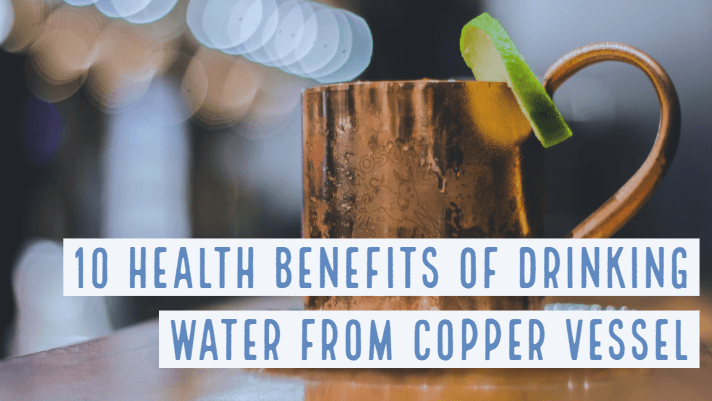
10 Health Benefits of Drinking Copper Water

For ages, our elders have advised us to drink water from the copper vessel to reap health benefits. Perhaps, most of our elders still drink water from the copper vessel, but the younger generation has now switched to plastic or other metallic bottles.

Since our old traditions are making way back to the present, it’s high time to know the benefits of drinking water in a copper vessel. Before focusing on the benefits of drinking water in the copper bottle, let us throw light on the importance of copper for our bodies.

Copper is one of the essential trace minerals which offers numerous health benefits. It helps in making red blood cells and collagen. It also plays a vital role in the production of energy.

Now that you have an idea of the importance of copper in our bodies, let us have a look at the science behind the ancient Indian practice of drinking water in copper vessels.

Table of Contents

The Science Behind the Ancient Indian Practice of Drinking Water from Copper Vessels

The concept of drinking water in a copper vessel is not new. It is something that was always suggested during Ancient times. But now we also have science backing the age-old logic.

A recently published article, in the Journal of Health, Population, and Nutrition, discussed the result of storing water contaminated with harmful bacteria like Salmonella and E.Coli in a copper vessel for 16 hours. Would you believe that no traces of bacteria were found in the water after 16 hours and the quality of the water also improved?

This is just one of the many studies that prove the benefits of drinking water in a copper vessel. Studies have also confirmed that the copper vessel has an inhibitory effect on the bacteria and this, in turn, purifies the water and makes it potable.

There is also a myth that after the water has been stored in a copper jug, the amount of copper in the water increases beyond the permissible limit. It is considered one of the side effects of drinking water from a copper jug but WHO has busted this myth and has revealed in a study that the copper quantity stays within the permissible limit and it is not only safe but healthy to drink water from a copper vessel.

Various other studies have explained the science behind the ancient Indian practice of drinking water from copper vessels and all of them have given a positive conclusion.

If you want to purify your drinking water naturally, just store it in a copper vessel for at least four hours, and you are good to consume the water.

Let us now focus on the health benefits of drinking water from a copper vessel.

10 Health Benefits of Drinking Water from Copper Vessel

1. Helps in Weight Loss

One of the most important benefits of copper water is that it helps the digestive system to perform in a better manner and not only this, but it also breaks down the fat stored in your body. The broken-down fat is then eliminated from the body efficiently. Drinking water from a copper vessel in the morning helps in weight loss. If you want to lose weight efficiently without much exercise, you should drink copper water i.e. the water stored in a copper vessel.

2. Improves Digestion

Copper has anti-bacterial properties, and thus it helps in killing harmful bacteria in the stomach, and in turn, it improves digestion. It is also an excellent remedy for infection and ulcers. You can also drink water stored in a copper vessel for detoxifying your body. The copper mineral gets leached when you store drinking water in a copper vessel. The copper-rich water breaks down the food particles and helps in improving digestion. If you want to improve your digestive system, drinking copper-infused water is one way of doing it.

3. Slows Down Ageing

As we age, fine lines or wrinkles appear on the face. Copper has natural anti-oxidant properties. It also has cell-forming properties. If you want to slow down the aging procedure, you can use copper-infused water for fighting off the free radicals.

4. Good for Heart and Beats Hypertension

The American Cancer Society has discovered that copper helps in regulating blood pressure and heart rate. It is thus, good for the heart. Apart from that it lowers the level of bad cholesterol and beats hypertension effectively.

5. Beats Arthritis And Inflamed Joints

We have already discussed the anti-inflammatory properties of copper. This property of copper can be used effectively for getting relief from pain due to inflamed joints. If you are suffering from arthritis or inflamed joints, drinking water in a copper vessel can be the perfect remedy for you.

6. Beats Anaemia

When the level of copper is low in our bodies, we absorb less iron. This deficiency of iron results in anemia. The iron absorption in the body can be increased naturally with the help of copper. As the copper intake increases in your body, the iron absorption will increase too, and this will help you to beat anemia.

7. Boosts Immunity & Heals Wounds Faster

Copper is known for its anti-inflammatory, anti-bacterial, and anti-viral properties. You can use copper-infused water for healing wounds faster.

Another amazing health benefit of drinking Copper water is the strengthening of the immune system. Copper not only helps in quicker healing of external wounds but it also aids in fighting against any internal infection.

8. Regulates the Working of the Thyroid Gland

Copper is an essential mineral that controls the working of the thyroid gland. Copper energizes the thyroid and prevents too much of excretion from the thyroid gland in the blood. However, there should be a balance in the copper intake for the proper functioning of the thyroid gland. So instead of consuming too much copper, one should consume it in limited quantity, and drinking water from a copper vessel is a perfect way to ensure that.

9. Boosts Skin Health And Melanin Production

Copper can also be used for improving your skin health. It supports the production of melanin which is the pigment responsible for the color of your skin, hair, and eyes. It also prevents the graying of the hair. The copper mineral because of its cell-producing properties helps in skin regeneration. It improves the softness, elasticity, and firmness of the skin.

10. Antimicrobial, Fights Infections

We have already discussed a study in the previous section where it has been proved that copper has antimicrobial properties. It can kill harmful bacteria effectively and helps in fighting against infection rigorously.

Tips on Drinking Water from a Copper Vessel, Correctly and Safely

Drinking water from a copper vessel can be very beneficial as discussed above. But, just drinking water from a copper vessel is not enough; it is essential to drink water from a copper vessel correctly and safely to extract maximum benefits. Here are a few tips for drinking water from a copper vessel correctly.

  • The quality of the copper used in a copper vessel plays an important role. Buy the copper vessel from the authentic copper seller. Also, make sure that the vessel is made of 100% copper.
  • After you purchased a new copper jug or bottle, do not drink water directly from it. Instead, wash or rinse it with a natural acidic solution. You can also use lemon and salt for cleaning the copper vessel.
  • If you want to avail the maximum benefit of water stored in a copper vessel, then store the water in the copper vessel for at least eight hours. You can store the water in a copper vessel at night and then drink it early in the morning.
  • Do not drink water that has been stored in a copper vessel for more than 12 hours.
  • Do not store any liquid other than water.
  • Never deep freeze the copper bottle or jug.

Do not keep drinking water from a copper vessel all day long. Excess of anything is bad, and the same thing is applicable in the case of copper too.

Drinking copper water once a day will help you balance the copper intake.

Myths Around Copper

One prevalent myth is that copper is poisonous to your body. This is not true; in fact, copper is one of the essential elements of the body. It is an important mineral for our enzyme system, and it helps in different kinds of metabolic procedures. Copper is poisonous only if you end up consuming corroded copper. It is therefore essential to buy a copper jug or bottle that is made of 100% copper.

Copper is not produced in our body naturally and therefore; you need an external source. And the best way of doing so is by drinking water from a copper vessel.

Also, just drinking water from a copper vessel is not enough. You have to store water in the copper vessel for eight hours at least and then consume it for gaining maximum benefits. When you allow water to sit for an extended hour, the copper is absorbed by water, and it acquires many valuable properties that can be beneficial for the body.

Are There Any Side Effects of Drinking Water from Copper Jug?

There are no side effects or disadvantages of drinking water in a copper vessel if you consume copper water as recommended.

However, as discussed above, you should not drink copper water all day long. Drinking copper water once daily is more than sufficient.

If you drink copper water in excess quantity then it can cause nausea, vomiting, diarrhoea, gastric (stomach) issues, and headaches. And if you drink excess copper water for far too long then it can also cause serious damage to your liver.

Important Things to Consider While Buying a Copper Jug or Bottle

As discussed above, there are several health benefits of the copper bottle but we should also keep a few important things in mind while buying a copper jug or bottle:

  • Buy only 100% copper vessels. Do not purchase copper vessels which are mixed with other metals.
  • Buy copper vessels that have a big mouth. It is because it is natural for the copper to tarnish with the passage of time and therefore regular cleaning is needed. A close or narrow mouth will make it difficult for you to wash the vessel. A big mouth copper vessel can be washed easily.
  • Sometimes, the adulterated copper vessel is sold as 100% pure. How will you check whether it is pure copper or not? One of the simplest methods to check the purity of copper is to apply some lemon juice on its surface and then rinse it with clean water. The surface should shine like new. This is a sign of pure copper.
  • Always buy from a reliable brand or offline/online store.

Follow these tips to enjoy maximum copper bottle benefits without worrying about any side effects.

Now that you know how to buy a good copper vessel let us shift our focus on the cleaning process of copper vessels.

Recommendation – Copper Bottle and Jug

How to Wash Your Copper Bottle or Jug

The process of washing a copper bottle or jug is different from washing a regular vessel. You have to clean the copper vessel with your hand and do not use the dishwasher. The dishwasher detergent can lead to the oxidization of the copper vessel which will damage it permanently.

Use a solution of lemon juice and salt in equal quantity, dilute it with water and then use this solution for washing the copper vessel. Do not use any scrubber, soap, or detergent for washing the copper vessel. For best cleaning, use hot water in the copper vessels.

You should clean the copper vessel once/twice a week using lemon and salt.

If you want to wash your copper vessel daily, use a soft cleaning liquid or hot water for cleaning it. You can also use the copper shining powder every now and then to keep the copper vessel shining like new.

Water Purifiers with Goodness of Copper

Keeping in mind the several health benefits that Copper-infused drinking water presents, some leading water purifier brands have launched purifiers that add the goodness of copper to the purified water.

If you are someone looking to take advantage of copper-infused water but feel it is too much of a task to use a Copper vessel.

You should consider buying a water purifier with the goodness of Copper.

We have reviewed two such purifiers for you.

Final Thoughts

Both the Ancient Indian practice and today’s science provide us enough reasons to drink water stored overnight in a copper vessel.

But try not to go overboard with drinking copper-infused water. Just drink once or twice a day from the copper vessel to stay healthy naturally.

The drinking water guidelines of the Bureau of Indian Standards specify 0.05 mg/L as an acceptable limit and 1.5 mg/L as the maximum permissible limit (in the absence of an alternate drinking water source) for copper in drinking water.

How to Make Alkaline Water – Health Benefits & Side Effects

A lot of health experts advise that maintaining the right pH balance is very essential for keeping ourselves healthy.

And we also believe the right pH balance is indeed very important because a large number of people nowadays suffer from acidity and problems related to acidity.

In order to understand the complex puzzle of acidic and alkaline nature let us first understand what pH value is.

pH stands for “potential hydrogen”, which is basically a measure of the hydrogen ion concentration.

pH value is a measure of how acidic or basic/alkaline a solution is on a scale of 0 to 14. A pH value of 7 is considered neutral, a pH value less than 7 is considered acidic and a pH greater than 7 is considered basic or alkaline.

E.g. if the level is 1, it means the solution is very acidic and if it is 14, it is very alkaline. Alkaline Water has a pH value generally ranging around 8 or 9.

Table of Contents

What is SCMT Filter in AO Smith Water Purifiers?

If you have read or researched about any high-end RO water purifier from AO Smith then you may have come across a term called SCMT.

Not sure what an SCMT filter is?

SCMT filter is a patented and one-of-a-kind water purification filter from AO Smith.

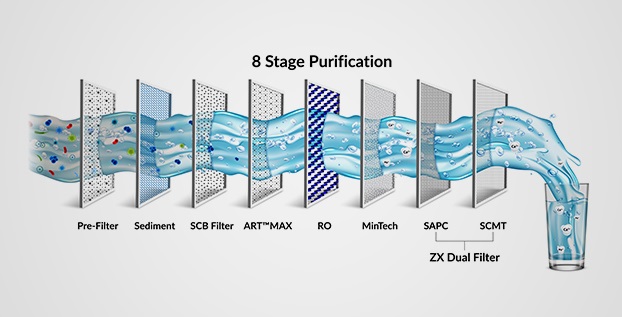
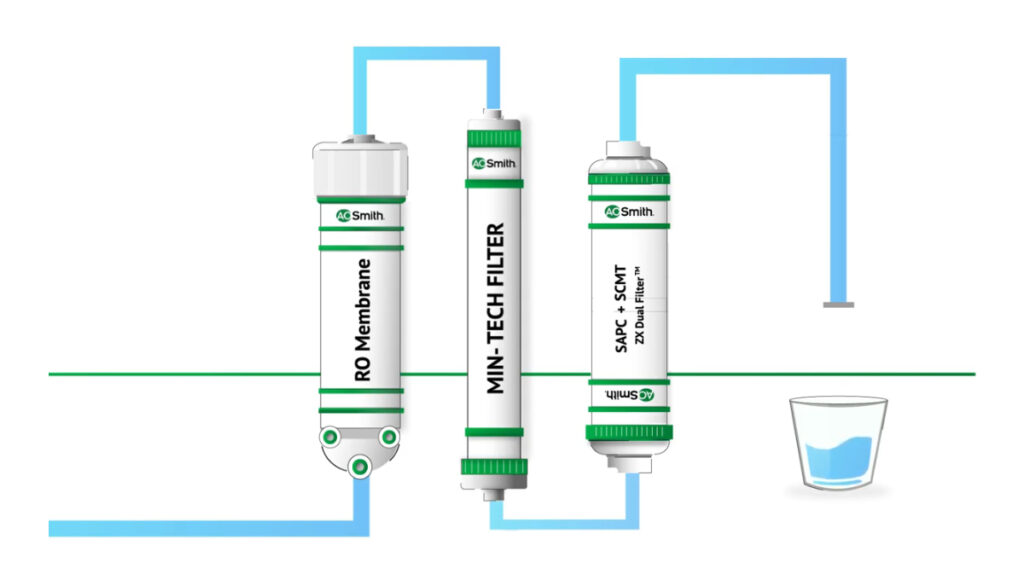
It is the final stage of purification in AO Smith RO purifiers and functions more or less like a UV disinfection chamber.

If it functions like UV purification, why not use UV then?

Because it does what UV does + a lot more.

You’ll see that in a few moments.

But first, have a look at what the SCMT filter is.

The SCMT stands for Silver Charged Membrane Technology.

And as the name suggests, this filter contains actual silver particles.

Yes, you read that right.

After the grand success of Sona Chandi Chyawanprash, now here we have the Chandi ka filter :).

Jokes apart, the SCMT filter does contain actual silver particles.

As the water passes through this filter, the anti-microbial nature of silver eliminates a range of microbial contaminants present in water.

Diagram Showing the Purification Stages of AO Smith Z9 (image courtesy: AO Smith)

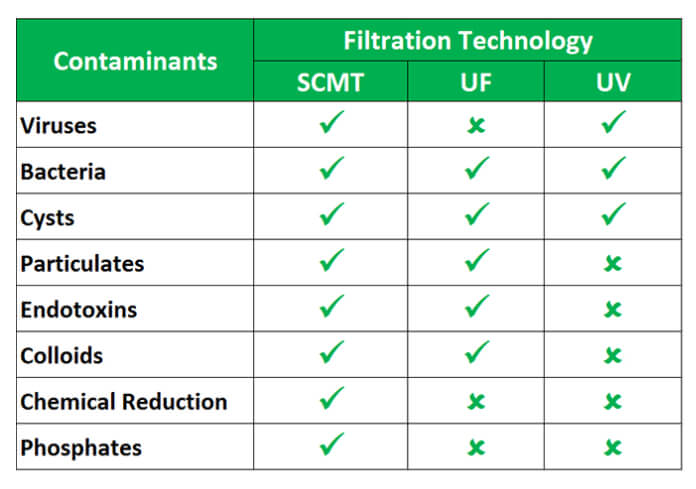
SCMT provides protection from microbial contaminants like viruses, bacteria, cysts, particulates, colloids, endotoxins, and phosphates.

SCMT Vs UV – Which is Better?

Have a look at the below-given comparison of SCMT with UV and UF.

Comparison of SCMT with UV and UF Filters

As you can see, AO Smith’s SCMT filter is far superior compared to UV and UF filters.

No other water purifier brand uses any filter, like AO Smith’s SCMT, with actual silver particles.

List of AO Smith RO Water Purifiers with SCMT Filter

  • X7+
  • Z5
  • Z8
  • Z9
  • ProPlanet P3
  • ProPlanet P4
  • ProPlanet P5
  • ProPlanet P6
  • ProPlanet P7

What do you think of this unique and innovative filter technology from AO Smith?

Do let us know your thoughts and queries in the comment section.

21 Easy Tips on How to Save Water in Daily Life

Read and try to implement the following tips. Don’t forget to share with your friends and family and do your bit to save the water!

70% of the earth is covered with water, but only 1% is easily accessible. Water is such a scarce resource. With more and more news of areas fighting water shortages and droughts, saving water and using it more efficiently has become an absolute necessity.

Even if your home has an abundant water supply, saving water and reducing wastage becomes a shared responsibility for our future generations. Reducing your water usage will also reduce electricity used directly or indirectly.

With water being such a vital natural resource for life, saving water and reducing water wastage is a great way to take action. You can adopt some effortless ways to start this fight for conserving water for our future generations. We have listed some of the most basic and most effective tips on how you can save water in your daily life.

Whether you’re washing your clothes, taking a bath, shaving, brushing your teeth, or gardening, several simple water conservation methods will help you save water.

How to Save Water in the Bathroom

1. Fix your Leaks

Known or unknown leaks in taps, pipes, and toilets can result in up to 11,000 Liters of water being wasted. You should always check all your bath fittings for any leakage and get the leaks repaired as soon as possible. It will save wastage of water and avoid any damage to your walls and fittings.

Use our water wastage calculator to get a fair idea of the amount of water your leaky faucet or tap may be wasting.

2. Turn Off the Tap While Brushing your Teeth or Shaving

An average tap or faucet throws approximately 10 liters of water every minute. So don’t leave the tap open while brushing or shaving. Please turn off the faucet after you wet your brush and turn it on when it’s time to rinse.

3. Turn Off the Tap While Washing your Hands

Do not leave the tap running while you’re scrubbing your hands. Wet your hands and turn off the tap; turn on the tap when you need to rinse.

4. Flush with Less

Older toilet flush systems use 3 to 4 times more water as compared to the new ones. Convert your old flush toilet to a dual-flush toilet. A dual-flush toilet allows you to use less water to flush liquid waste and more water to flush the solid waste by pressing the correct button.

5. Install a Tap/Faucet Aerator

Adding an aerator to your tap/faucet will add air to the water flow, giving you a more consistent stream while also using less water overall. Tap/Faucet aerators are very easy to install, inexpensive, and highly effective. Taps/faucets with aerators can save up to 80% of water than the tap/faucets without aerators. Aerators should also be used in taps/faucets in bathrooms.

6. Bath for Shorter Duration

Bathing or taking a shower for longer durations requires more water. Try to reduce the shower duration. It will not only save the much-needed water but will also give you more time to enjoy other things.

Relevant link: Best hard water softener for the bathroom.

How to Save Water in the Kitchen

1. Don’t Use RO Water Purifiers (if RO purification is not necessary)

Do you know that an average RO purifier wastes approximately 3 litres of water for every 1 litre of purified water?

That means only 25% of water is purified, and 75% of water comes out as waste.

The Bureau of Indian Standards (BIS) has specified the maximum TDS limit for safe drinking water as 500 mg/L. Therefore, you should avoid using an RO water purifier if the TDS level of the input water is below 500 mg/L. Please also get your water checked for harmful heavy metals like lead, arsenic, and mercury.

In such a case, using a UV+UF water purifier would be more appropriate.

Save water by not using RO water purifiers if RO purification is not necessary. Use water purifiers using alternate purification technologies like Gravity Based water purifiers, UV water purifiers, UV+UF water purifiers, etc.

READ THIS

Buying guide to know which type of purifier is best for your home.

2. Using an RO Purifier? Reduce & Re-use the RO Waste Water

As detailed in the above point, you should only use an RO water purifier if necessary. Suppose the input water quality is such that it is required to use an RO water purifier at your home. Then it would be best to reduce and re-use the RO wastewater.

  • Reduce: Most RO water purifiers only recover around 20-25% water as purified drinking water. Some brands have tried to address this concern by improving the recovery rate by up to 50%. Always check the purifier’s recovery rate while buying a new RO purifier. You can also reduce the amount of wastewater that your existing RO purifier produces by periodically changing the filters and RO membrane. The wastewater increases when filters and RO membrane gets choked. A choked RO membrane will have a very poor recovery rate. Suppose you notice your purifier is taking more than usual time to fill the storage tank or there is an increase in the amount of wastewater. In that case, it is time for you to get the filters and membrane checked.
  • Re-use: Don’t let the RO wastewater flow down the drain. You can store the wastewater in some tank or bucket. Re-use this wastewater for other household works like washing utensils, floor mopping, washing your car, watering your plants, etc. Please visit the following link to understand how you can re-use the RO wastewater.

3. Washing Dishes by Hand?

When you are washing dishes by hand, don’t leave the water running for rinsing. Fill up your sink with water, or use a large pan or bucket for rinsing the dishes. It will minimize water wastage by not letting the water run the whole time when you’re scrubbing the dishes.

4. Washing Dishes by Dishwasher?

Always remember to load your dishwasher to its full capacity. It will avoid multiple running cycles of the dishwasher and will save a lot of water.

5. Defrost Frozen Food in the Refrigerator

If you are cooking frozen foods or vegetables, then instead of soaking them in the water, you can use your refrigerator’s defrost option. But for doing this, you will have to plan a little earlier as defrosting with the fridge will take some time.

6. Clean Fruits & Vegetables in a Pan

When you need to clean fruits and vegetables with water, try filling up a pan of water to wash them instead of letting the faucet run. By doing this, you will use less water and use the water from the pan for watering your plants.

How to Save Water While Washing Clothes

1. Replace your Old In-efficient Washing Machine with an Efficient Washing Machine

Top Load and Front Load Washing Machines

– Old-style top-loading washing machines use 150 to 170 Liters of water per wash. You can reduce this by up to 50% by using high-efficiency top-loading washing machines. Front-loading washing machines use much less water and electricity than top-loading washing machines.

2. Don’t Run Empty Washing Machines

Don’t just run your washing machine for a couple of socks or 1 or 2 shirts. Make sure you’re washing a full load of laundry. When washing your clothes, use the economy mode – this will save you both water and electricity.

3. Wash Less Often

Several clothes like sweaters, jeans, towels, track pants and jackets do not require washing every time you wear them. It will not only save water but will save wear and tear on your clothes.

How to Save Water Outdoors

1. Install a Water Meter

A water meter will help measure the amount of water you use. It is an essential tool in your fight against reducing the wastage of water. Because without measuring the water usage, you may feel that you are not wasting the water. Once you install a water meter, you might be shocked to find out how much water you are using. Meters can also be beneficial in detecting leaks – take the meter reading, wait for an hour or two without running any water, and reread it. If there is any difference in the meter reading, then you know something is leaking.

2. Stop the Overflow

Almost all homes and commercial premises in India have overhead tanks for water storage. And all of us have seen ours or our neighbors’ water tank overflowing at some point in time. We can quickly stop the overflow from our water tanks and save hundreds of liters of water daily by only using one of the below solutions:

  • Install a Float Valve: A float valve is a straightforward, inexpensive, but highly effective equipment for stopping the tank overflow. It automatically prevents the incoming water flow in the tank when the tank’s water reaches the maximum level. This solution is best suited for water tanks that are filled using normal incoming water pressure. Remember, you should never install a standard float valve if you use a water motor/pump to fill the water tank.
  • Water Tank Overflow Alarm: A float valve is an excellent equipment for stopping the tank overflow if you do not use a water pump. But what about the people who are using a water pump? Water Tank Overflow Alarm is a small electronic device that alerts you every time water overflows from your tank. It does not stop the flow of water. It merely raises an alarm so you can shut off the water pump. This simple device not only saves water but also saves electricity. It automatically switches off your water pump after your water tank is full.
  • Automatic Water Level Controller: As the name suggests, an Automatic Water Level Controller is an electronic device that controls or manages the water level in your water tank. It consists of an electronic controller and water level sensors. The electronic controller is connected to the electric supply, water motor/pump, and the sensors. This device automatically switches on/off your water pump when the tank’s water level reaches the minimum/maximum level.

All of these solutions not only help you in saving water and electricity but are also very helpful in preventing damage to roofs and walls from overflowing water.

3. Use Smart Watering Tactics on your Garden and Plants

You can keep your home garden and plants green and healthy without wasting too much water. It would be best if you only watered areas that truly need it. The best time of day to do your watering is in the morning or evening so that the water doesn’t immediately evaporate. Do not water on a rainy day. Water deeply, but less often. It will encourage plants to grow deeper roots, and plants with deeper roots require water less frequently. If you are watering using a pipe, connect a hose or spray gun at the end. Water-saving hoses and spray guns cover more area and use comparatively lesser water.

4. Don’t Plant Grass If you Have Water Shortage

Do you live in an area with insufficient water supply or inadequate rainfall? The best advice anyone can give you is not to plant grass because grass requires a considerable amount of water. You can instead grow plants that don’t need as much water.

5. Use a Bucket to Wash your Car

While using a bucket may require a little more effort but using a bucket instead of a running water pipe to wash your car will reduce the water wastage.

6. Don’t Wash the Verandah or Backyard with a Pipe

If you need to clean your verandah or backyard, use a broom to remove dry matter. If the area still needs additional cleaning, use a bucket of water.

Let’s join hands with us and take a pledge to save the water. Be more responsible and act now to save the earth and lives before it’s too late.

Share this with your friends and start a campaign to make them aware of how they can begin to saving water today.

Top Water Quotes & Save Water Slogans

We celebrate World Water Day on 22nd March every year.

But I believe every day is a water day.

What do you think?

No one can live without water and this is the first need of any living being. It would help if you understood the importance of water in your life.

Earth is the only known planet in this universe that has water and life.

We’ve also compiled a list of over 200 short & catchy save water slogans in Hindi.

The unmindful wastage of clean drinking water is one of the most serious threats in front of the world.

We have compiled a big list of very useful and motivational save water slogans that can create much-needed awareness about saving water in your daily life.

These quotes and slogans will not only motivate you but you can also use them to spread awareness in your society. These save water quotes will also add that x-factor in your speech on saving water or the essay for your school assignment.

Save water, stop wasting it.

Below listed are some of the best quotes and slogans on saving water. We have handpicked these quotes and slogans from various sources and created beautiful posters for popular Save Water slogans.

Here are some inspirational save water quotes and slogans.

Please share these slogans and posters with your friends and spread awareness about the importance of water conservation.

Popular Save Water Slogans and Quotes

#1 – Save Water, Save Life

Save Water Save Life Poster
Save Water, Save Life

#2 – Thousands Have Lived Without Love, Not One Without Water. – W.H.Auden

without water quotes
Thousands have lived without love, not one without water. – W.H.Auden

#3 – No Water. No Life. No Blue. No Green. – Sylvia Earle

beautiful Water Sayings
No Water. No Life. No Blue. No Green. – Sylvia Earle

#4 – Water is Life. Don’t Waste It.

Drinking water quotes
Water is Life. Don’t Waste It.

#5 – Keep Calm & Drink Water.

drinking water quotes
Keep Calm & Drink Water.

#6 – Water is Your Best Friend for Life.

water inspirational quotes
Water is Your Best Friend for Life.

#7 – Pure Water is the World’s First and Foremost Medicine. – Slovakian Proverb.

Pure Water sayings
Pure Water is the World’s First and Foremost Medicine. – Slovakian Proverb

#8 – Clean Water Should be a Necessity.

water is necessity quote
Clean Water Should be a Necessity.

#9 – THINK, You Can’t do anything without water. Save it.

save water quote
THINK, You Can’t do anything without water. Save it.

#10 – Water is the Best Natural Remedy. Drink Your Way to Better Health.

drinking water quotes
Water the Natural Remedy. Drink Your Way to Better Health

#11 – Water is Life and Clean Water Means Health – Audrey Hepburn

pure water saying
Water is Life and Clean Water Means Health – Audrey Hepburn

#12 – Water is the Driving Force of All Nature – Leonardo da Vinci

best water quotes
Water is the driving force of all nature – Leonardo da Vinci

#13 – Drink Pure Water. Stay Healthy.

drinking water status quotes
Drink Pure Water. Stay Healthy.

#14 – Improve Your Water. Improve Your Life.

water life saying
Improve Your Water. Improve Your Life.

#15 – Drink More Water. Pure Water.

drinking pure water image
Drink More Water. Pure Water.

#16 – Water Used to Be Fresh, Pure, and Drinkable, Now the Water Has Lots of Focal Matter and Bacteria – Claudine Sierra

best water quotes
Water used to be fresh, pure, and drinkable, now the water has lots of focal matter and bacteria – Claudine Sierra

#17 – There is No Small Pleasure in Pure Water – Ovid

pure water
There is no small pleasure in pure water – Ovid

#18 – When the Well is Dry, We’ll Know the Worth of Water – Benjamin Franklin

worth of water quote
When the well is dry, we’ll know the worth of water – Benjamin Franklin

Slogans on Water Conservation – Complete List

  1. Save water before it’s too late.
  2. SAVE WATER the world is in your hands.
  3. Save water, and it will save you.
  4. Nothing will be left here without water.
  5. A slogan on Water is a slogan for life.
  6. Water taught lessons that the rest of the world could not.
  7. Use water but never waste water!
  8. Water is a gift from the creator, Protect it! Respect it!
  9. No matter, how rich you are, you can’t live without water.
  10. Do the Earth a favor, Be a water saver
  11. Today’s rainwater is tomorrow’s lifesaver so think outside the sink!
  12. Do your children a favor and save tomorrow’s lifesaver. WATER!
  13. Save water and save the earth
  14. If we don’t learn to conserve, we’ll all be fish out of the water, and You Know the Result!!
  15. Water is life, Treat it right!
  16. You never know the worth of water until the taps run dry.
  17. Every drop counts!
  18. Every drop of water matters
  19. Pure water runs life!
  20. Pure water = better life. Don’t ruin it.
  21. Save water and tell others to do so
  22. Let’s be a water saver!!!
  23. Life starts with water
  24. You will look for water on the moon because the earth is going to be waterless soon.
  25. We need your helping hand, to save water, sky, and land.
  26. Water is a Priceless Gift of Nature, so Save it for the Future.
  27. Whether rich or poor; everyone needs water.
  28. If we care for it, It will care for us.
  29. Water covers two-thirds of the surface of the Earth, but Freshwater is only 0.002% of Earth.
  30. Wanted: Water in its natural form
  31. Water is more precious than Gold.
  32. You are 70% water. Save 70% of YOURSELF
  33. I don’t waste water – Do you?
  34. Go green & Drink clean
  35. Use your brain to save water even from the rain.
  36. Without water you are nothing.
  37. Put a STOP to the Water DROP.
  38. Please stop that drip
  39. Slow the flow Save H2O
  40. Water Smarter!
  41. Be Water Wise!
  42. Be a Water Hero!
  43. Think outside the sink!
  44. Do you harvest rainwater? If not, start today!
  45. Save water… it doesn’t grow on trees.
  46. Don’t forget to save water, otherwise, water will forget you one day.
  47. Don’t waste even a drop of water otherwise, you will be finished for a drop of water.
  48. Without water, survival is impossible
  49. Life is impossible without water
  50. You can’t live without water
  51. Save water and secure the future!
  52. Save Water to Save this Planet.
  53. Water is the soul of the earth, don’t separate both.
  54. Keep the water crystal clear or your kids will shed a tear.
  55. Every drop of clean water is important to us.
  56. Let’s all do our share to conserve water with care.
  57. For those who conserve, a Big thank you is deserved!
  58. Wasting water is a BAD idea!
  59. Save water, It’s a Big Deal!
  60. Be aware, and use it with care!
  61. Wait, stop and think, what if we didn’t have water to drink? Save it Now.
  62. Don’t let the water run in the sink, our life’s on the brink!
  63. It will be a BIG problem if we waste our water.
  64. Don’t let this chance fly away. Save Water!
  65. SAVE WATER – Don’t waste the world’s blood.
  66. Conserve Those You Love, The Things That Matter, What Keeps You Living! Save Water!
  67. Water conservation is the key to a sustainable future for you and me.
  68. When not in use don’t let the water flow, You must conserve the H2O.
  69. Our ecosystems depend on water, Don’t waste it!
  70. You don’t know its true worth until it is gone. SAVE WATER.
  71. Water is the driver of Nature. Please save it.
  72. Water – A priceless treasure, Save it with pleasure.
  73. One good action repeated a million times creates global change.
  74. It’s a good thing to know, how to conserve H2O.
  75. You have the power to turn off the faucet and the shower.
  76. Saving water can be tons of fun!
  77. Water: The liquid that sustains life, Conserve it!
  78. Saving water is a good deed, it’s an essential resource, we all need!
  79. If not now? then when? Save water before you see it end.
  80. If we care for Water Now, It will care for us in the Present and Future.
  81. Don’t let me spot you wasting water!
  82. Don’t forget to save water. I’m watching you!
  83. The choice is yours- Save it or Waste it.
  84. Water preservation to prevent future devastation.
  85. Before it all wastes away, let’s start conserving water today!
  86. Save Water. It’s not just a drop in the bucket. It’s a Life
  87. Save water every day, and keep scarcity always away.
  88. Life on earth would not exist without water.
  89. The bright future begins with clean water.
  90. Water is precious but its availability is serious.
  91. If you don’t want mental hydration then think about water conservation.
  92. The less you use, the more you save.
  93. Don’t waste water, so we can have it another day.
  94. Don’t drop out to save the drop.
  95. A drop of water is worth more than a sack of gold to a thirsty man.
  96. Store water for Dry days!
  97. Save water; it will save you later.
  98. When you conserve water, you conserve life!
  99. Life depends on water, the reservoir depends on you.
  100. Save water every day and keep disasters away.
  101. Water pollution is a bad solution.
  102. Want life or death, you choose! Stop water pollution!
  103. Clean water is a blessing from God, don’t pollute it.
  104. Say no to water pollution and lead a healthy life.
  105. Water is to drink not pollute and waste
  106. Say no to water pollution!
  107. Love water, Hate pollution
  108. Protect Your Water Bodies From Pollution.
  109. Water: The original NO calorie drink.
  110. There are several ways to save water. And, they all start with you.
  111. Always remember to fill the glass up to the need.
  112. More water, more happiness.
  113. Put a stop to the drop.
  114. A Drip can Destroy many Drops.
  115. Please Think and don’t Waste Water in the Sink.
  116. Don’t let the water run when you brush your teeth.
  117. Turn off the faucet while brushing your teeth.
  118. Save Some Water for mankind, Close the tap, and don’t be blind.
  119. Close the water tap after use always.
  120. It’s no fun to let the water run.
  121. Save water flush less.
  122. It’s all about water!
  123. There is a thin line between using water and wasting water.
  124. How many drops make up an ocean? Conserve water; every drop counts.
  125. Imagine a day without water
  126. Waste water today – Live in the desert tomorrow.
  127. Walk in the desert, you will realize the cost of Water.
  128. Go to a desert to learn the importance of water
  129. We never know the worth of water till the well is dry. Save Water!!
  130. Waterless planets have no life.
  131. What if you stopped drinking water?
  132. Never throw away drinking water; always save it to have later.
  133. Start water conservation to prevent future dehydration.
  134. Save water! Your small step can be a major change.
  135. Be a real human being and save the water from your end.
  136. If you don’t know, ask the importance of water to a thirsty man.
  137. Teach your kids to respect water so that they can have it later.
  138. The rainwater tank, won’t break the bank.
  139. A Gallon Saved is a Gallon Earned
  140. The wars of the twenty-first century will be fought over water.
  141. The water you pollute will find its way back to you.
  142. Don’t flush our planet’s most valuable resource.
  143. Conserve water, every drop counts!
  144. Save water today, use it tomorrow
  145. Destroy water, you destroy life.
  146. Don’t make nature cry, keep your water clean.
  147. Water is the most critical resource issue of our lifetime and our children’s lifetime.
  148. Even a drop can bring life! Save water!
  149. The best gift you can give to the coming generation is water.
  150. Saving water is in our hands.
  151. The habit of saving water is the best
  152. Save water, it’s our most valuable resource
  153. Save water, do your part
  154. Save water for your bright future
  155. Save water, the world depends on it
  156. Saving water can save the world
  157. No Water – No Life
  158. Conserve water, conserve life.
  159. Water is the substance of life. Treasure it!
  160. Water is not the source of life, it is life.
  161. If Water is Life, then why we are wasting it?
  162. We forget that the water cycle and the life cycle are one.
  163. Water is a human right!
  164. Water, the beauty of nature
  165. Think Blue and go Green!
  166. It takes a lot of blue to stay green.
  167. WATER, the DNA of life
  168. Water = Life, Conservation = Future!
  169. There are no substitutes for water.
  170. Water, a wonder liquid
  171. Water is sacred. Kindly save it.
  172. Water for the future generations… Priceless.
  173. Water, water everywhere but not a drop to drink.
  174. One drop could save our thirsty world! Conserve Water!
  175. Water is the one substance from which the earth can conceal nothing, it sucks out its innermost secrets and brings them to our very lips.
  176. Think of water conservation to prevent it from extinction.
  177. Use water only when you need it, like costly things.
  178. Water is to save, otherwise, you will crave.

These are the best save water slogans and quotes for encouraging people to understand the importance of water conservation.

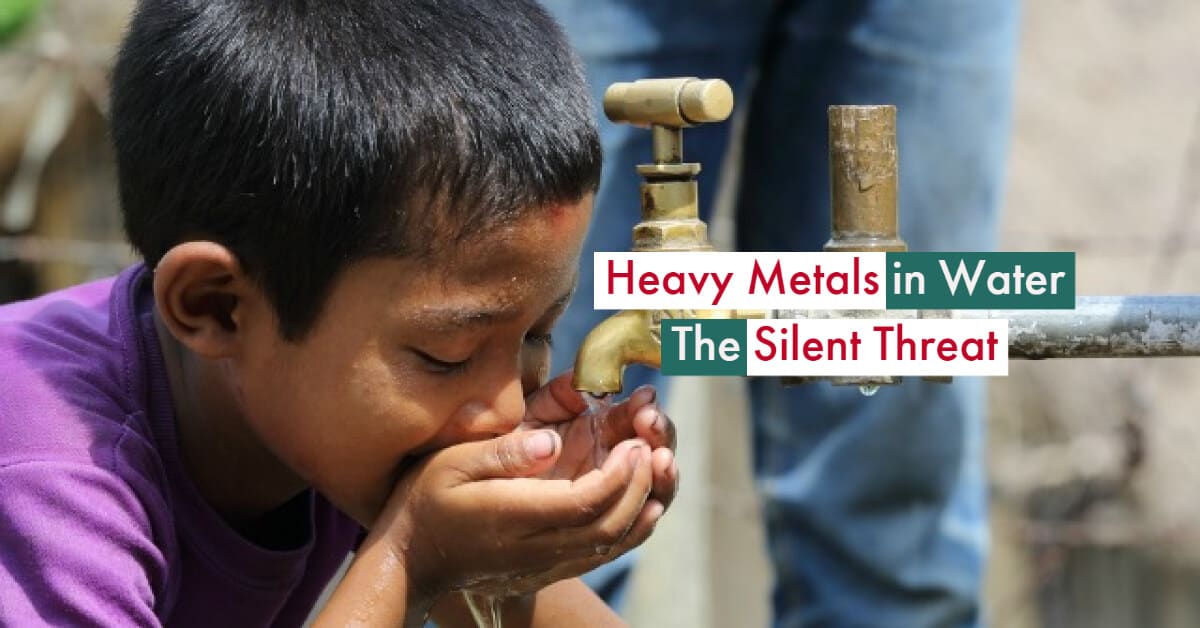
The Silent Threat: Why Heavy Metals in Water Deserve Your Attention

Water is essential for life, but contaminated water poses a great threat to your health.

Heavy metals are one such contaminant that is considered a silent threat to your health. Their presence in water may lead to life-threatening consequences.

Unlike other pollutants, even a small dose of some heavy metals has the potential to disrupt your body’s normal metabolic functions.

According to a report from the Centre for Science and Environment, 75% of river monitoring stations in India reported alarming levels of heavy metals.

But your groundwater must be safe.

If you thought so, the results from the groundwater quality tests are even more shocking.

Over 80% of the Indian population depends on groundwater and toxic metals were found in groundwater in almost all states of India.

In this blog post, you’ll explore the different heavy metals found in water, their effects on health, how to test for them, and ways to remove them.

List of Heavy Metals in Water

As per the scientific definition, heavy metals are defined as ‘elements with an atomic number higher than 20’.

For laymen, heavy metals are elements that have a high density and are toxic to humans beyond the recommended limits.

Here is a list of the most common heavy metals found in drinking water in India.

  • Lead
  • Mercury
  • Arsenic
  • Cadmium
  • Chromium
  • Copper
  • Iron

Sources of Heavy Metals in Drinking Water?

These metals can enter drinking water sources through natural processes, such as weathering of rocks and soil erosion, or through human activities like mining, agriculture, manufacturing, and improper waste disposal.

Heavy metals are naturally present in the earth’s crust. Rocks are a natural source of heavy metals like iron, copper, lead, arsenic, etc.

Effects of Heavy Metals in Water

Some have termed heavy metals as indestructible poisons.

And rightly so.

There are enough scientific studies to prove that the effects of heavy metals on human health can be severe, irreversible, and long-lasting.

Continuous and prolonged exposure results in the accumulation of these heavy metals in your vital organs, like the liver, kidneys, and brain. This leads to a range of serious and life-threatening health problems.

Some of the most common health effects of heavy metal exposure include cancer, nervous system damage, developmental problems, and reproductive issues.

Children, pregnant women, and the old population are highly vulnerable to the harmful effects of heavy metals.

Testing for Heavy Metals in Water

Testing for heavy metals in water is essential to ensure the safety of your drinking water.

You can get your drinking water tested for heavy metals in a water testing lab or do a preliminary investigation using a home testing kit.

Lab tests are generally more accurate as they can detect even minute traces of heavy metals in water.

On the other hand, home water testing kits are more convenient and affordable but the results may not be as accurate as lab tests.

How to Remove Heavy Metals from Water

Fortunately, there are several methods to remove heavy metals from water.

The most common methods include reverse osmosis and distillation.

Reverse osmosis is an effective method that can remove up to 99% of heavy metals from water.

Distillation is another effective method that involves boiling water and collecting the steam, leaving behind heavy metals.

For homes and offices, a reverse osmosis water purifier is the most convenient, effective, and affordable choice to get rid of heavy metals in your drinking water.

Conclusion

Heavy metals in water are a serious threat to your health.

They can cause long-lasting health effects, including cancer, nervous system damage, developmental problems, and reproductive issues.

Testing for heavy metals in water is essential to ensure the safety of your drinking water.

Reverse osmosis is the most common and effective method to remove heavy metals from your drinking water.

By being aware of the risks of heavy metals in water and taking action to remove them, you can protect your health and well-being.

Frequently Asked Questions (FAQs)

What is the most common heavy metal found in water?

The most common heavy metal found in water in India is arsenic. It is estimated that more than 50 million people in India are exposed to unsafe levels of arsenic in their drinking water, particularly in the states of West Bengal, Jharkhand, Bihar, Uttar Pradesh, Chhattisgarh, Manipur, and Assam. Arsenic contamination in water sources is a serious public health issue in India, and India has made very good progress in addressing it through programs like Jal Jeevan Mission.

Which metal is toxic in drinking water?

Several heavy metals can be toxic in drinking water, but one of the most toxic is lead. Lead can cause a range of health effects, particularly in children and pregnant women, including developmental delays, lower IQ, and behavioral problems. Lead is commonly found in older pipes and plumbing fixtures and can leach into drinking water over time. Arsenic and Mercury are also highly toxic and very dangerous.

How do I know if my water has heavy metals?

There are several ways to determine if your water has heavy metals:

Water testing: The most accurate way to determine if your water has heavy metals is to have it tested by a certified water testing lab. A water testing lab can find out the presence and concentration of heavy metals.

Geographic location: Some areas are more prone to heavy metal contamination than others. For example, areas with a history of mining or industrial activity may have higher levels of heavy metals in their water. Agricultural areas known for misuse of fertilizers and pesticides are also known for high levels of heavy metals in groundwater.

If you suspect that your drinking water may have heavy metals, get it tested in a lab and install a reverse osmosis system.

What are the top 5 heavy metals?

The top 5 heavy metals found in water that are of concern to human health are Lead, Arsenic, Mercury, Cadmium, and Chromium.