10 Health Benefits of Drinking Copper Water

For ages, our elders have advised us to drink water from the copper vessel to reap health benefits. Perhaps, most of our elders still drink water from the copper vessel, but the younger generation has now switched to plastic or other metallic bottles.

Since our old traditions are making way back to the present, it’s high time to know the benefits of drinking water in a copper vessel. Before focusing on the benefits of drinking water in the copper bottle, let us throw light on the importance of copper for our bodies.

Copper is one of the essential trace minerals which offers numerous health benefits. It helps in making red blood cells and collagen. It also plays a vital role in the production of energy.

Now that you have an idea of the importance of copper in our bodies, let us have a look at the science behind the ancient Indian practice of drinking water in copper vessels.

Table of Contents

The Science Behind the Ancient Indian Practice of Drinking Water from Copper Vessels

The concept of drinking water in a copper vessel is not new. It is something that was always suggested during Ancient times. But now we also have science backing the age-old logic.

A recently published article, in the Journal of Health, Population, and Nutrition, discussed the result of storing water contaminated with harmful bacteria like Salmonella and E.Coli in a copper vessel for 16 hours. Would you believe that no traces of bacteria were found in the water after 16 hours and the quality of the water also improved?

This is just one of the many studies that prove the benefits of drinking water in a copper vessel. Studies have also confirmed that the copper vessel has an inhibitory effect on the bacteria and this, in turn, purifies the water and makes it potable.

There is also a myth that after the water has been stored in a copper jug, the amount of copper in the water increases beyond the permissible limit. It is considered one of the side effects of drinking water from a copper jug but WHO has busted this myth and has revealed in a study that the copper quantity stays within the permissible limit and it is not only safe but healthy to drink water from a copper vessel.

Various other studies have explained the science behind the ancient Indian practice of drinking water from copper vessels and all of them have given a positive conclusion.

If you want to purify your drinking water naturally, just store it in a copper vessel for at least four hours, and you are good to consume the water.

Let us now focus on the health benefits of drinking water from a copper vessel.

10 Health Benefits of Drinking Water from Copper Vessel

1. Helps in Weight Loss

One of the most important benefits of copper water is that it helps the digestive system to perform in a better manner and not only this, but it also breaks down the fat stored in your body. The broken-down fat is then eliminated from the body efficiently. Drinking water from a copper vessel in the morning helps in weight loss. If you want to lose weight efficiently without much exercise, you should drink copper water i.e. the water stored in a copper vessel.

2. Improves Digestion

Copper has anti-bacterial properties, and thus it helps in killing harmful bacteria in the stomach, and in turn, it improves digestion. It is also an excellent remedy for infection and ulcers. You can also drink water stored in a copper vessel for detoxifying your body. The copper mineral gets leached when you store drinking water in a copper vessel. The copper-rich water breaks down the food particles and helps in improving digestion. If you want to improve your digestive system, drinking copper-infused water is one way of doing it.

3. Slows Down Ageing

As we age, fine lines or wrinkles appear on the face. Copper has natural anti-oxidant properties. It also has cell-forming properties. If you want to slow down the aging procedure, you can use copper-infused water for fighting off the free radicals.

4. Good for Heart and Beats Hypertension

The American Cancer Society has discovered that copper helps in regulating blood pressure and heart rate. It is thus, good for the heart. Apart from that it lowers the level of bad cholesterol and beats hypertension effectively.

5. Beats Arthritis And Inflamed Joints

We have already discussed the anti-inflammatory properties of copper. This property of copper can be used effectively for getting relief from pain due to inflamed joints. If you are suffering from arthritis or inflamed joints, drinking water in a copper vessel can be the perfect remedy for you.

6. Beats Anaemia

When the level of copper is low in our bodies, we absorb less iron. This deficiency of iron results in anemia. The iron absorption in the body can be increased naturally with the help of copper. As the copper intake increases in your body, the iron absorption will increase too, and this will help you to beat anemia.

7. Boosts Immunity & Heals Wounds Faster

Copper is known for its anti-inflammatory, anti-bacterial, and anti-viral properties. You can use copper-infused water for healing wounds faster.

Another amazing health benefit of drinking Copper water is the strengthening of the immune system. Copper not only helps in quicker healing of external wounds but it also aids in fighting against any internal infection.

8. Regulates the Working of the Thyroid Gland

Copper is an essential mineral that controls the working of the thyroid gland. Copper energizes the thyroid and prevents too much of excretion from the thyroid gland in the blood. However, there should be a balance in the copper intake for the proper functioning of the thyroid gland. So instead of consuming too much copper, one should consume it in limited quantity, and drinking water from a copper vessel is a perfect way to ensure that.

9. Boosts Skin Health And Melanin Production

Copper can also be used for improving your skin health. It supports the production of melanin which is the pigment responsible for the color of your skin, hair, and eyes. It also prevents the graying of the hair. The copper mineral because of its cell-producing properties helps in skin regeneration. It improves the softness, elasticity, and firmness of the skin.

10. Antimicrobial, Fights Infections

We have already discussed a study in the previous section where it has been proved that copper has antimicrobial properties. It can kill harmful bacteria effectively and helps in fighting against infection rigorously.

Tips on Drinking Water from a Copper Vessel, Correctly and Safely

Drinking water from a copper vessel can be very beneficial as discussed above. But, just drinking water from a copper vessel is not enough; it is essential to drink water from a copper vessel correctly and safely to extract maximum benefits. Here are a few tips for drinking water from a copper vessel correctly.

  • The quality of the copper used in a copper vessel plays an important role. Buy the copper vessel from the authentic copper seller. Also, make sure that the vessel is made of 100% copper.
  • After you purchased a new copper jug or bottle, do not drink water directly from it. Instead, wash or rinse it with a natural acidic solution. You can also use lemon and salt for cleaning the copper vessel.
  • If you want to avail the maximum benefit of water stored in a copper vessel, then store the water in the copper vessel for at least eight hours. You can store the water in a copper vessel at night and then drink it early in the morning.
  • Do not drink water that has been stored in a copper vessel for more than 12 hours.
  • Do not store any liquid other than water.
  • Never deep freeze the copper bottle or jug.

Do not keep drinking water from a copper vessel all day long. Excess of anything is bad, and the same thing is applicable in the case of copper too.

Drinking copper water once a day will help you balance the copper intake.

Myths Around Copper

One prevalent myth is that copper is poisonous to your body. This is not true; in fact, copper is one of the essential elements of the body. It is an important mineral for our enzyme system, and it helps in different kinds of metabolic procedures. Copper is poisonous only if you end up consuming corroded copper. It is therefore essential to buy a copper jug or bottle that is made of 100% copper.

Copper is not produced in our body naturally and therefore; you need an external source. And the best way of doing so is by drinking water from a copper vessel.

Also, just drinking water from a copper vessel is not enough. You have to store water in the copper vessel for eight hours at least and then consume it for gaining maximum benefits. When you allow water to sit for an extended hour, the copper is absorbed by water, and it acquires many valuable properties that can be beneficial for the body.

Are There Any Side Effects of Drinking Water from Copper Jug?

There are no side effects or disadvantages of drinking water in a copper vessel if you consume copper water as recommended.

However, as discussed above, you should not drink copper water all day long. Drinking copper water once daily is more than sufficient.

If you drink copper water in excess quantity then it can cause nausea, vomiting, diarrhoea, gastric (stomach) issues, and headaches. And if you drink excess copper water for far too long then it can also cause serious damage to your liver.

Important Things to Consider While Buying a Copper Jug or Bottle

As discussed above, there are several health benefits of the copper bottle but we should also keep a few important things in mind while buying a copper jug or bottle:

  • Buy only 100% copper vessels. Do not purchase copper vessels which are mixed with other metals.
  • Buy copper vessels that have a big mouth. It is because it is natural for the copper to tarnish with the passage of time and therefore regular cleaning is needed. A close or narrow mouth will make it difficult for you to wash the vessel. A big mouth copper vessel can be washed easily.
  • Sometimes, the adulterated copper vessel is sold as 100% pure. How will you check whether it is pure copper or not? One of the simplest methods to check the purity of copper is to apply some lemon juice on its surface and then rinse it with clean water. The surface should shine like new. This is a sign of pure copper.
  • Always buy from a reliable brand or offline/online store.

Follow these tips to enjoy maximum copper bottle benefits without worrying about any side effects.

Now that you know how to buy a good copper vessel let us shift our focus on the cleaning process of copper vessels.

Recommendation – Copper Bottle and Jug

How to Wash Your Copper Bottle or Jug

The process of washing a copper bottle or jug is different from washing a regular vessel. You have to clean the copper vessel with your hand and do not use the dishwasher. The dishwasher detergent can lead to the oxidization of the copper vessel which will damage it permanently.

Use a solution of lemon juice and salt in equal quantity, dilute it with water and then use this solution for washing the copper vessel. Do not use any scrubber, soap, or detergent for washing the copper vessel. For best cleaning, use hot water in the copper vessels.

You should clean the copper vessel once/twice a week using lemon and salt.

If you want to wash your copper vessel daily, use a soft cleaning liquid or hot water for cleaning it. You can also use the copper shining powder every now and then to keep the copper vessel shining like new.

Water Purifiers with Goodness of Copper

Keeping in mind the several health benefits that Copper-infused drinking water presents, some leading water purifier brands have launched purifiers that add the goodness of copper to the purified water.

If you are someone looking to take advantage of copper-infused water but feel it is too much of a task to use a Copper vessel.

You should consider buying a water purifier with the goodness of Copper.

We have reviewed two such purifiers for you.

Final Thoughts

Both the Ancient Indian practice and today’s science provide us enough reasons to drink water stored overnight in a copper vessel.

But try not to go overboard with drinking copper-infused water. Just drink once or twice a day from the copper vessel to stay healthy naturally.

The drinking water guidelines of the Bureau of Indian Standards specify 0.05 mg/L as an acceptable limit and 1.5 mg/L as the maximum permissible limit (in the absence of an alternate drinking water source) for copper in drinking water.
How to Make Alkaline Water – Health Benefits & Side Effects

A lot of health experts advise that maintaining the right pH balance is very essential for keeping ourselves healthy.

And we also believe the right pH balance is indeed very important because a large number of people nowadays suffer from acidity and problems related to acidity.

In order to understand the complex puzzle of acidic and alkaline nature let us first understand what pH value is.

pH stands for “potential hydrogen”, which is basically a measure of the hydrogen ion concentration.

pH value is a measure of how acidic or basic/alkaline a solution is on a scale of 0 to 14. A pH value of 7 is considered neutral, a pH value less than 7 is considered acidic and a pH greater than 7 is considered basic or alkaline.

E.g. if the level is 1, it means the solution is very acidic and if it is 14, it is very alkaline. Alkaline Water has a pH value generally ranging around 8 or 9.

Table of Contents

What is SCMT Filter in AO Smith Water Purifiers?

If you have read or researched about any high-end RO water purifier from AO Smith then you may have come across a term called SCMT.

Not sure what an SCMT filter is?

SCMT filter is a patented and one-of-a-kind water purification filter from AO Smith.

It is the final stage of purification in AO Smith RO purifiers and functions more or less like a UV disinfection chamber.

If it functions like UV purification, why not use UV then?

Because it does what UV does + a lot more.

You’ll see that in a few moments.

But first, have a look at what the SCMT filter is.

The SCMT stands for Silver Charged Membrane Technology.

And as the name suggests, this filter contains actual silver particles.

Yes, you read that right.

After the grand success of Sona Chandi Chyawanprash, now here we have the Chandi ka filter :).

Jokes apart, the SCMT filter does contain actual silver particles.

As the water passes through this filter, the anti-microbial nature of silver eliminates a range of microbial contaminants present in water.

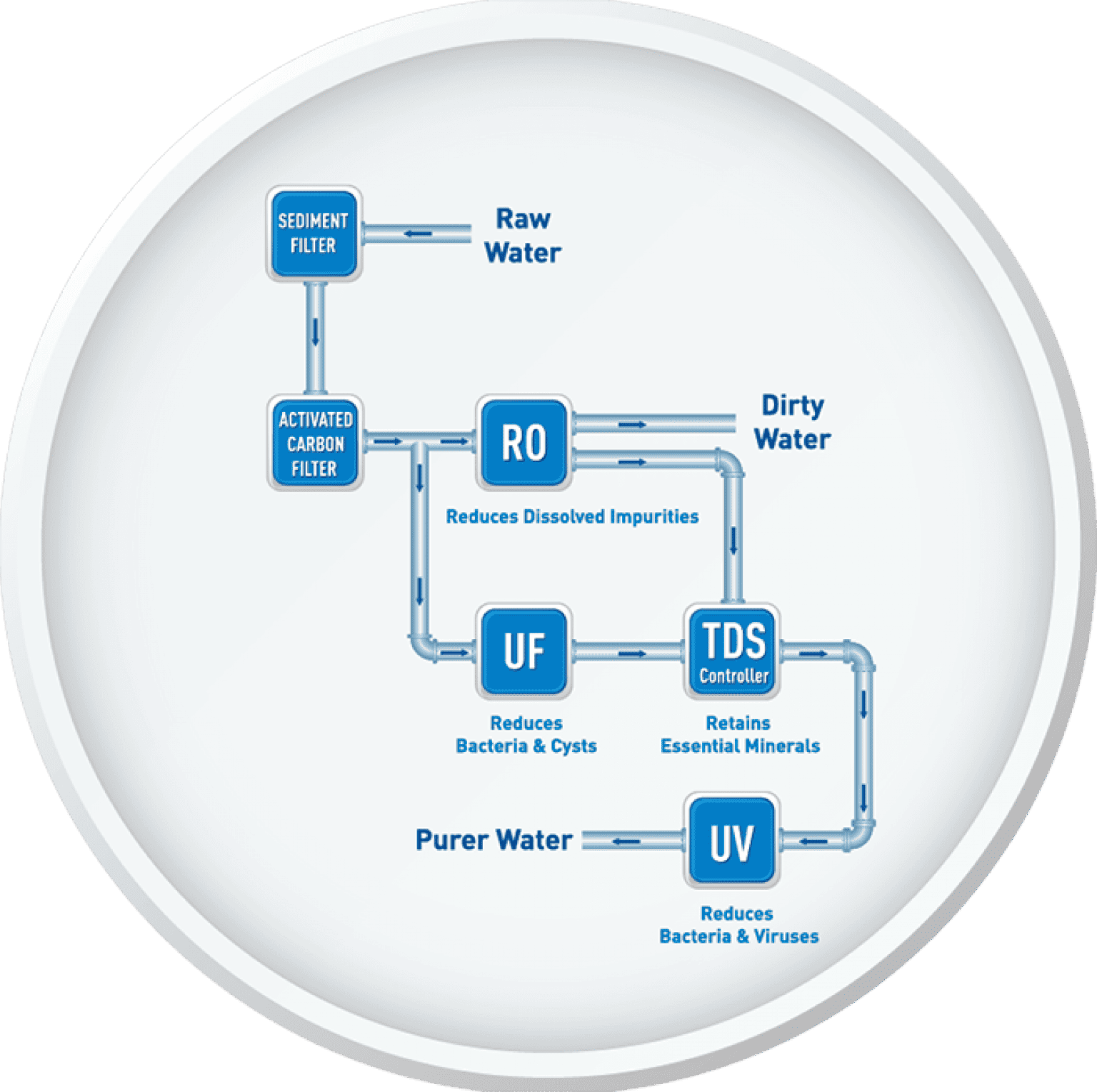
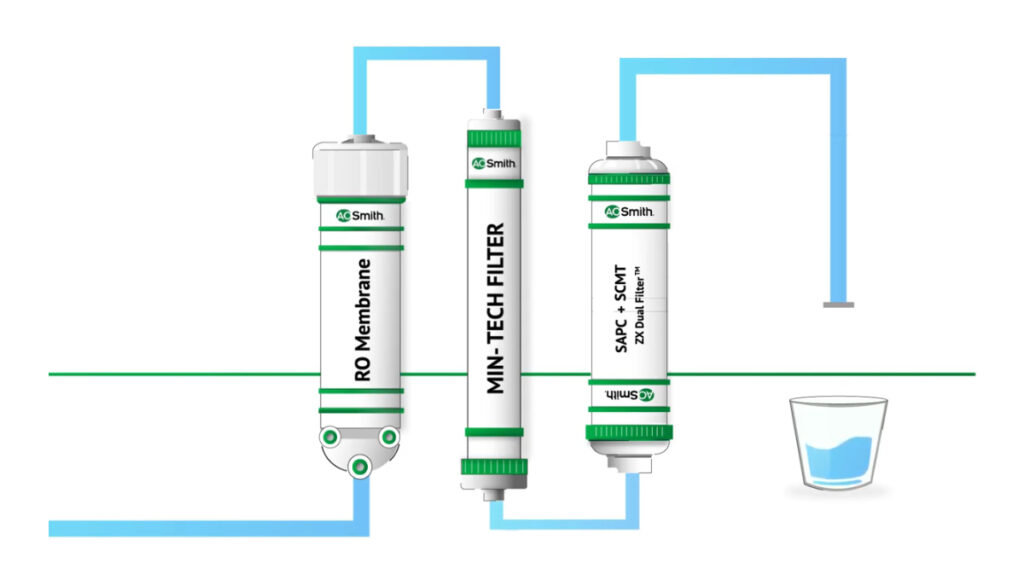
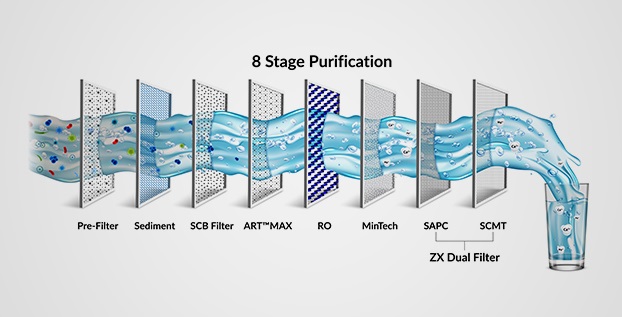
Diagram Showing the Purification Stages of AO Smith Z9 (image courtesy: AO Smith)

SCMT provides protection from microbial contaminants like viruses, bacteria, cysts, particulates, colloids, endotoxins, and phosphates.

SCMT Vs UV – Which is Better?

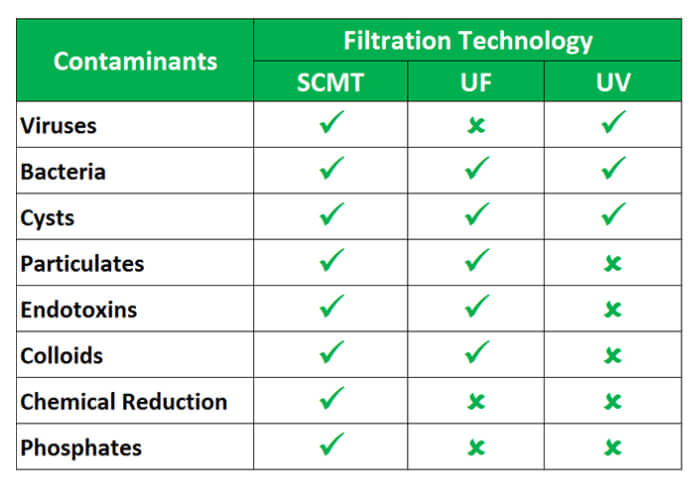
Have a look at the below-given comparison of SCMT with UV and UF.

Comparison of SCMT with UV and UF Filters

As you can see, AO Smith’s SCMT filter is far superior compared to UV and UF filters.

No other water purifier brand uses any filter, like AO Smith’s SCMT, with actual silver particles.

List of AO Smith RO Water Purifiers with SCMT Filter

  • X7+
  • Z5
  • Z8
  • Z9
  • ProPlanet P3
  • ProPlanet P4
  • ProPlanet P5
  • ProPlanet P6
  • ProPlanet P7

What do you think of this unique and innovative filter technology from AO Smith?

Do let us know your thoughts and queries in the comment section.

What is TDS Controller/MTDS and Mineralizer? Which One to Choose?

If you are planning to buy a new RO water purifier and have done some research online or offline then you must have come across some RO purifiers that come with an extra feature called ‘TDS Controller’ or MTDS.

It is also interesting to note that this same feature is sometimes marketed as a ‘TDS Modulator’ by some water purifier brands.

However, TDS Controller, MTDS, and TDS Modulator are one and the same thing and there is no functional difference between each of them.

Different manufacturers use different terms for the same feature or functionality.

While Kent uses the term ‘TDS Controller”, Aquaguard or Eureka Forbes uses the term MTDS (Manual Total Dissolved Solids Controller).

But they all perform absolutely the same function.

What the heck is this TDS Controller/MTDS?

The following text will answer all your questions about the TDS controller in an easy and user-friendly manner.

Let’s begin then.

What is a TDS Controller or MTDS in Water Purifier?

In simple terms, a TDS Controller or MTDS is a device that controls the TDS (Total Dissolved Solids) of water. Unlike the filters, cartridges, and membrane(s), TDS Controller does not filter or purify the water in any way.

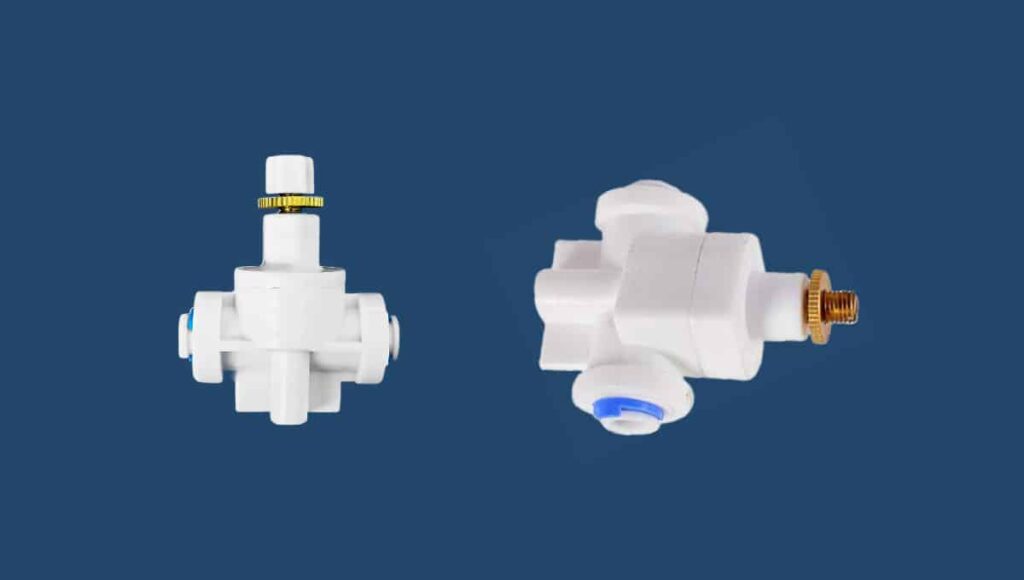
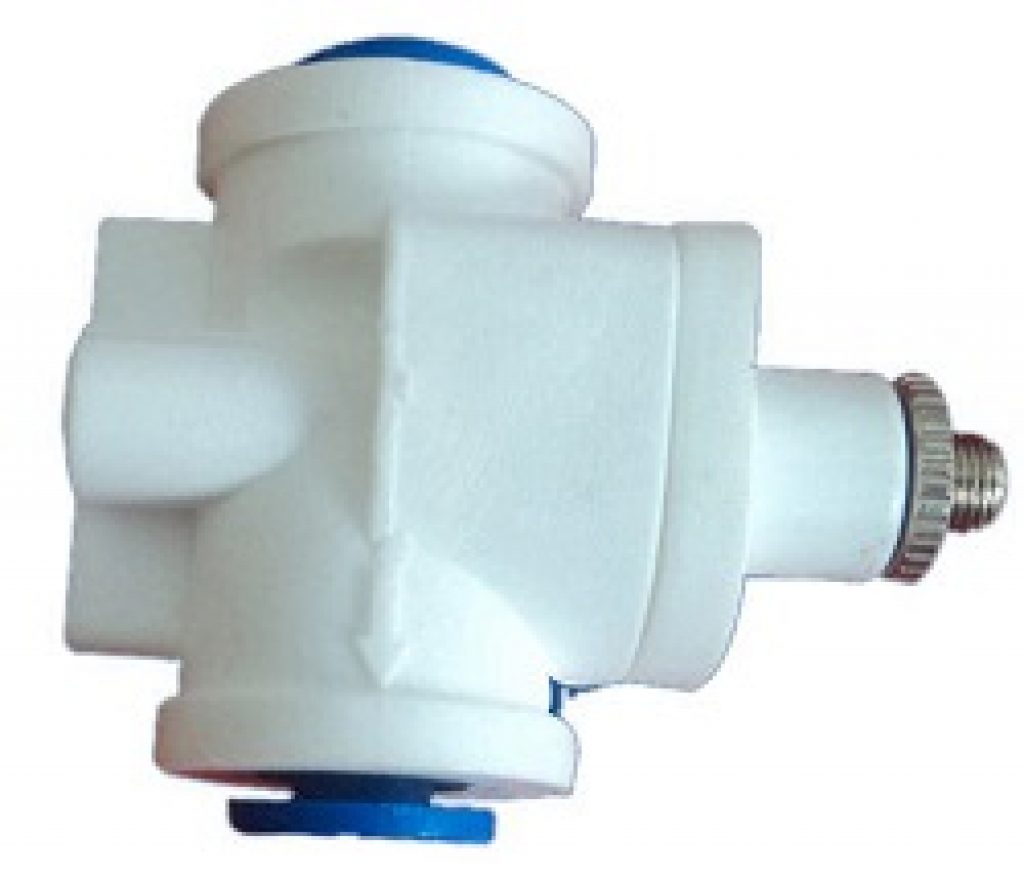
The image above shows a typical TDS controller, as you can see this is a small device. This is quite inexpensive and costs roughly around Rs. 50 only.

How TDS Controller Works?

TDS Controller or MTDS is basically a manual device that consists of two water inputs, one water output, and a TDS Control screw.

Water Input 1: Purified water output from the RO membrane

Water Input 2:
a) Purified Water from Activated Carbon Filter in case of RO+UV+TDS Controller Water Purifiers

OR

b) Purified Water from UF Membrane in case of RO+UF+UV+TDS Controller or RO+UF+TDS Controller Water Purifiers

Water Output: Mix of two water inputs in the required ratio.

TDS Control Screw: TDS Control screw controls the TDS value in output water by manually adjusting the flow of water from the two water inputs.

I) If TDS needs to be reduced then the flow of input water from the RO membrane is increased and the flow of input water from the Activated Carbon Filter or UF membrane is reduced.

II) If TDS needs to be increased then the flow of input water from the RO membrane is reduced and the flow of input water from the Activated Carbon Filter or UF membrane is increased.

Simply, Turn the screw clockwise to reduce the TDS level or anti-clockwise to increase the TDS level.

Please note, in most RO purifiers, TDS Controller is located inside the assembly along with all other RO parts. So for adjusting the TDS level, you will have to first open the outer cover.

However, if you are not comfortable doing this, we recommend getting this done by a trained professional.

Recommended TDS Level in Drinking Water?

You should adjust the TDS controller such that the TDS level of purified water is between 80 to 150 ppm.

Must Read

Need and Benefits of TDS Controller?

Natural water contains several essential minerals like Calcium, Magnesium and may also contain harmful impurities like heavy metals, fluorides, and arsenic.

These minerals and heavy metals are what constitute ‘Dissolved Solids’ in water. The level or the presence of these Dissolved Solids in water is commonly referred to as the TDS (Total Dissolved Solids) level of water.

The presence of minerals like calcium and magnesium in small quantities is what makes the drinking water healthy and it is very essential that the drinking water contains these minerals.

RO Membranes usually remove around 90% of dissolved solids from the input water, and that includes essential minerals.

What this essentially means is, if the input water does not have high TDS then chances are the RO Membranes will reduce the level of essential minerals to a significantly low level making the water unhealthy and not fit for drinking.

Relevant Link

Worried about the side effects of RO water on your health?

This is where the role of the TDS Controller comes into effect. As detailed above, in such a scenario when theowaterpur TDS level of the input water is not so high, TDS Controller can be used to increase the TDS of purified water to a healthy level.

The TDS Controller is basically used to increase the level of essential minerals in the purified water.

TDS Controller: Can it be Harmful?

In our opinion, the TDS Controller or MTDS is not an ideal way to add essential minerals to purified water. In RO purifiers with a TDS controller, 100% of the input water does not pass through the RO membrane.

Mixing RO purified water with non-RO purified water may result in the presence of several harmful heavy metals like lead and arsenic in the purified water, as these impurities can only be removed by an RO membrane.

Should you Buy an RO with TDS Controller or MTDS?

Keeping all the above discussion in mind, you should only consider buying an RO purifier with TDS Controller or MTDS if:

• The TDS Level of input/raw water is low (lower than 900 ppm).
• Water does not contain heavy metals like lead and arsenic.

If the TDS level of the raw/input water is high (higher than 900 ppm) or if the water contains harmful heavy metals then you should not choose an RO purifier with TDS Controller.

 The above recommendation is given on the basis of the RO membrane reduces the TDS level by 90%. The lower and higher TDS level limits will change if the RO membrane reduces the TDS level by more or less than 90%.

Be sure to check the specifications of the RO membrane before deciding to buy an RO purifier with TDS Controller or without TDS Controller.

Which Water Purifier with TDS Controller to Choose?

Now, if you have zeroed in on buying an RO purifier with TDS Controller then the following table will help you in finding the perfect match for your home.
TDS LEVEL    IS WATER MUDDY?    PRESENCE OF BIOLOGICAL IMPURITIES?    IDEAL CHOICE
500 – 900 ppm    No    No    RO+TDS Controller/Mineralizer
500 – 900 ppm    No    Yes    RO+UV+TDS Controller/Mineralizer
500 – 900 ppm    Yes    No    RO+UF+TDS Controller/Mineralizer or RO+UV+UF+TDS Controller/Mineralizer
500 – 900 ppm    Yes    Yes    RO+UV+UF+TDS Controller/Mineralizer
Over 900 ppm    No    No    RO
Over 900 ppm    No    Yes    RO+UV
Over 900 ppm    Yes     No    RO+UF or RO+UV+UF
Over 900 ppm    Yes     Yes     RO+UV+UF

Is there any Better Alternative to TDS Controller?

There are now better technologies available to add back the essential minerals removed by RO purification.

RO purifiers with Mineralizer cartridges are a much better option as compared to RO purifiers with TDS Controllers. Because in RO purifiers with Mineralizer feature, 100% of the water passes through the RO membrane. This removes any possible chances of harmful dissolved solids and heavy metals accidentally entering your drinking water.

The next section talks about Mineralizer, the difference between TDS Controller and Mineralizer, and which one is better.

What is Mineralizer or Mineral Cartridge?

RO Membrane does not differentiate between the good particles and the bad particles/impurities. And this is one of the disadvantages of using an RO purifier.

RO also removes essential minerals like calcium and magnesium from the water, so we need some way to add back the minerals removed during RO purification.

One way of doing that is by using a TDS Controller/Modulator, we have already discussed this in detail above.

Another, slightly more effective, way to add essential minerals is ‘Mineralizer or Mineral Cartridge’.

Mineralizer or Mineral Cartridge adds back essential minerals like Magnesium and Calcium in the proper concentration and helps in maintaining proper PH and Acid-alkaline balance in the water.

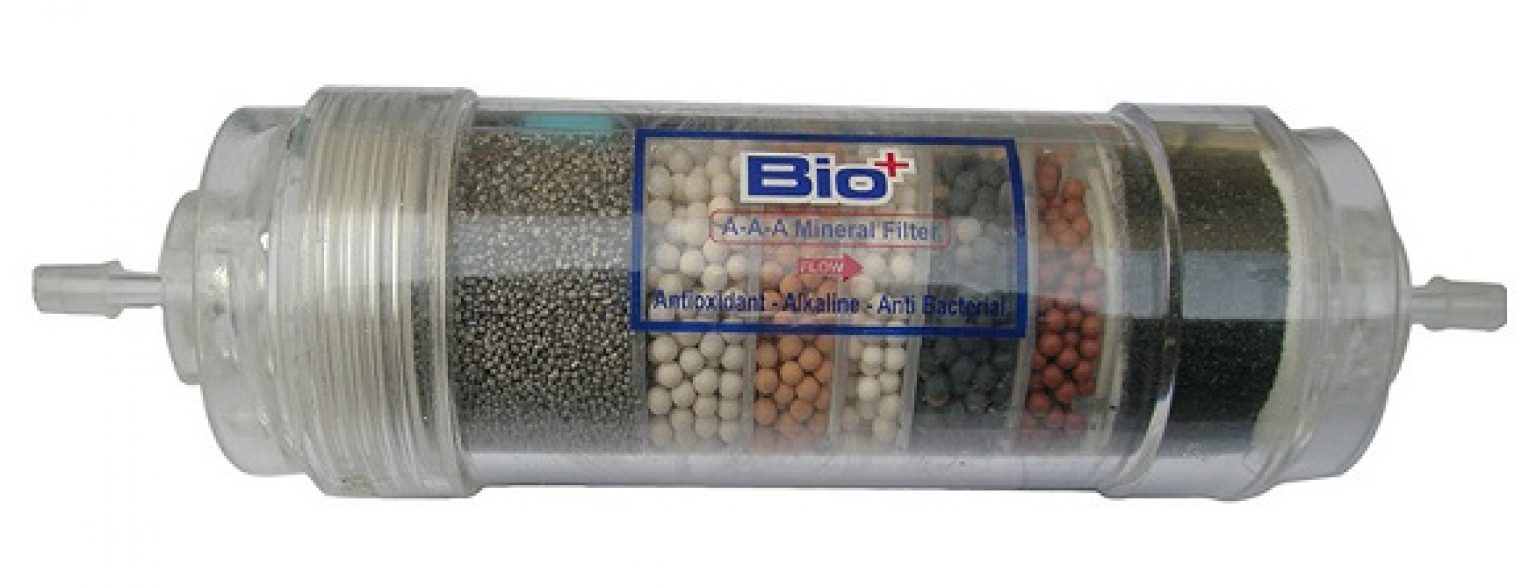
Below is an image of a typical mineral cartridge:

As you can see in the image above, the mineralizer (AKA Mineral Cartridge) consists of several types of particles. Water passes from one end to the other and several essential minerals are added, and the acidic nature of water is reduced by balancing the PH value.

Difference Between TDS Controller and Mineralizer?

TDS CONTROLLER/MTDS:    

  • 100% of the input water is not passed through RO Membrane.
  • Not ideal for water containing harmful heavy metals like lead and arsenic.
  • TDS Levels of purified water can be increased or decreased.
  • Small and costs very little.

MINERALIZER/MINERAL CARTRIDGE:

  • 100% of the input water is purified by RO Membrane.
  • Since 100% water passes through RO purification, heavy metals like lead and arsenic are removed.
  • No option to control the TDS level of purified water.
  • The size is the same as regular filters and cartridges used in RO purifiers, costing over Rs. 500.

Mineralizer or TDS Controller, Which One is Better?

Both Mineralizer and TDS Controller features are quite useful and provide excellent benefits if used appropriately.

If the water supply contains industrial impurities like lead and arsenic then you should avoid buying an RO purifier with TDS Controller. Apart from that, RO purifiers with TDS Controllers work well in most scenarios.

RO purifiers with the Mineralizer feature can be used for water infected with lead and arsenic but these purifiers have no option to adjust the TDS level as per your requirement.

So, the answer to the question ‘Whether to choose an RO purifier with TDS Controller or Mineralizer’ would actually depend on the factors like the presence of industrial impurities and your choice.

However, we feel RO purifiers with the mineralizer feature have a little upper hand as compared to the RO purifiers with the TDS Controller feature.

The Ultimate Guide for Buying A New Water Purifier

We’re pretty sure you’re convinced that every penny you spend on a great water purifier is a penny spent wisely, because of the health benefits of drinking purified and uncontaminated water.

Even apart from that, there are dozens of reasons for you to look for the best water purifier and get one home; for instance, water purifiers ensure:

  • Safety from life-threatening waterborne diseases that may be caused by contaminated water
  • That weird taste of chlorine and calcium carbonate is removed from tap water (which means it won’t spoil your coffee!)
  • Little to zero scratchings, spotting, and scaling on the surface of your kitchen utensils.

In Hurry? Jump to:

Which Water Purifier is Best for Borewell Water?

Summary

When selecting the right water purifier for borewell water you must consider both the purification technologies and the TDS level of the water. If the TDS level exceeds 500 ppm, an RO purifier combined with UV, UF, or MF is recommended. For TDS levels below 500 ppm, a UV+UF water purifier suffices.

In India, where borewells are a common water source, ensuring its purity becomes paramount for health and well-being. Borewell water often contains impurities with high TDS levels, requiring specialized purification methods to make it safe for drinking.

Borewell Water & Its Characteristics

Borewell water is obtained from under the ground and is known for its high mineral content and TDS levels.

The water from borewells can contain various contaminants such as dissolved salts, heavy metals, bacteria, and other impurities, making it unfit for direct consumption.

Additionally, the TDS levels in borewell water can surpass the recommended limits, leading to health concerns if not adequately treated.

Therefore, you must employ effective purification techniques to make borewell water drinkable.

Best Water Purifier for Borewell Water

Choosing the optimal water purifier for borewell water hinges on both the purification technologies employed and the TDS level of the water.

If the TDS level exceeds 500 ppm, indicating a high mineral content, an RO purifier combined with UV, UF, or MF technologies is recommended. Reverse Osmosis (RO) effectively reduces TDS levels by passing water through a semi-permeable membrane, removing dissolved impurities. UV, UF, or MF serve as additional purification stages, targeting microorganisms and particulate matter, ensuring comprehensive water treatment.

For borewell water with TDS levels below 500 ppm, a UV+UF water purifier suffices. Ultraviolet (UV) purification eliminates bacteria, viruses, and other pathogens, while Ultrafiltration (UF) removes suspended particles and colloidal matter. This combination ensures reliable purification without the need for RO technology, tailored to the lower TDS content of the water.

In conclusion, when selecting a water purifier for borewell water, it is essential to consider both the purification technologies and the TDS level of the water. By assessing these factors, users can make informed decisions to ensure the delivery of safe and clean drinking water tailored to their specific water quality requirements.

21 Easy Tips on How to Save Water in Daily Life

Read and try to implement the following tips. Don’t forget to share with your friends and family and do your bit to save the water!

70% of the earth is covered with water, but only 1% is easily accessible. Water is such a scarce resource. With more and more news of areas fighting water shortages and droughts, saving water and using it more efficiently has become an absolute necessity.

Even if your home has an abundant water supply, saving water and reducing wastage becomes a shared responsibility for our future generations. Reducing your water usage will also reduce electricity used directly or indirectly.

With water being such a vital natural resource for life, saving water and reducing water wastage is a great way to take action. You can adopt some effortless ways to start this fight for conserving water for our future generations. We have listed some of the most basic and most effective tips on how you can save water in your daily life.

Whether you’re washing your clothes, taking a bath, shaving, brushing your teeth, or gardening, several simple water conservation methods will help you save water.

How to Save Water in the Bathroom

1. Fix your Leaks

Known or unknown leaks in taps, pipes, and toilets can result in up to 11,000 Liters of water being wasted. You should always check all your bath fittings for any leakage and get the leaks repaired as soon as possible. It will save wastage of water and avoid any damage to your walls and fittings.

Use our water wastage calculator to get a fair idea of the amount of water your leaky faucet or tap may be wasting.

2. Turn Off the Tap While Brushing your Teeth or Shaving

An average tap or faucet throws approximately 10 liters of water every minute. So don’t leave the tap open while brushing or shaving. Please turn off the faucet after you wet your brush and turn it on when it’s time to rinse.

3. Turn Off the Tap While Washing your Hands

Do not leave the tap running while you’re scrubbing your hands. Wet your hands and turn off the tap; turn on the tap when you need to rinse.

4. Flush with Less

Older toilet flush systems use 3 to 4 times more water as compared to the new ones. Convert your old flush toilet to a dual-flush toilet. A dual-flush toilet allows you to use less water to flush liquid waste and more water to flush the solid waste by pressing the correct button.

5. Install a Tap/Faucet Aerator

Adding an aerator to your tap/faucet will add air to the water flow, giving you a more consistent stream while also using less water overall. Tap/Faucet aerators are very easy to install, inexpensive, and highly effective. Taps/faucets with aerators can save up to 80% of water than the tap/faucets without aerators. Aerators should also be used in taps/faucets in bathrooms.

6. Bath for Shorter Duration

Bathing or taking a shower for longer durations requires more water. Try to reduce the shower duration. It will not only save the much-needed water but will also give you more time to enjoy other things.

Relevant link: Best hard water softener for the bathroom.

How to Save Water in the Kitchen

1. Don’t Use RO Water Purifiers (if RO purification is not necessary)

Do you know that an average RO purifier wastes approximately 3 litres of water for every 1 litre of purified water?

That means only 25% of water is purified, and 75% of water comes out as waste.

The Bureau of Indian Standards (BIS) has specified the maximum TDS limit for safe drinking water as 500 mg/L. Therefore, you should avoid using an RO water purifier if the TDS level of the input water is below 500 mg/L. Please also get your water checked for harmful heavy metals like lead, arsenic, and mercury.

In such a case, using a UV+UF water purifier would be more appropriate.

Save water by not using RO water purifiers if RO purification is not necessary. Use water purifiers using alternate purification technologies like Gravity Based water purifiers, UV water purifiers, UV+UF water purifiers, etc.

READ THIS

Buying guide to know which type of purifier is best for your home.

2. Using an RO Purifier? Reduce & Re-use the RO Waste Water

As detailed in the above point, you should only use an RO water purifier if necessary. Suppose the input water quality is such that it is required to use an RO water purifier at your home. Then it would be best to reduce and re-use the RO wastewater.

  • Reduce: Most RO water purifiers only recover around 20-25% water as purified drinking water. Some brands have tried to address this concern by improving the recovery rate by up to 50%. Always check the purifier’s recovery rate while buying a new RO purifier. You can also reduce the amount of wastewater that your existing RO purifier produces by periodically changing the filters and RO membrane. The wastewater increases when filters and RO membrane gets choked. A choked RO membrane will have a very poor recovery rate. Suppose you notice your purifier is taking more than usual time to fill the storage tank or there is an increase in the amount of wastewater. In that case, it is time for you to get the filters and membrane checked.
  • Re-use: Don’t let the RO wastewater flow down the drain. You can store the wastewater in some tank or bucket. Re-use this wastewater for other household works like washing utensils, floor mopping, washing your car, watering your plants, etc. Please visit the following link to understand how you can re-use the RO wastewater.

3. Washing Dishes by Hand?

When you are washing dishes by hand, don’t leave the water running for rinsing. Fill up your sink with water, or use a large pan or bucket for rinsing the dishes. It will minimize water wastage by not letting the water run the whole time when you’re scrubbing the dishes.

4. Washing Dishes by Dishwasher?

Always remember to load your dishwasher to its full capacity. It will avoid multiple running cycles of the dishwasher and will save a lot of water.

5. Defrost Frozen Food in the Refrigerator

If you are cooking frozen foods or vegetables, then instead of soaking them in the water, you can use your refrigerator’s defrost option. But for doing this, you will have to plan a little earlier as defrosting with the fridge will take some time.

6. Clean Fruits & Vegetables in a Pan

When you need to clean fruits and vegetables with water, try filling up a pan of water to wash them instead of letting the faucet run. By doing this, you will use less water and use the water from the pan for watering your plants.

How to Save Water While Washing Clothes

1. Replace your Old In-efficient Washing Machine with an Efficient Washing Machine

Top Load and Front Load Washing Machines

– Old-style top-loading washing machines use 150 to 170 Liters of water per wash. You can reduce this by up to 50% by using high-efficiency top-loading washing machines. Front-loading washing machines use much less water and electricity than top-loading washing machines.

2. Don’t Run Empty Washing Machines

Don’t just run your washing machine for a couple of socks or 1 or 2 shirts. Make sure you’re washing a full load of laundry. When washing your clothes, use the economy mode – this will save you both water and electricity.

3. Wash Less Often

Several clothes like sweaters, jeans, towels, track pants and jackets do not require washing every time you wear them. It will not only save water but will save wear and tear on your clothes.

How to Save Water Outdoors

1. Install a Water Meter

A water meter will help measure the amount of water you use. It is an essential tool in your fight against reducing the wastage of water. Because without measuring the water usage, you may feel that you are not wasting the water. Once you install a water meter, you might be shocked to find out how much water you are using. Meters can also be beneficial in detecting leaks – take the meter reading, wait for an hour or two without running any water, and reread it. If there is any difference in the meter reading, then you know something is leaking.

2. Stop the Overflow

Almost all homes and commercial premises in India have overhead tanks for water storage. And all of us have seen ours or our neighbors’ water tank overflowing at some point in time. We can quickly stop the overflow from our water tanks and save hundreds of liters of water daily by only using one of the below solutions:

  • Install a Float Valve: A float valve is a straightforward, inexpensive, but highly effective equipment for stopping the tank overflow. It automatically prevents the incoming water flow in the tank when the tank’s water reaches the maximum level. This solution is best suited for water tanks that are filled using normal incoming water pressure. Remember, you should never install a standard float valve if you use a water motor/pump to fill the water tank.
  • Water Tank Overflow Alarm: A float valve is an excellent equipment for stopping the tank overflow if you do not use a water pump. But what about the people who are using a water pump? Water Tank Overflow Alarm is a small electronic device that alerts you every time water overflows from your tank. It does not stop the flow of water. It merely raises an alarm so you can shut off the water pump. This simple device not only saves water but also saves electricity. It automatically switches off your water pump after your water tank is full.
  • Automatic Water Level Controller: As the name suggests, an Automatic Water Level Controller is an electronic device that controls or manages the water level in your water tank. It consists of an electronic controller and water level sensors. The electronic controller is connected to the electric supply, water motor/pump, and the sensors. This device automatically switches on/off your water pump when the tank’s water level reaches the minimum/maximum level.

All of these solutions not only help you in saving water and electricity but are also very helpful in preventing damage to roofs and walls from overflowing water.

3. Use Smart Watering Tactics on your Garden and Plants

You can keep your home garden and plants green and healthy without wasting too much water. It would be best if you only watered areas that truly need it. The best time of day to do your watering is in the morning or evening so that the water doesn’t immediately evaporate. Do not water on a rainy day. Water deeply, but less often. It will encourage plants to grow deeper roots, and plants with deeper roots require water less frequently. If you are watering using a pipe, connect a hose or spray gun at the end. Water-saving hoses and spray guns cover more area and use comparatively lesser water.

4. Don’t Plant Grass If you Have Water Shortage

Do you live in an area with insufficient water supply or inadequate rainfall? The best advice anyone can give you is not to plant grass because grass requires a considerable amount of water. You can instead grow plants that don’t need as much water.

5. Use a Bucket to Wash your Car

While using a bucket may require a little more effort but using a bucket instead of a running water pipe to wash your car will reduce the water wastage.

6. Don’t Wash the Verandah or Backyard with a Pipe

If you need to clean your verandah or backyard, use a broom to remove dry matter. If the area still needs additional cleaning, use a bucket of water.

Let’s join hands with us and take a pledge to save the water. Be more responsible and act now to save the earth and lives before it’s too late.

Share this with your friends and start a campaign to make them aware of how they can begin to saving water today.