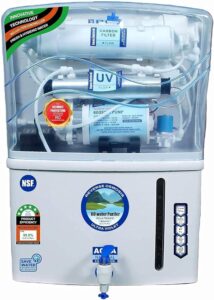
Most Indian homes use RO water purifiers, but very few know about the side effects of using one.
This isn’t surprising. RO water purifiers provide reliable water purification, but they often lead to unnecessary wastage of water.
Should you stop using RO water purifiers?
OR
Stop worrying about the wastage of water?
Out of all the water purifier technologies, RO water purification is the most reliable. And if your home/office has high TDS water then you have no choice but to use an RO water purifier.
What if we tell you something that lets you enjoy the trustworthy RO purification without having to worry about the wastage of water?
You just need to know about some easy ways to re-use RO waste water, and then take action.
In this guide, we’ll go through six actionable ways to re-use RO waste/reject water to reduce water wastage.
But first, let’s go over the basics.
Why Re-Use RO Waste Water?
Using RO water purifiers not only gives us safe, clean and tasty water but also protects us from life-threatening waterborne diseases.
But there is one big drawback of using RO water purifiers i.e. the excessive wastage of water. An average RO purifier wastes approximately 3 litres of water for every 1 litre of purified water. That means only 25% of water is purified and 75% of water comes out as waste.
Wondering why so much water is wasted? Reverse Osmosis (RO) purifiers use membrane technology to filter dissolved impurities, the impure water is filtered out and is often called waste water or reject water. The percentage of waste water varies according to the RO purifier being used.
Because of the high level of impurities and dissolved solids, this reject water is not fit for drinking or bathing.
However, the RO waste water can be used in various ways to avoid the overall wastage of water in your home or office.
Before we check out how you can use this waste water, let’s look at some things to be kept in mind beforehand.
Things to Keep in Mind Before Using the RO Waste Water
It is best to determine the TDS level
To be 100% sure, if possible, the waste water should also be tested for the presence of inorganic and chemical impurities like Sodium.
In addition to the TDS level, a few websites and several videos on YouTube also suggest checking the pH value of the RO reject water. But there would hardly be any difference in the pH value of the input water and the RO reject water. So you need not worry about the pH value of the Reverse Osmosis waste water.
How to Store the RO Waste Water?
The easiest way would be to drop the reject pipe in a bucket. But if your daily drinking water requirement is 20 litres then on an average your RO water purifier would generate around 60 litres of waste water.
Assuming you are using a bucket of 15 litres, you would need to empty the bucket 4 times in a day. And the biggest pain is keeping a check on the bucket, so it does not overflow.
This may not be practical for a lot of users.
If you are one of those then worry not because we have a better solution for people like you.
You can extend the RO waste pipe and drop it in a big tank placed outside your kitchen. This stored water can later be re-used for one of the several ways listed below.
You can use a small submersible pump (like the ones used in water coolers) for taking water from this tank. All you have to do is drop the submersible pump in the tank and connect it to a power source.
You can then use a water pipe connected to the outlet of the pump to draw water from the tank without using any bucket or container. A bigger tank also means that you do not have to worry about the water overflow, as would be the case if you were using a bucket in place of a big tank.
The bucket, container or tank used for storing Reverse Osmosis waste water should have a wide opening so you can easily clean the deposits at regular intervals.
in the reject water before deciding to reuse for other purposes.
If the TDS level of the RO waste water is too high, then it might not be suitable for re-use in most of the applications given below.
6 Easy Ways to Re-use RO Reject Water
1. Wash Your Car
A single car wash could consume anywhere between 14 litres (for car wash using a bucket) to 75 litres (for car wash using a hosepipe) of water. Keeping in mind the scarcity of drinking water, using so much potable water for car wash seems unreasonable and no lesser than a crime.
We believe, washing cars every day not only wastes a lot of water but is unnecessary. If you are using an RO water purifier at your home or office then you can simply store the waste water in some tank or bucket and reuse it for washing your car. Water with a TDS level of 1200 – 1500 PPM can be safely used for car washing. If the TDS level of waste water is high you can mix tap water to dilute it. This should lower down the TDS level.
2. Watering Your Plants or Home Garden
If you are someone who loves gardening or have planted some plants in pots, the wastewater can be used for watering your plants to keep your indoor or terrace garden green. This tip is particularly useful for people living in urban areas as the TDS level in municipal water tends to be lower.
To be on the safer side, you can start with a few plants. Use the RO waste water for 15-20 days and check its effect on the growth of your plants. Each plant will respond to this change differently, which will give you a clear understanding of which plants are responding better to RO waste water. For gardening/irrigation use, a TDS level of up to 2100 PPM is permissible. You should also check out the percentage of Sodium, it should be less than 60 % ( 1.e. Na / Na + Ca + Mg). High Sodium content causes loss of soil porosity and therefore harmful to soil fertility in the long run.
3. Wash Your Utensils
Another useful application for Reverse Osmosis waste water is to wash your utensils. Simply store the waste water in bucket or tank, make sure you place the bucket for collecting RO waste water near your kitchen sink so it can be used easily when you clean your utensils.
We found this useful YouTube video that shows you how you can easily re-use the RO waste water in your kitchen for washing utensils.
4. Floor Mopping
Using the RO waste water for mopping the floor is easy and will definitely save tens of litres of clean water every day. If you have a bigger house then the savings could be in hundreds of litres every single day. If the TDS level of waste water is high (over 2000 ppm):
Dilute waste RO water with an equal quantity of tap water. Because plain Reverse Osmosis waste water with high TDS may stain or leave salt particles on the floor.
Use the RO waste water for floor mopping on alternate days. This will reduce the chances of any stains or salt deposits.
5. Pre-rinsing Laundry
You can use the RO waste water for daily laundry as well, but please keep in mind that using high TDS water might not be suitable for some delicate fabrics. Most of the Indian homes now use washing machines, though washing machines save a lot of time and effort but also result in a lot of wastage of water. You can create an overhead tank that collects the RO waste water and use the waste water from this tank directly in your washing machine (do keep in mind the fact about delicate fabrics)? This tip works best for semi-automatic & twin tub washing machines.
6. Cleaning and Flushing Your Toilets
Another big source of clean water wastage in modern homes is the use of toilet flush. Every single flush sends approximately 5 to 7 litres of potable water down the drain.RO waste water can be used effectively to reduce this wastage of clean water by using it to flush your toilets. When you start, always monitor your toilet seats for any discoloration on porcelain surfaces after a few days. With a periodical cleanup using common toilet cleaners, the chances of discoloration and salt deposits can be avoided.
Looking for an RO purifier that produces very little or no waste water? Check out KENT RO Water Purifiers. These purifiers use Save Water Technology which recovers up to 50% pure water and stores the rejected water in a separate tank.
Every year we read and listen to the news of farmers committing suicide because of droughts. And there are thousands and lakhs of families in our country who have to travel for miles every day to collect drinking water. If you are fortunate enough to be blessed with sufficient water supply, think of it as a privilege.
Do your bit by saving every drop of water. These small measures can really make a lot of difference because EVERY DROP COUNTS.
Before we discuss the different types of water purification technologies and which one of these suits your needs, it is important to first understand the different types of impurities found commonly in drinking water. Because then only we’ll be able to understand the need for such varied types of water purifiers.
Different Types of Impurities Found Commonly in Drinking Water
The type of impurities found in the drinking water coming to your home mainly depends on the source and distribution medium of water. The most common sources of drinking water are: lakes, rivers, bore wells, harvested rainwater, piped municipal corporation supply, water tankers, etc.
The quality of water, level of impurities like harmful pollutants, and chemicals, biological impurities like bacteria and viruses, and hardness, all depend on the source of water.
Most common types of impurities in water:
TYPE OF IMPURITY
MOST COMMON WATER SOURCE
EFFECT ON DRINKING WATER
Un-dissolved solids such as sand and mud
River, borewell, or piped water where pipes are damaged
Muddy or turbid appearance
Dissolved inorganic salts like Sodium & Potassium
Borewells and seawater
Salty or brackish taste
Dissolved inorganic salts like Sodium and potassium
Borewells and river water
Hardness and scale formation
Organic compounds
Lakes and ponds
Foul smell or bad odor
Disinfectants like Chlorine
Municipal piped water supply
Bitter taste
Biological impurities like bacteria & viruses
Piped water where pipes are damaged, water tankers
Biological contamination, waterborne diseases
Usually, water from lakes, rivers, and harvested rainwater will have a low TDS level (Total Dissolved Solids) as compared to water from bore wells.
Borewell or groundwater generally has high TDS and may also contain harmful chemical impurities like lead, arsenic, etc.
Piped water supply or water stored in tanks is generally more prone to biological contamination (if the pipes are damaged or the storage tanks are not cleaned frequently).
Identify the Water Type – Soft or Hard Water
Water can be classified as soft or hard based on the level of dissolved solids in water. Total Dissolved Solids (TDS) is regarded as the degree of hardness and are measured in units of Parts Per Million (PPM) or Milligrams per Litre (mg/L).
1 ppm = 1 mg/L
Water with TDS values ranging between 150-300 ppm is considered to be soft water, while water with a TDS value higher than 500 ppm is considered to be hard or contaminated water.
What’s the source of the water you get supplied to your home?
If it comes from underground water, supplied by water tankers, or drawn from deep-dug bore wells, then most probably it’s hard water.
Now, hard water contains pretty high percentages of dissolved solids like calcium, magnesium, heavy metals, fluorides, and arsenic. All these dissolved impurities make hard water unfit for human drinking.
On the other hand, water sourced from rivers, rainwater harvesting systems, lakes, and municipality-managed storage and delivery systems is generally termed soft water. Soft water, though not as dangerous, also needs purification before it can be deemed safe for human consumption in the long run.
Water Purifier Types, and Mapping Them to Your Water Type
1. Reverse Osmosis (RO) Purifiers
To understand the workings of RO, we need to first understand what Osmosis is.
In the normal osmosis process, the water naturally flows from an area of low solute concentration (low TDS level), through a membrane, to an area of high solute concentration (high TDS level).
The pores of the membrane are very small (about 0.0001 microns), water molecules being smaller are allowed to pass through and the smallest dissolved impurities and bacteria are trapped.
As the name suggests, Reverse Osmosis (RO) does the opposite of Osmosis, that is, pushing the water molecules from the region of higher TDS level to the region of lower TDS level. This is achieved by applying external pressure with the help of a water pump to reverse the natural flow of water.
Water with impurities or high TDS is pumped at high pressure into the RO chamber, this pushes the water molecules across the semi-permeable membrane to the other side while leaving the dissolved solids and other impurities behind.
All the dissolved solids and impurities along with some input water, also known as RO wastewater, are discharged through a separate outlet.
RO purifiers are therefore always recommended for purifying water that has a high TDS level. The TDS level of the output drinking water from the RO purifier is very low as compared to the input water.
Some Drawbacks of RO Technology
Requires Electricity: A high-pressure electrical water pump is used to apply external pressure on the input water, hence RO purifiers cannot work without electricity.
Wastes Water: A significant part of the input water is discharged along with the dissolved impurities, which results in unnecessary wastage of water. On average, RO purifiers produce 3 litres of wastewater for every 1 litre of purified water.
2. Ultrafiltration (UF)
Like RO, Ultrafiltration also uses a semi-permeable membrane to purify water.
After reading the first sentence, you must now be thinking if both RO and UF use the same method to purify the water then what is the difference between RO and UF?
Ultrafiltration or UF uses a membrane with much larger pores (appx. 0.01 microns) as compared to RO which uses a membrane with very small pores (appx. 0.0001 microns).
The advantage of using Ultrafiltration is that UF purifiers can work without electricity because the membrane has much larger pores and water can pass through it naturally using the force of gravity. This means no external pressure or water pump is required. Also, since UF purifiers do not hold back any water, there is no wastage of water.
However there are some limitations to using UF purifiers, because of larger pore size, UF can only remove undissolved solids and larger impurities. It cannot remove the dissolved solids or reduce the TDS level. So, UF purifiers are not suitable for the purification of high TDS water or hard water.
3. Ultraviolet (UV) Purification
As the name suggests, Ultraviolet or UV purification uses ultraviolet rays for the purification of water.
A UV purifier works by throwing high-intensity UV rays on the water which kills or inactivates the disease-causing bacteria and viruses.
However, UV purifiers cannot remove any dissolved or un-dissolved impurities or chemicals from water.
Because of this most of the UV purifiers that are available in the market use sediment filters to remove undissolved impurities and an activated carbon filter to remove Chlorine and some dissolved impurities.
Therefore, UV water purifiers are only recommended for areas where the water source has a low level of TDS.
If the water has a low TDS level but is contaminated with bacteria and viruses and appears muddy then you can use a UF+UV water purifier.
4. Tap/Faucet Mounted Filters or Gravity-Based Purifiers
These types of filters or purifiers are the simplest to use and provide the most basic water purification.
These filters generally comprise sediment or sediment + activated carbon filters which can remove large and un-dissolved impurities like mud and sand along with some chemicals and microorganisms. Tap/Faucet Filters are very small in size and can be directly fitted on taps.
Gravity-based storage purifiers are the advanced version of tap/faucet filters. These purifiers offer slightly advanced purification and come with an in-built storage tank to store input/impure water.
Most of the Gravity-based water purifiers available in the Indian market now have 2 separate storage tanks for input/impure and output/purified water.
Tap/Faucet Mounted Filters and Gravity Based Purifiers are only suitable for areas where the TDS level is low and water is not highly contaminated with biological impurities like bacteria, viruses, and other disease-causing germs.
Which Water Purifier Should I Choose?
RO technology has become synonymous with water purifiers and you must have heard a lot of people referring to water purifiers as RO (like the brand Xerox has become synonymous with photocopying).
Because of this, when we talk about buying a water purifier most people think RO water purifiers should be purchased by default without considering the most important facts like the source of water and TDS level of input water.
If you have read all the above discussion then you are well aware of the fact that RO purification is required only when the water coming to your home or office has a high TDS value (generally higher than 500 ppm).
These days there are different kinds of water purifiers available in the market ranging from simple tap/faucet filters and Gravity-based purifiers to UF, UV, RO, and their combinations. This vast range of different technologies and hundreds of different water purifier models from various brands have increased the complexity of buying the right purifier for your home or office.
As discussed earlier, you should buy an RO purifier only if the water to be purified has a high TDS level. The Bureau of Indian Standards (BIS) has specified the maximum TDS limit for safe drinking water as 500 ppm.
There is absolutely no need to use an RO purifier if the TDS level is below 500 ppm. Because if your water source has low TDS then the RO purifier will further reduce it to a very low TDS level. This means the purified water will then be devoid of essential minerals like calcium and magnesium which are required for our good health.
If the TDS level of incoming water is below 500 ppm then you should check the incoming water for turbidity (clarity), muddy appearance, or the presence of biological impurities like bacteria and viruses.
Though water purifier makers try to differentiate their products from competitors by flaunting advanced water purification technologies, most of them use a mix of three major purification approaches – Reverse Osmosis (RO), Ultraviolet (UV), and UF (Ultrafiltration).
If you do not want to go into the technicalities of the different purification approaches, then you can simply refer to the below checklist that will help you buy the right purifier for your home or office.
The table given below lists all the parameters to evaluate and choose the right water purifier according to your needs.
Soft water has a low TDS level; UF water purifiers work pretty well for it.
For soft water with a high level of biological contamination, go for a UV or UF+UV water purifier.
Hard water contains a higher level of TDS, apart from specific toxins; so, RO purifiers are well suited for purifying it.
For hard water with a high level of biological contamination, go for an RO+UV or RO+UV+UF water purifier.
UF filters are best used in combination with another water purification system, as they don’t kill any microorganisms in contaminated water. UF filters only remove suspended solids from water.
Activated carbon-based water purifiers are ideally suited to remove excess chlorine from water.
Important Note
Please note that there is one exception to the above rules.
If the water contains harmful heavy metals like lead, arsenic, mercury, etc., then you must choose an RO purifier regardless of the TDS level of the water.
This is so because only the RO membranes can get rid of these contaminants.
Main Components of RO Water Purifier
Sediment Pre-filter: In the first stage of purification, the input water is filtered using a pre-sediment filter. Pre-sediment filter not only removes fine and coarse particulate impurities/dirt but also improves the life of the RO/UF membrane resulting in a lower cost of maintenance. If the purifier does not include this as a standard feature then it can be added separately as well.
Activated Carbon Pre-filter: Activated carbon pre-filter removes chlorine and organic impurities like harmful pesticides from the water. Activated carbon pre-filter also adsorbs bad odor and taste-causing organic compounds from water.
RO/UF membranes: Water is fed into the RO membrane at high pressure using an in-built water pump. RO membrane removes the hardness, dissolved salts, pesticides, and heavy metals like lead, arsenic, and mercury. It also removes microbial contaminants like viruses, bacteria, protozoa, and cysts. The UF membrane also works like the RO membrane but it does not remove the dissolved solids. Some purifiers use both RO and a UF membrane, the output water from both membranes is mixed to control the TDS level of purified water.
TDS controller: The TDS controller is used for controlling the TDS level of the output water. RO process not only removes bad impurities but also removes essential minerals like Calcium and Magnesium. TDS controller retains adequate quantities of essential minerals in the purified water by adjusting the ratio of water from the RO membrane (low TDS) and UF membrane (normal TDS) in the final mix.
UV Filter: A UV filter uses a high-intensity UV bulb to kill or inactivate any virus, bacteria, and parasites to deliver safe water.
Carbon Post-filter: Carbon Post-filter acts as a polisher and enhances the taste of purified water. It also removes any foul smell from water.
Storage Tank: This stores the purified water for later use. Make sure the storage tank is made of food-grade, non-toxic material. Some of the high-end water purifiers now come with a stainless steel water storage tank. You should also check the capacity of the storage tank.
Display: Most of the RO water purifiers come with a basic display for on/off, tank full, etc. Some advanced purifiers also come with fault alerts, filter change alerts, UV fail, TDS level indicators, purity indicators, etc.
Gravity-Based Water Purifiers – Where Do They Fit In?
Good question. Considering they’re inexpensive and effective, it’s natural that these filters excite a lot of interest, especially among first-time buyers of water purifiers. Now, these filters don’t deliver advanced water purification capabilities such as RO and UV-based filters. So, the only scenarios where they become practical options are:
When you don’t have optimum conditions for the installation of an electric water purifier, such as optimum water pressure, electricity, and running water supply.
When you need to switch homes frequently and don’t want to have bulky equipment to move around and re-install every time.
When you have a very limited budget.
In such situations, you could either choose to buy purified water in bulk from a convenience store or install a gravity-based water purifier.
Installation Feasibility of Water Purifiers
Most RO and UV-based water purifiers are bulky and pretty heavy. Before you buy one, make sure you know of its dimensions, and have a plan to have it wall-mounted in the kitchen area. You will need to provide an inlet for electricity and another for water. Also, there must be a continuous water supply at decent pressure, particularly when the water purifier is mounted high on a kitchen wall.
Reducing and Reusing RO Waste Water
Avoid using an RO water purifier if the TDS level of the input water is below 500 mg/L and the water does not contain any harmful heavy metals like lead, arsenic, and mercury. In such a case, using a UV+UF water purifier would be more appropriate. Save water by not using RO water purifiers if RO purification is not necessary.
An average RO purifier wastes approximately 3 litres of water for every 1 litre of purified water. That means only 25% of water is purified and 75% of water comes out as waste.
Shocked?
It’s true. This high percentage of water wastage is a major cause of worry. If you are also using an RO water purifier at your home or office then we request you to follow the below-given tips to reduce the wastage of water and re-use the wastewater generated by RO purifiers.
If the output water from your purifier has very low TDS (less than 150) then it means your purifier is generating more wastewater. A very low level of TDS not only results in higher wastage of water but it is also bad for our health as it is devoid of essential minerals. Increasing the TDS will not only make drinking water healthier but also reduce waste. You can increase the TDS level of your water purifier using the TDS controller knob.
The sole and biggest criteria for deciding the type of water purifier you should buy are the source of water and the kind of impurities present in the water supplied to your home or office. Use the suggestions shared in this water purifier buying guide to buy a new water purifier for your home or office.