10 Health Benefits of Drinking Copper Water

For ages, our elders have advised us to drink water from the copper vessel to reap health benefits. Perhaps, most of our elders still drink water from the copper vessel, but the younger generation has now switched to plastic or other metallic bottles.

Since our old traditions are making way back to the present, it’s high time to know the benefits of drinking water in a copper vessel. Before focusing on the benefits of drinking water in the copper bottle, let us throw light on the importance of copper for our bodies.

Copper is one of the essential trace minerals which offers numerous health benefits. It helps in making red blood cells and collagen. It also plays a vital role in the production of energy.

Now that you have an idea of the importance of copper in our bodies, let us have a look at the science behind the ancient Indian practice of drinking water in copper vessels.

Table of Contents

The Science Behind the Ancient Indian Practice of Drinking Water from Copper Vessels

The concept of drinking water in a copper vessel is not new. It is something that was always suggested during Ancient times. But now we also have science backing the age-old logic.

A recently published article, in the Journal of Health, Population, and Nutrition, discussed the result of storing water contaminated with harmful bacteria like Salmonella and E.Coli in a copper vessel for 16 hours. Would you believe that no traces of bacteria were found in the water after 16 hours and the quality of the water also improved?

This is just one of the many studies that prove the benefits of drinking water in a copper vessel. Studies have also confirmed that the copper vessel has an inhibitory effect on the bacteria and this, in turn, purifies the water and makes it potable.

There is also a myth that after the water has been stored in a copper jug, the amount of copper in the water increases beyond the permissible limit. It is considered one of the side effects of drinking water from a copper jug but WHO has busted this myth and has revealed in a study that the copper quantity stays within the permissible limit and it is not only safe but healthy to drink water from a copper vessel.

Various other studies have explained the science behind the ancient Indian practice of drinking water from copper vessels and all of them have given a positive conclusion.

If you want to purify your drinking water naturally, just store it in a copper vessel for at least four hours, and you are good to consume the water.

Let us now focus on the health benefits of drinking water from a copper vessel.

10 Health Benefits of Drinking Water from Copper Vessel

1. Helps in Weight Loss

One of the most important benefits of copper water is that it helps the digestive system to perform in a better manner and not only this, but it also breaks down the fat stored in your body. The broken-down fat is then eliminated from the body efficiently. Drinking water from a copper vessel in the morning helps in weight loss. If you want to lose weight efficiently without much exercise, you should drink copper water i.e. the water stored in a copper vessel.

2. Improves Digestion

Copper has anti-bacterial properties, and thus it helps in killing harmful bacteria in the stomach, and in turn, it improves digestion. It is also an excellent remedy for infection and ulcers. You can also drink water stored in a copper vessel for detoxifying your body. The copper mineral gets leached when you store drinking water in a copper vessel. The copper-rich water breaks down the food particles and helps in improving digestion. If you want to improve your digestive system, drinking copper-infused water is one way of doing it.

3. Slows Down Ageing

As we age, fine lines or wrinkles appear on the face. Copper has natural anti-oxidant properties. It also has cell-forming properties. If you want to slow down the aging procedure, you can use copper-infused water for fighting off the free radicals.

4. Good for Heart and Beats Hypertension

The American Cancer Society has discovered that copper helps in regulating blood pressure and heart rate. It is thus, good for the heart. Apart from that it lowers the level of bad cholesterol and beats hypertension effectively.

5. Beats Arthritis And Inflamed Joints

We have already discussed the anti-inflammatory properties of copper. This property of copper can be used effectively for getting relief from pain due to inflamed joints. If you are suffering from arthritis or inflamed joints, drinking water in a copper vessel can be the perfect remedy for you.

6. Beats Anaemia

When the level of copper is low in our bodies, we absorb less iron. This deficiency of iron results in anemia. The iron absorption in the body can be increased naturally with the help of copper. As the copper intake increases in your body, the iron absorption will increase too, and this will help you to beat anemia.

7. Boosts Immunity & Heals Wounds Faster

Copper is known for its anti-inflammatory, anti-bacterial, and anti-viral properties. You can use copper-infused water for healing wounds faster.

Another amazing health benefit of drinking Copper water is the strengthening of the immune system. Copper not only helps in quicker healing of external wounds but it also aids in fighting against any internal infection.

8. Regulates the Working of the Thyroid Gland

Copper is an essential mineral that controls the working of the thyroid gland. Copper energizes the thyroid and prevents too much of excretion from the thyroid gland in the blood. However, there should be a balance in the copper intake for the proper functioning of the thyroid gland. So instead of consuming too much copper, one should consume it in limited quantity, and drinking water from a copper vessel is a perfect way to ensure that.

9. Boosts Skin Health And Melanin Production

Copper can also be used for improving your skin health. It supports the production of melanin which is the pigment responsible for the color of your skin, hair, and eyes. It also prevents the graying of the hair. The copper mineral because of its cell-producing properties helps in skin regeneration. It improves the softness, elasticity, and firmness of the skin.

10. Antimicrobial, Fights Infections

We have already discussed a study in the previous section where it has been proved that copper has antimicrobial properties. It can kill harmful bacteria effectively and helps in fighting against infection rigorously.

Tips on Drinking Water from a Copper Vessel, Correctly and Safely

Drinking water from a copper vessel can be very beneficial as discussed above. But, just drinking water from a copper vessel is not enough; it is essential to drink water from a copper vessel correctly and safely to extract maximum benefits. Here are a few tips for drinking water from a copper vessel correctly.

  • The quality of the copper used in a copper vessel plays an important role. Buy the copper vessel from the authentic copper seller. Also, make sure that the vessel is made of 100% copper.
  • After you purchased a new copper jug or bottle, do not drink water directly from it. Instead, wash or rinse it with a natural acidic solution. You can also use lemon and salt for cleaning the copper vessel.
  • If you want to avail the maximum benefit of water stored in a copper vessel, then store the water in the copper vessel for at least eight hours. You can store the water in a copper vessel at night and then drink it early in the morning.
  • Do not drink water that has been stored in a copper vessel for more than 12 hours.
  • Do not store any liquid other than water.
  • Never deep freeze the copper bottle or jug.

Do not keep drinking water from a copper vessel all day long. Excess of anything is bad, and the same thing is applicable in the case of copper too.

Drinking copper water once a day will help you balance the copper intake.

Myths Around Copper

One prevalent myth is that copper is poisonous to your body. This is not true; in fact, copper is one of the essential elements of the body. It is an important mineral for our enzyme system, and it helps in different kinds of metabolic procedures. Copper is poisonous only if you end up consuming corroded copper. It is therefore essential to buy a copper jug or bottle that is made of 100% copper.

Copper is not produced in our body naturally and therefore; you need an external source. And the best way of doing so is by drinking water from a copper vessel.

Also, just drinking water from a copper vessel is not enough. You have to store water in the copper vessel for eight hours at least and then consume it for gaining maximum benefits. When you allow water to sit for an extended hour, the copper is absorbed by water, and it acquires many valuable properties that can be beneficial for the body.

Are There Any Side Effects of Drinking Water from Copper Jug?

There are no side effects or disadvantages of drinking water in a copper vessel if you consume copper water as recommended.

However, as discussed above, you should not drink copper water all day long. Drinking copper water once daily is more than sufficient.

If you drink copper water in excess quantity then it can cause nausea, vomiting, diarrhoea, gastric (stomach) issues, and headaches. And if you drink excess copper water for far too long then it can also cause serious damage to your liver.

Important Things to Consider While Buying a Copper Jug or Bottle

As discussed above, there are several health benefits of the copper bottle but we should also keep a few important things in mind while buying a copper jug or bottle:

  • Buy only 100% copper vessels. Do not purchase copper vessels which are mixed with other metals.
  • Buy copper vessels that have a big mouth. It is because it is natural for the copper to tarnish with the passage of time and therefore regular cleaning is needed. A close or narrow mouth will make it difficult for you to wash the vessel. A big mouth copper vessel can be washed easily.
  • Sometimes, the adulterated copper vessel is sold as 100% pure. How will you check whether it is pure copper or not? One of the simplest methods to check the purity of copper is to apply some lemon juice on its surface and then rinse it with clean water. The surface should shine like new. This is a sign of pure copper.
  • Always buy from a reliable brand or offline/online store.

Follow these tips to enjoy maximum copper bottle benefits without worrying about any side effects.

Now that you know how to buy a good copper vessel let us shift our focus on the cleaning process of copper vessels.

Recommendation – Copper Bottle and Jug

How to Wash Your Copper Bottle or Jug

The process of washing a copper bottle or jug is different from washing a regular vessel. You have to clean the copper vessel with your hand and do not use the dishwasher. The dishwasher detergent can lead to the oxidization of the copper vessel which will damage it permanently.

Use a solution of lemon juice and salt in equal quantity, dilute it with water and then use this solution for washing the copper vessel. Do not use any scrubber, soap, or detergent for washing the copper vessel. For best cleaning, use hot water in the copper vessels.

You should clean the copper vessel once/twice a week using lemon and salt.

If you want to wash your copper vessel daily, use a soft cleaning liquid or hot water for cleaning it. You can also use the copper shining powder every now and then to keep the copper vessel shining like new.

Water Purifiers with Goodness of Copper

Keeping in mind the several health benefits that Copper-infused drinking water presents, some leading water purifier brands have launched purifiers that add the goodness of copper to the purified water.

If you are someone looking to take advantage of copper-infused water but feel it is too much of a task to use a Copper vessel.

You should consider buying a water purifier with the goodness of Copper.

We have reviewed two such purifiers for you.

Final Thoughts

Both the Ancient Indian practice and today’s science provide us enough reasons to drink water stored overnight in a copper vessel.

But try not to go overboard with drinking copper-infused water. Just drink once or twice a day from the copper vessel to stay healthy naturally.

The drinking water guidelines of the Bureau of Indian Standards specify 0.05 mg/L as an acceptable limit and 1.5 mg/L as the maximum permissible limit (in the absence of an alternate drinking water source) for copper in drinking water.
How to Make Alkaline Water – Health Benefits & Side Effects

A lot of health experts advise that maintaining the right pH balance is very essential for keeping ourselves healthy.

And we also believe the right pH balance is indeed very important because a large number of people nowadays suffer from acidity and problems related to acidity.

In order to understand the complex puzzle of acidic and alkaline nature let us first understand what pH value is.

pH stands for “potential hydrogen”, which is basically a measure of the hydrogen ion concentration.

pH value is a measure of how acidic or basic/alkaline a solution is on a scale of 0 to 14. A pH value of 7 is considered neutral, a pH value less than 7 is considered acidic and a pH greater than 7 is considered basic or alkaline.

E.g. if the level is 1, it means the solution is very acidic and if it is 14, it is very alkaline. Alkaline Water has a pH value generally ranging around 8 or 9.

Table of Contents

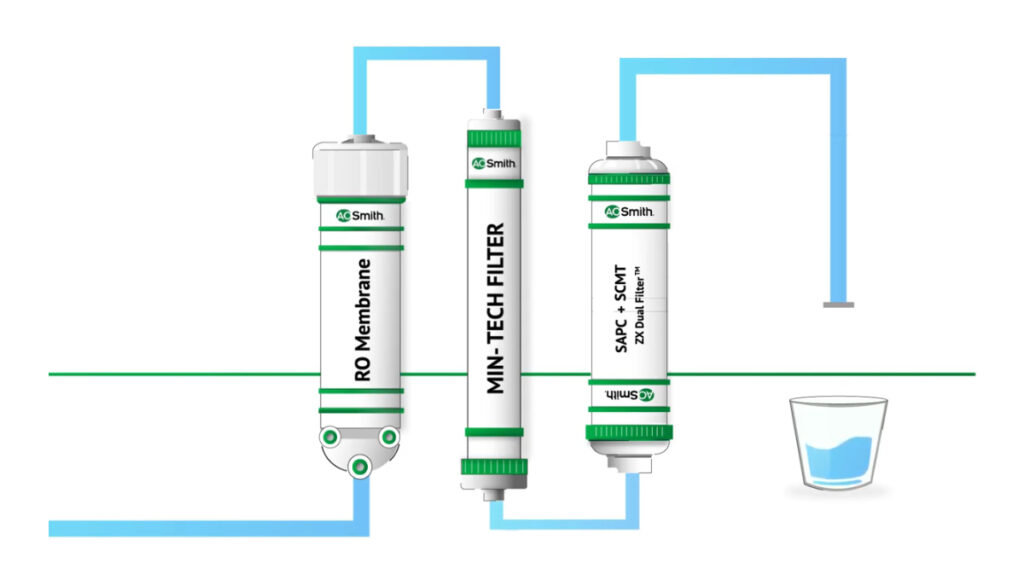
What is SCMT Filter in AO Smith Water Purifiers?

If you have read or researched about any high-end RO water purifier from AO Smith then you may have come across a term called SCMT.

Not sure what an SCMT filter is?

SCMT filter is a patented and one-of-a-kind water purification filter from AO Smith.

It is the final stage of purification in AO Smith RO purifiers and functions more or less like a UV disinfection chamber.

If it functions like UV purification, why not use UV then?

Because it does what UV does + a lot more.

You’ll see that in a few moments.

But first, have a look at what the SCMT filter is.

The SCMT stands for Silver Charged Membrane Technology.

And as the name suggests, this filter contains actual silver particles.

Yes, you read that right.

After the grand success of Sona Chandi Chyawanprash, now here we have the Chandi ka filter :).

Jokes apart, the SCMT filter does contain actual silver particles.

As the water passes through this filter, the anti-microbial nature of silver eliminates a range of microbial contaminants present in water.

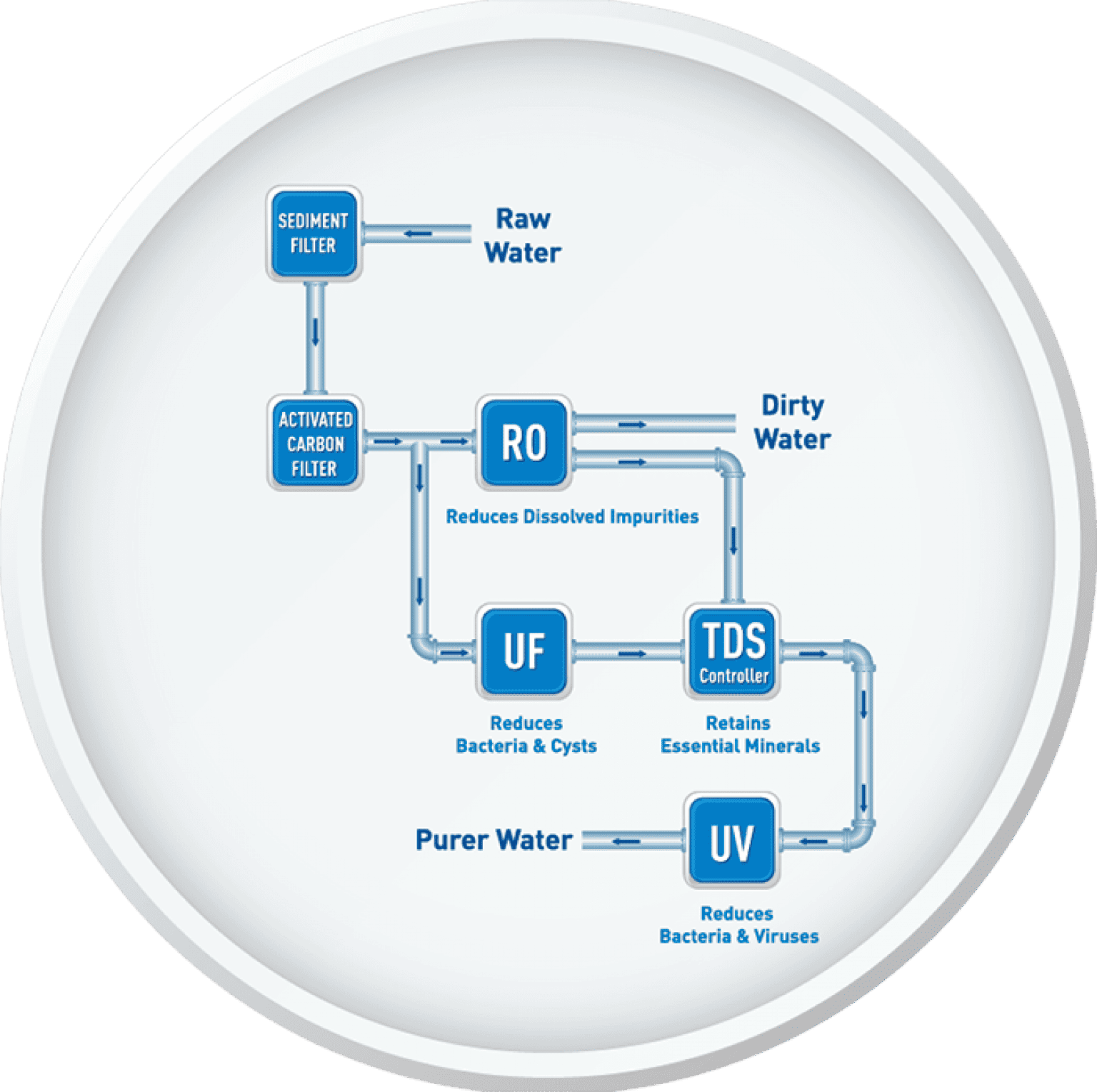
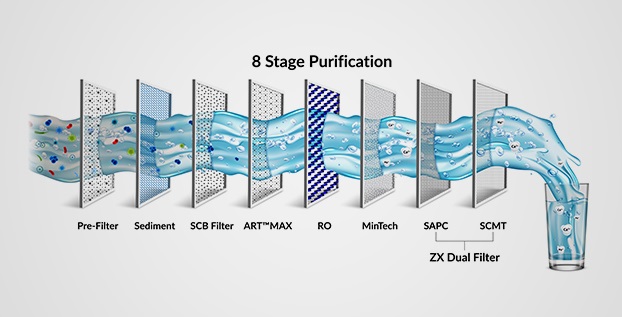
Diagram Showing the Purification Stages of AO Smith Z9 (image courtesy: AO Smith)

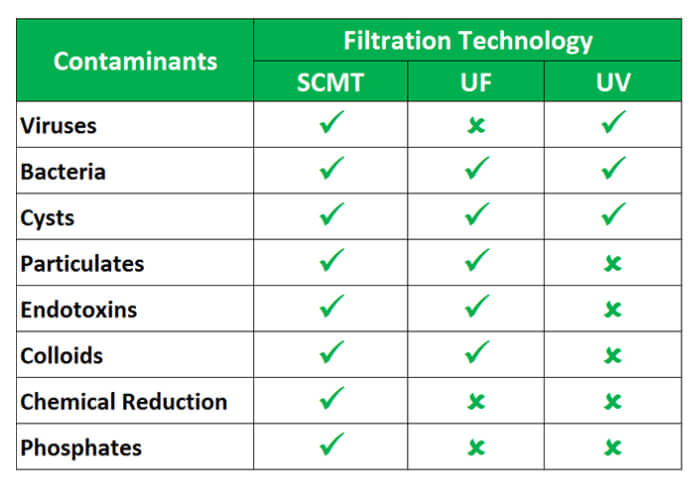
SCMT provides protection from microbial contaminants like viruses, bacteria, cysts, particulates, colloids, endotoxins, and phosphates.

SCMT Vs UV – Which is Better?

Have a look at the below-given comparison of SCMT with UV and UF.

Comparison of SCMT with UV and UF Filters

As you can see, AO Smith’s SCMT filter is far superior compared to UV and UF filters.

No other water purifier brand uses any filter, like AO Smith’s SCMT, with actual silver particles.

List of AO Smith RO Water Purifiers with SCMT Filter

  • X7+
  • Z5
  • Z8
  • Z9
  • ProPlanet P3
  • ProPlanet P4
  • ProPlanet P5
  • ProPlanet P6
  • ProPlanet P7

What do you think of this unique and innovative filter technology from AO Smith?

Do let us know your thoughts and queries in the comment section.

What is TDS Controller/MTDS and Mineralizer? Which One to Choose?

If you are planning to buy a new RO water purifier and have done some research online or offline then you must have come across some RO purifiers that come with an extra feature called ‘TDS Controller’ or MTDS.

It is also interesting to note that this same feature is sometimes marketed as a ‘TDS Modulator’ by some water purifier brands.

However, TDS Controller, MTDS, and TDS Modulator are one and the same thing and there is no functional difference between each of them.

Different manufacturers use different terms for the same feature or functionality.

While Kent uses the term ‘TDS Controller”, Aquaguard or Eureka Forbes uses the term MTDS (Manual Total Dissolved Solids Controller).

But they all perform absolutely the same function.

What the heck is this TDS Controller/MTDS?

The following text will answer all your questions about the TDS controller in an easy and user-friendly manner.

Let’s begin then.

What is a TDS Controller or MTDS in Water Purifier?

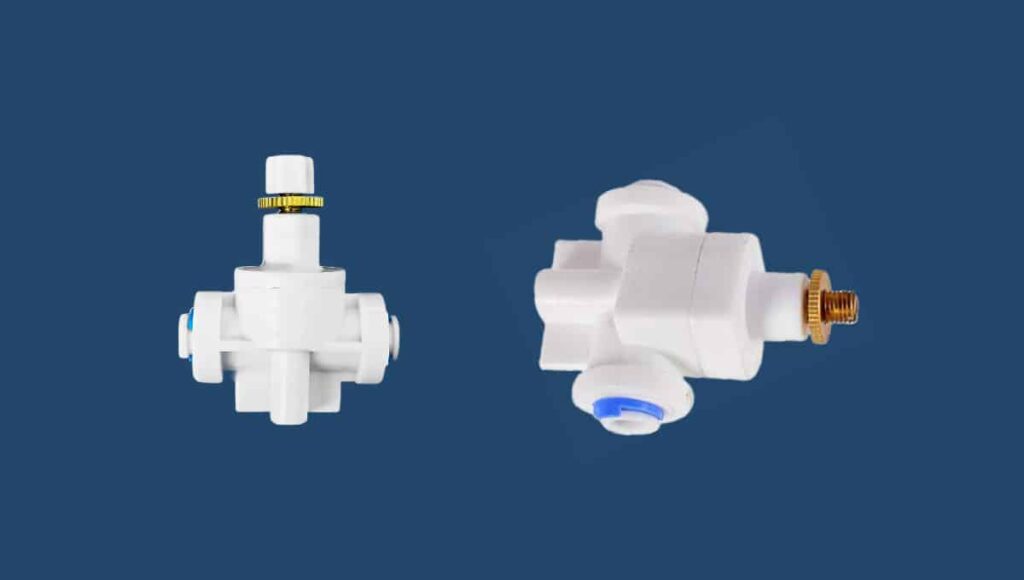
In simple terms, a TDS Controller or MTDS is a device that controls the TDS (Total Dissolved Solids) of water. Unlike the filters, cartridges, and membrane(s), TDS Controller does not filter or purify the water in any way.

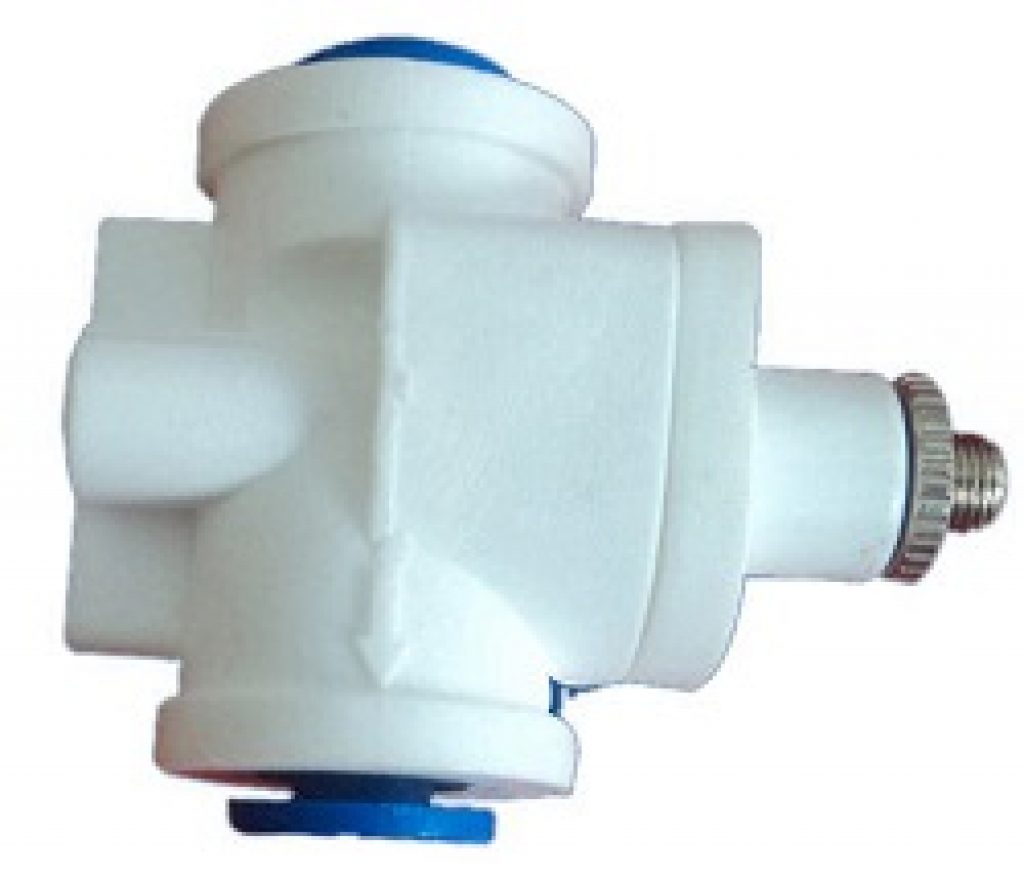
The image above shows a typical TDS controller, as you can see this is a small device. This is quite inexpensive and costs roughly around Rs. 50 only.

How TDS Controller Works?

TDS Controller or MTDS is basically a manual device that consists of two water inputs, one water output, and a TDS Control screw.

Water Input 1: Purified water output from the RO membrane

Water Input 2:
a) Purified Water from Activated Carbon Filter in case of RO+UV+TDS Controller Water Purifiers

OR

b) Purified Water from UF Membrane in case of RO+UF+UV+TDS Controller or RO+UF+TDS Controller Water Purifiers

Water Output: Mix of two water inputs in the required ratio.

TDS Control Screw: TDS Control screw controls the TDS value in output water by manually adjusting the flow of water from the two water inputs.

I) If TDS needs to be reduced then the flow of input water from the RO membrane is increased and the flow of input water from the Activated Carbon Filter or UF membrane is reduced.

II) If TDS needs to be increased then the flow of input water from the RO membrane is reduced and the flow of input water from the Activated Carbon Filter or UF membrane is increased.

Simply, Turn the screw clockwise to reduce the TDS level or anti-clockwise to increase the TDS level.

Please note, in most RO purifiers, TDS Controller is located inside the assembly along with all other RO parts. So for adjusting the TDS level, you will have to first open the outer cover.

However, if you are not comfortable doing this, we recommend getting this done by a trained professional.

Recommended TDS Level in Drinking Water?

You should adjust the TDS controller such that the TDS level of purified water is between 80 to 150 ppm.

Must Read

Need and Benefits of TDS Controller?

Natural water contains several essential minerals like Calcium, Magnesium and may also contain harmful impurities like heavy metals, fluorides, and arsenic.

These minerals and heavy metals are what constitute ‘Dissolved Solids’ in water. The level or the presence of these Dissolved Solids in water is commonly referred to as the TDS (Total Dissolved Solids) level of water.

The presence of minerals like calcium and magnesium in small quantities is what makes the drinking water healthy and it is very essential that the drinking water contains these minerals.

RO Membranes usually remove around 90% of dissolved solids from the input water, and that includes essential minerals.

What this essentially means is, if the input water does not have high TDS then chances are the RO Membranes will reduce the level of essential minerals to a significantly low level making the water unhealthy and not fit for drinking.

Relevant Link

Worried about the side effects of RO water on your health?

This is where the role of the TDS Controller comes into effect. As detailed above, in such a scenario when theowaterpur TDS level of the input water is not so high, TDS Controller can be used to increase the TDS of purified water to a healthy level.

The TDS Controller is basically used to increase the level of essential minerals in the purified water.

TDS Controller: Can it be Harmful?

In our opinion, the TDS Controller or MTDS is not an ideal way to add essential minerals to purified water. In RO purifiers with a TDS controller, 100% of the input water does not pass through the RO membrane.

Mixing RO purified water with non-RO purified water may result in the presence of several harmful heavy metals like lead and arsenic in the purified water, as these impurities can only be removed by an RO membrane.

Should you Buy an RO with TDS Controller or MTDS?

Keeping all the above discussion in mind, you should only consider buying an RO purifier with TDS Controller or MTDS if:

• The TDS Level of input/raw water is low (lower than 900 ppm).
• Water does not contain heavy metals like lead and arsenic.

If the TDS level of the raw/input water is high (higher than 900 ppm) or if the water contains harmful heavy metals then you should not choose an RO purifier with TDS Controller.

 The above recommendation is given on the basis of the RO membrane reduces the TDS level by 90%. The lower and higher TDS level limits will change if the RO membrane reduces the TDS level by more or less than 90%.

Be sure to check the specifications of the RO membrane before deciding to buy an RO purifier with TDS Controller or without TDS Controller.

Which Water Purifier with TDS Controller to Choose?

Now, if you have zeroed in on buying an RO purifier with TDS Controller then the following table will help you in finding the perfect match for your home.
TDS LEVEL    IS WATER MUDDY?    PRESENCE OF BIOLOGICAL IMPURITIES?    IDEAL CHOICE
500 – 900 ppm    No    No    RO+TDS Controller/Mineralizer
500 – 900 ppm    No    Yes    RO+UV+TDS Controller/Mineralizer
500 – 900 ppm    Yes    No    RO+UF+TDS Controller/Mineralizer or RO+UV+UF+TDS Controller/Mineralizer
500 – 900 ppm    Yes    Yes    RO+UV+UF+TDS Controller/Mineralizer
Over 900 ppm    No    No    RO
Over 900 ppm    No    Yes    RO+UV
Over 900 ppm    Yes     No    RO+UF or RO+UV+UF
Over 900 ppm    Yes     Yes     RO+UV+UF

Is there any Better Alternative to TDS Controller?

There are now better technologies available to add back the essential minerals removed by RO purification.

RO purifiers with Mineralizer cartridges are a much better option as compared to RO purifiers with TDS Controllers. Because in RO purifiers with Mineralizer feature, 100% of the water passes through the RO membrane. This removes any possible chances of harmful dissolved solids and heavy metals accidentally entering your drinking water.

The next section talks about Mineralizer, the difference between TDS Controller and Mineralizer, and which one is better.

What is Mineralizer or Mineral Cartridge?

RO Membrane does not differentiate between the good particles and the bad particles/impurities. And this is one of the disadvantages of using an RO purifier.

RO also removes essential minerals like calcium and magnesium from the water, so we need some way to add back the minerals removed during RO purification.

One way of doing that is by using a TDS Controller/Modulator, we have already discussed this in detail above.

Another, slightly more effective, way to add essential minerals is ‘Mineralizer or Mineral Cartridge’.

Mineralizer or Mineral Cartridge adds back essential minerals like Magnesium and Calcium in the proper concentration and helps in maintaining proper PH and Acid-alkaline balance in the water.

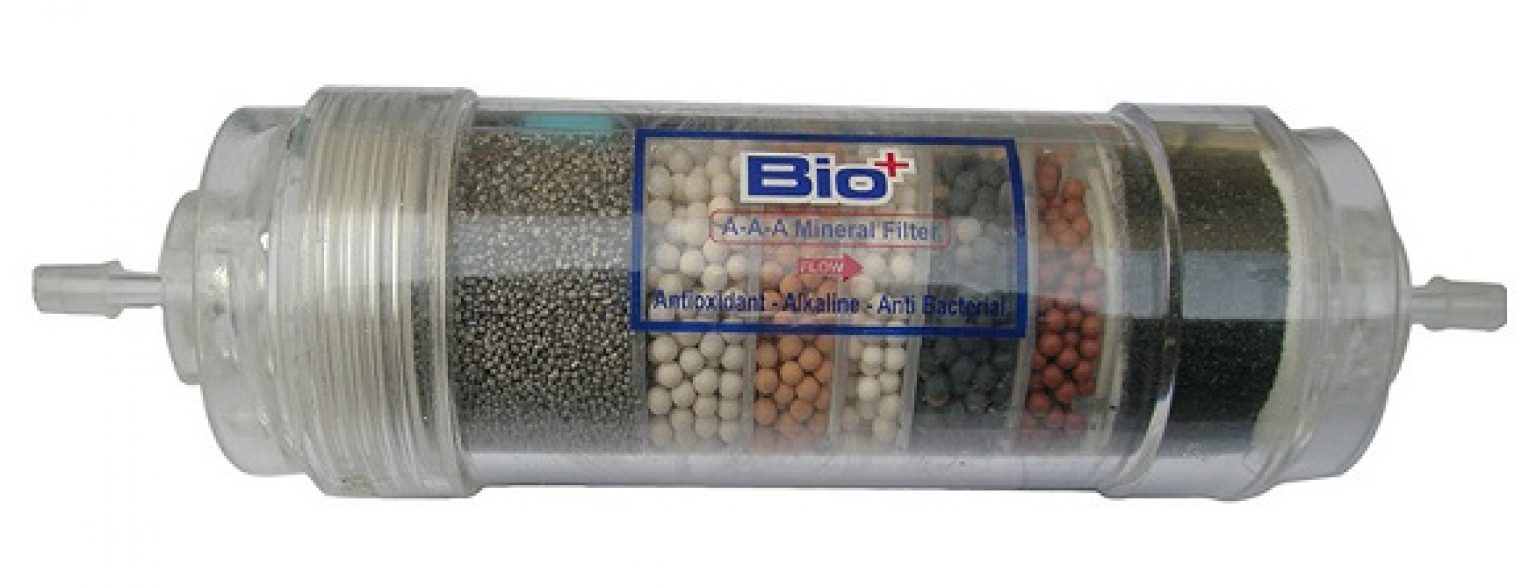
Below is an image of a typical mineral cartridge:

As you can see in the image above, the mineralizer (AKA Mineral Cartridge) consists of several types of particles. Water passes from one end to the other and several essential minerals are added, and the acidic nature of water is reduced by balancing the PH value.

Difference Between TDS Controller and Mineralizer?

TDS CONTROLLER/MTDS:    

  • 100% of the input water is not passed through RO Membrane.
  • Not ideal for water containing harmful heavy metals like lead and arsenic.
  • TDS Levels of purified water can be increased or decreased.
  • Small and costs very little.

MINERALIZER/MINERAL CARTRIDGE:

  • 100% of the input water is purified by RO Membrane.
  • Since 100% water passes through RO purification, heavy metals like lead and arsenic are removed.
  • No option to control the TDS level of purified water.
  • The size is the same as regular filters and cartridges used in RO purifiers, costing over Rs. 500.

Mineralizer or TDS Controller, Which One is Better?

Both Mineralizer and TDS Controller features are quite useful and provide excellent benefits if used appropriately.

If the water supply contains industrial impurities like lead and arsenic then you should avoid buying an RO purifier with TDS Controller. Apart from that, RO purifiers with TDS Controllers work well in most scenarios.

RO purifiers with the Mineralizer feature can be used for water infected with lead and arsenic but these purifiers have no option to adjust the TDS level as per your requirement.

So, the answer to the question ‘Whether to choose an RO purifier with TDS Controller or Mineralizer’ would actually depend on the factors like the presence of industrial impurities and your choice.

However, we feel RO purifiers with the mineralizer feature have a little upper hand as compared to the RO purifiers with the TDS Controller feature.

The Ultimate Guide for Buying A New Water Purifier

We’re pretty sure you’re convinced that every penny you spend on a great water purifier is a penny spent wisely, because of the health benefits of drinking purified and uncontaminated water.

Even apart from that, there are dozens of reasons for you to look for the best water purifier and get one home; for instance, water purifiers ensure:

  • Safety from life-threatening waterborne diseases that may be caused by contaminated water
  • That weird taste of chlorine and calcium carbonate is removed from tap water (which means it won’t spoil your coffee!)
  • Little to zero scratchings, spotting, and scaling on the surface of your kitchen utensils.

In Hurry? Jump to:

Which Water Purifier is Best for Borewell Water?

Summary

When selecting the right water purifier for borewell water you must consider both the purification technologies and the TDS level of the water. If the TDS level exceeds 500 ppm, an RO purifier combined with UV, UF, or MF is recommended. For TDS levels below 500 ppm, a UV+UF water purifier suffices.

In India, where borewells are a common water source, ensuring its purity becomes paramount for health and well-being. Borewell water often contains impurities with high TDS levels, requiring specialized purification methods to make it safe for drinking.

Borewell Water & Its Characteristics

Borewell water is obtained from under the ground and is known for its high mineral content and TDS levels.

The water from borewells can contain various contaminants such as dissolved salts, heavy metals, bacteria, and other impurities, making it unfit for direct consumption.

Additionally, the TDS levels in borewell water can surpass the recommended limits, leading to health concerns if not adequately treated.

Therefore, you must employ effective purification techniques to make borewell water drinkable.

Best Water Purifier for Borewell Water

Choosing the optimal water purifier for borewell water hinges on both the purification technologies employed and the TDS level of the water.

If the TDS level exceeds 500 ppm, indicating a high mineral content, an RO purifier combined with UV, UF, or MF technologies is recommended. Reverse Osmosis (RO) effectively reduces TDS levels by passing water through a semi-permeable membrane, removing dissolved impurities. UV, UF, or MF serve as additional purification stages, targeting microorganisms and particulate matter, ensuring comprehensive water treatment.

For borewell water with TDS levels below 500 ppm, a UV+UF water purifier suffices. Ultraviolet (UV) purification eliminates bacteria, viruses, and other pathogens, while Ultrafiltration (UF) removes suspended particles and colloidal matter. This combination ensures reliable purification without the need for RO technology, tailored to the lower TDS content of the water.

In conclusion, when selecting a water purifier for borewell water, it is essential to consider both the purification technologies and the TDS level of the water. By assessing these factors, users can make informed decisions to ensure the delivery of safe and clean drinking water tailored to their specific water quality requirements.

21 Easy Tips on How to Save Water in Daily Life

Read and try to implement the following tips. Don’t forget to share with your friends and family and do your bit to save the water!

70% of the earth is covered with water, but only 1% is easily accessible. Water is such a scarce resource. With more and more news of areas fighting water shortages and droughts, saving water and using it more efficiently has become an absolute necessity.

Even if your home has an abundant water supply, saving water and reducing wastage becomes a shared responsibility for our future generations. Reducing your water usage will also reduce electricity used directly or indirectly.

With water being such a vital natural resource for life, saving water and reducing water wastage is a great way to take action. You can adopt some effortless ways to start this fight for conserving water for our future generations. We have listed some of the most basic and most effective tips on how you can save water in your daily life.

Whether you’re washing your clothes, taking a bath, shaving, brushing your teeth, or gardening, several simple water conservation methods will help you save water.

How to Save Water in the Bathroom

1. Fix your Leaks

Known or unknown leaks in taps, pipes, and toilets can result in up to 11,000 Liters of water being wasted. You should always check all your bath fittings for any leakage and get the leaks repaired as soon as possible. It will save wastage of water and avoid any damage to your walls and fittings.

Use our water wastage calculator to get a fair idea of the amount of water your leaky faucet or tap may be wasting.

2. Turn Off the Tap While Brushing your Teeth or Shaving

An average tap or faucet throws approximately 10 liters of water every minute. So don’t leave the tap open while brushing or shaving. Please turn off the faucet after you wet your brush and turn it on when it’s time to rinse.

3. Turn Off the Tap While Washing your Hands

Do not leave the tap running while you’re scrubbing your hands. Wet your hands and turn off the tap; turn on the tap when you need to rinse.

4. Flush with Less

Older toilet flush systems use 3 to 4 times more water as compared to the new ones. Convert your old flush toilet to a dual-flush toilet. A dual-flush toilet allows you to use less water to flush liquid waste and more water to flush the solid waste by pressing the correct button.

5. Install a Tap/Faucet Aerator

Adding an aerator to your tap/faucet will add air to the water flow, giving you a more consistent stream while also using less water overall. Tap/Faucet aerators are very easy to install, inexpensive, and highly effective. Taps/faucets with aerators can save up to 80% of water than the tap/faucets without aerators. Aerators should also be used in taps/faucets in bathrooms.

6. Bath for Shorter Duration

Bathing or taking a shower for longer durations requires more water. Try to reduce the shower duration. It will not only save the much-needed water but will also give you more time to enjoy other things.

Relevant link: Best hard water softener for the bathroom.

How to Save Water in the Kitchen

1. Don’t Use RO Water Purifiers (if RO purification is not necessary)

Do you know that an average RO purifier wastes approximately 3 litres of water for every 1 litre of purified water?

That means only 25% of water is purified, and 75% of water comes out as waste.

The Bureau of Indian Standards (BIS) has specified the maximum TDS limit for safe drinking water as 500 mg/L. Therefore, you should avoid using an RO water purifier if the TDS level of the input water is below 500 mg/L. Please also get your water checked for harmful heavy metals like lead, arsenic, and mercury.

In such a case, using a UV+UF water purifier would be more appropriate.

Save water by not using RO water purifiers if RO purification is not necessary. Use water purifiers using alternate purification technologies like Gravity Based water purifiers, UV water purifiers, UV+UF water purifiers, etc.

READ THIS

Buying guide to know which type of purifier is best for your home.

2. Using an RO Purifier? Reduce & Re-use the RO Waste Water

As detailed in the above point, you should only use an RO water purifier if necessary. Suppose the input water quality is such that it is required to use an RO water purifier at your home. Then it would be best to reduce and re-use the RO wastewater.

  • Reduce: Most RO water purifiers only recover around 20-25% water as purified drinking water. Some brands have tried to address this concern by improving the recovery rate by up to 50%. Always check the purifier’s recovery rate while buying a new RO purifier. You can also reduce the amount of wastewater that your existing RO purifier produces by periodically changing the filters and RO membrane. The wastewater increases when filters and RO membrane gets choked. A choked RO membrane will have a very poor recovery rate. Suppose you notice your purifier is taking more than usual time to fill the storage tank or there is an increase in the amount of wastewater. In that case, it is time for you to get the filters and membrane checked.
  • Re-use: Don’t let the RO wastewater flow down the drain. You can store the wastewater in some tank or bucket. Re-use this wastewater for other household works like washing utensils, floor mopping, washing your car, watering your plants, etc. Please visit the following link to understand how you can re-use the RO wastewater.

3. Washing Dishes by Hand?

When you are washing dishes by hand, don’t leave the water running for rinsing. Fill up your sink with water, or use a large pan or bucket for rinsing the dishes. It will minimize water wastage by not letting the water run the whole time when you’re scrubbing the dishes.

4. Washing Dishes by Dishwasher?

Always remember to load your dishwasher to its full capacity. It will avoid multiple running cycles of the dishwasher and will save a lot of water.

5. Defrost Frozen Food in the Refrigerator

If you are cooking frozen foods or vegetables, then instead of soaking them in the water, you can use your refrigerator’s defrost option. But for doing this, you will have to plan a little earlier as defrosting with the fridge will take some time.

6. Clean Fruits & Vegetables in a Pan

When you need to clean fruits and vegetables with water, try filling up a pan of water to wash them instead of letting the faucet run. By doing this, you will use less water and use the water from the pan for watering your plants.

How to Save Water While Washing Clothes

1. Replace your Old In-efficient Washing Machine with an Efficient Washing Machine

Top Load and Front Load Washing Machines

– Old-style top-loading washing machines use 150 to 170 Liters of water per wash. You can reduce this by up to 50% by using high-efficiency top-loading washing machines. Front-loading washing machines use much less water and electricity than top-loading washing machines.

2. Don’t Run Empty Washing Machines

Don’t just run your washing machine for a couple of socks or 1 or 2 shirts. Make sure you’re washing a full load of laundry. When washing your clothes, use the economy mode – this will save you both water and electricity.

3. Wash Less Often

Several clothes like sweaters, jeans, towels, track pants and jackets do not require washing every time you wear them. It will not only save water but will save wear and tear on your clothes.

How to Save Water Outdoors

1. Install a Water Meter

A water meter will help measure the amount of water you use. It is an essential tool in your fight against reducing the wastage of water. Because without measuring the water usage, you may feel that you are not wasting the water. Once you install a water meter, you might be shocked to find out how much water you are using. Meters can also be beneficial in detecting leaks – take the meter reading, wait for an hour or two without running any water, and reread it. If there is any difference in the meter reading, then you know something is leaking.

2. Stop the Overflow

Almost all homes and commercial premises in India have overhead tanks for water storage. And all of us have seen ours or our neighbors’ water tank overflowing at some point in time. We can quickly stop the overflow from our water tanks and save hundreds of liters of water daily by only using one of the below solutions:

  • Install a Float Valve: A float valve is a straightforward, inexpensive, but highly effective equipment for stopping the tank overflow. It automatically prevents the incoming water flow in the tank when the tank’s water reaches the maximum level. This solution is best suited for water tanks that are filled using normal incoming water pressure. Remember, you should never install a standard float valve if you use a water motor/pump to fill the water tank.
  • Water Tank Overflow Alarm: A float valve is an excellent equipment for stopping the tank overflow if you do not use a water pump. But what about the people who are using a water pump? Water Tank Overflow Alarm is a small electronic device that alerts you every time water overflows from your tank. It does not stop the flow of water. It merely raises an alarm so you can shut off the water pump. This simple device not only saves water but also saves electricity. It automatically switches off your water pump after your water tank is full.
  • Automatic Water Level Controller: As the name suggests, an Automatic Water Level Controller is an electronic device that controls or manages the water level in your water tank. It consists of an electronic controller and water level sensors. The electronic controller is connected to the electric supply, water motor/pump, and the sensors. This device automatically switches on/off your water pump when the tank’s water level reaches the minimum/maximum level.

All of these solutions not only help you in saving water and electricity but are also very helpful in preventing damage to roofs and walls from overflowing water.

3. Use Smart Watering Tactics on your Garden and Plants

You can keep your home garden and plants green and healthy without wasting too much water. It would be best if you only watered areas that truly need it. The best time of day to do your watering is in the morning or evening so that the water doesn’t immediately evaporate. Do not water on a rainy day. Water deeply, but less often. It will encourage plants to grow deeper roots, and plants with deeper roots require water less frequently. If you are watering using a pipe, connect a hose or spray gun at the end. Water-saving hoses and spray guns cover more area and use comparatively lesser water.

4. Don’t Plant Grass If you Have Water Shortage

Do you live in an area with insufficient water supply or inadequate rainfall? The best advice anyone can give you is not to plant grass because grass requires a considerable amount of water. You can instead grow plants that don’t need as much water.

5. Use a Bucket to Wash your Car

While using a bucket may require a little more effort but using a bucket instead of a running water pipe to wash your car will reduce the water wastage.

6. Don’t Wash the Verandah or Backyard with a Pipe

If you need to clean your verandah or backyard, use a broom to remove dry matter. If the area still needs additional cleaning, use a bucket of water.

Let’s join hands with us and take a pledge to save the water. Be more responsible and act now to save the earth and lives before it’s too late.

Share this with your friends and start a campaign to make them aware of how they can begin to saving water today.

Top Water Quotes & Save Water Slogans

We celebrate World Water Day on 22nd March every year.

But I believe every day is a water day.

What do you think?

No one can live without water and this is the first need of any living being. It would help if you understood the importance of water in your life.

Earth is the only known planet in this universe that has water and life.

We’ve also compiled a list of over 200 short & catchy save water slogans in Hindi.

The unmindful wastage of clean drinking water is one of the most serious threats in front of the world.

We have compiled a big list of very useful and motivational save water slogans that can create much-needed awareness about saving water in your daily life.

These quotes and slogans will not only motivate you but you can also use them to spread awareness in your society. These save water quotes will also add that x-factor in your speech on saving water or the essay for your school assignment.

Save water, stop wasting it.

Below listed are some of the best quotes and slogans on saving water. We have handpicked these quotes and slogans from various sources and created beautiful posters for popular Save Water slogans.

Here are some inspirational save water quotes and slogans.

Please share these slogans and posters with your friends and spread awareness about the importance of water conservation.

Popular Save Water Slogans and Quotes

#1 – Save Water, Save Life

Save Water Save Life Poster
Save Water, Save Life

#2 – Thousands Have Lived Without Love, Not One Without Water. – W.H.Auden

without water quotes
Thousands have lived without love, not one without water. – W.H.Auden

#3 – No Water. No Life. No Blue. No Green. – Sylvia Earle

beautiful Water Sayings
No Water. No Life. No Blue. No Green. – Sylvia Earle

#4 – Water is Life. Don’t Waste It.

Drinking water quotes
Water is Life. Don’t Waste It.

#5 – Keep Calm & Drink Water.

drinking water quotes
Keep Calm & Drink Water.

#6 – Water is Your Best Friend for Life.

water inspirational quotes
Water is Your Best Friend for Life.

#7 – Pure Water is the World’s First and Foremost Medicine. – Slovakian Proverb.

Pure Water sayings
Pure Water is the World’s First and Foremost Medicine. – Slovakian Proverb

#8 – Clean Water Should be a Necessity.

water is necessity quote
Clean Water Should be a Necessity.

#9 – THINK, You Can’t do anything without water. Save it.

save water quote
THINK, You Can’t do anything without water. Save it.

#10 – Water is the Best Natural Remedy. Drink Your Way to Better Health.

drinking water quotes
Water the Natural Remedy. Drink Your Way to Better Health

#11 – Water is Life and Clean Water Means Health – Audrey Hepburn

pure water saying
Water is Life and Clean Water Means Health – Audrey Hepburn

#12 – Water is the Driving Force of All Nature – Leonardo da Vinci

best water quotes
Water is the driving force of all nature – Leonardo da Vinci

#13 – Drink Pure Water. Stay Healthy.

drinking water status quotes
Drink Pure Water. Stay Healthy.

#14 – Improve Your Water. Improve Your Life.

water life saying
Improve Your Water. Improve Your Life.

#15 – Drink More Water. Pure Water.

drinking pure water image
Drink More Water. Pure Water.

#16 – Water Used to Be Fresh, Pure, and Drinkable, Now the Water Has Lots of Focal Matter and Bacteria – Claudine Sierra

best water quotes
Water used to be fresh, pure, and drinkable, now the water has lots of focal matter and bacteria – Claudine Sierra

#17 – There is No Small Pleasure in Pure Water – Ovid

pure water
There is no small pleasure in pure water – Ovid

#18 – When the Well is Dry, We’ll Know the Worth of Water – Benjamin Franklin

worth of water quote
When the well is dry, we’ll know the worth of water – Benjamin Franklin

Slogans on Water Conservation – Complete List

  1. Save water before it’s too late.
  2. SAVE WATER the world is in your hands.
  3. Save water, and it will save you.
  4. Nothing will be left here without water.
  5. A slogan on Water is a slogan for life.
  6. Water taught lessons that the rest of the world could not.
  7. Use water but never waste water!
  8. Water is a gift from the creator, Protect it! Respect it!
  9. No matter, how rich you are, you can’t live without water.
  10. Do the Earth a favor, Be a water saver
  11. Today’s rainwater is tomorrow’s lifesaver so think outside the sink!
  12. Do your children a favor and save tomorrow’s lifesaver. WATER!
  13. Save water and save the earth
  14. If we don’t learn to conserve, we’ll all be fish out of the water, and You Know the Result!!
  15. Water is life, Treat it right!
  16. You never know the worth of water until the taps run dry.
  17. Every drop counts!
  18. Every drop of water matters
  19. Pure water runs life!
  20. Pure water = better life. Don’t ruin it.
  21. Save water and tell others to do so
  22. Let’s be a water saver!!!
  23. Life starts with water
  24. You will look for water on the moon because the earth is going to be waterless soon.
  25. We need your helping hand, to save water, sky, and land.
  26. Water is a Priceless Gift of Nature, so Save it for the Future.
  27. Whether rich or poor; everyone needs water.
  28. If we care for it, It will care for us.
  29. Water covers two-thirds of the surface of the Earth, but Freshwater is only 0.002% of Earth.
  30. Wanted: Water in its natural form
  31. Water is more precious than Gold.
  32. You are 70% water. Save 70% of YOURSELF
  33. I don’t waste water – Do you?
  34. Go green & Drink clean
  35. Use your brain to save water even from the rain.
  36. Without water you are nothing.
  37. Put a STOP to the Water DROP.
  38. Please stop that drip
  39. Slow the flow Save H2O
  40. Water Smarter!
  41. Be Water Wise!
  42. Be a Water Hero!
  43. Think outside the sink!
  44. Do you harvest rainwater? If not, start today!
  45. Save water… it doesn’t grow on trees.
  46. Don’t forget to save water, otherwise, water will forget you one day.
  47. Don’t waste even a drop of water otherwise, you will be finished for a drop of water.
  48. Without water, survival is impossible
  49. Life is impossible without water
  50. You can’t live without water
  51. Save water and secure the future!
  52. Save Water to Save this Planet.
  53. Water is the soul of the earth, don’t separate both.
  54. Keep the water crystal clear or your kids will shed a tear.
  55. Every drop of clean water is important to us.
  56. Let’s all do our share to conserve water with care.
  57. For those who conserve, a Big thank you is deserved!
  58. Wasting water is a BAD idea!
  59. Save water, It’s a Big Deal!
  60. Be aware, and use it with care!
  61. Wait, stop and think, what if we didn’t have water to drink? Save it Now.
  62. Don’t let the water run in the sink, our life’s on the brink!
  63. It will be a BIG problem if we waste our water.
  64. Don’t let this chance fly away. Save Water!
  65. SAVE WATER – Don’t waste the world’s blood.
  66. Conserve Those You Love, The Things That Matter, What Keeps You Living! Save Water!
  67. Water conservation is the key to a sustainable future for you and me.
  68. When not in use don’t let the water flow, You must conserve the H2O.
  69. Our ecosystems depend on water, Don’t waste it!
  70. You don’t know its true worth until it is gone. SAVE WATER.
  71. Water is the driver of Nature. Please save it.
  72. Water – A priceless treasure, Save it with pleasure.
  73. One good action repeated a million times creates global change.
  74. It’s a good thing to know, how to conserve H2O.
  75. You have the power to turn off the faucet and the shower.
  76. Saving water can be tons of fun!
  77. Water: The liquid that sustains life, Conserve it!
  78. Saving water is a good deed, it’s an essential resource, we all need!
  79. If not now? then when? Save water before you see it end.
  80. If we care for Water Now, It will care for us in the Present and Future.
  81. Don’t let me spot you wasting water!
  82. Don’t forget to save water. I’m watching you!
  83. The choice is yours- Save it or Waste it.
  84. Water preservation to prevent future devastation.
  85. Before it all wastes away, let’s start conserving water today!
  86. Save Water. It’s not just a drop in the bucket. It’s a Life
  87. Save water every day, and keep scarcity always away.
  88. Life on earth would not exist without water.
  89. The bright future begins with clean water.
  90. Water is precious but its availability is serious.
  91. If you don’t want mental hydration then think about water conservation.
  92. The less you use, the more you save.
  93. Don’t waste water, so we can have it another day.
  94. Don’t drop out to save the drop.
  95. A drop of water is worth more than a sack of gold to a thirsty man.
  96. Store water for Dry days!
  97. Save water; it will save you later.
  98. When you conserve water, you conserve life!
  99. Life depends on water, the reservoir depends on you.
  100. Save water every day and keep disasters away.
  101. Water pollution is a bad solution.
  102. Want life or death, you choose! Stop water pollution!
  103. Clean water is a blessing from God, don’t pollute it.
  104. Say no to water pollution and lead a healthy life.
  105. Water is to drink not pollute and waste
  106. Say no to water pollution!
  107. Love water, Hate pollution
  108. Protect Your Water Bodies From Pollution.
  109. Water: The original NO calorie drink.
  110. There are several ways to save water. And, they all start with you.
  111. Always remember to fill the glass up to the need.
  112. More water, more happiness.
  113. Put a stop to the drop.
  114. A Drip can Destroy many Drops.
  115. Please Think and don’t Waste Water in the Sink.
  116. Don’t let the water run when you brush your teeth.
  117. Turn off the faucet while brushing your teeth.
  118. Save Some Water for mankind, Close the tap, and don’t be blind.
  119. Close the water tap after use always.
  120. It’s no fun to let the water run.
  121. Save water flush less.
  122. It’s all about water!
  123. There is a thin line between using water and wasting water.
  124. How many drops make up an ocean? Conserve water; every drop counts.
  125. Imagine a day without water
  126. Waste water today – Live in the desert tomorrow.
  127. Walk in the desert, you will realize the cost of Water.
  128. Go to a desert to learn the importance of water
  129. We never know the worth of water till the well is dry. Save Water!!
  130. Waterless planets have no life.
  131. What if you stopped drinking water?
  132. Never throw away drinking water; always save it to have later.
  133. Start water conservation to prevent future dehydration.
  134. Save water! Your small step can be a major change.
  135. Be a real human being and save the water from your end.
  136. If you don’t know, ask the importance of water to a thirsty man.
  137. Teach your kids to respect water so that they can have it later.
  138. The rainwater tank, won’t break the bank.
  139. A Gallon Saved is a Gallon Earned
  140. The wars of the twenty-first century will be fought over water.
  141. The water you pollute will find its way back to you.
  142. Don’t flush our planet’s most valuable resource.
  143. Conserve water, every drop counts!
  144. Save water today, use it tomorrow
  145. Destroy water, you destroy life.
  146. Don’t make nature cry, keep your water clean.
  147. Water is the most critical resource issue of our lifetime and our children’s lifetime.
  148. Even a drop can bring life! Save water!
  149. The best gift you can give to the coming generation is water.
  150. Saving water is in our hands.
  151. The habit of saving water is the best
  152. Save water, it’s our most valuable resource
  153. Save water, do your part
  154. Save water for your bright future
  155. Save water, the world depends on it
  156. Saving water can save the world
  157. No Water – No Life
  158. Conserve water, conserve life.
  159. Water is the substance of life. Treasure it!
  160. Water is not the source of life, it is life.
  161. If Water is Life, then why we are wasting it?
  162. We forget that the water cycle and the life cycle are one.
  163. Water is a human right!
  164. Water, the beauty of nature
  165. Think Blue and go Green!
  166. It takes a lot of blue to stay green.
  167. WATER, the DNA of life
  168. Water = Life, Conservation = Future!
  169. There are no substitutes for water.
  170. Water, a wonder liquid
  171. Water is sacred. Kindly save it.
  172. Water for the future generations… Priceless.
  173. Water, water everywhere but not a drop to drink.
  174. One drop could save our thirsty world! Conserve Water!
  175. Water is the one substance from which the earth can conceal nothing, it sucks out its innermost secrets and brings them to our very lips.
  176. Think of water conservation to prevent it from extinction.
  177. Use water only when you need it, like costly things.
  178. Water is to save, otherwise, you will crave.

These are the best save water slogans and quotes for encouraging people to understand the importance of water conservation.

The Ultimate Guide for Buying A New Water Purifier

We’re pretty sure you’re convinced that every penny you spend on a great water purifier is a penny spent wisely, because of the health benefits of drinking purified and uncontaminated water.

Even apart from that, there are dozens of reasons for you to look for the best water purifier and get one home; for instance, water purifiers ensure:

  • Safety from life-threatening waterborne diseases that may be caused by contaminated water
  • That weird taste of chlorine and calcium carbonate is removed from tap water (which means it won’t spoil your coffee!)
  • Little to zero scratchings, spotting, and scaling on the surface of your kitchen utensils.

Things to Look for When Buying a New Water Purifier

Water Purifier Buying Guide 2026

This Water Purifier Buying Guide will help you identify the right water purifier for your home or office; read on.

Before we discuss the different types of water purification technologies and which one of these suits your needs, it is important to first understand the different types of impurities found commonly in drinking water. Because then only we’ll be able to understand the need for such varied types of water purifiers.

Different Types of Impurities Found Commonly in Drinking Water

The type of impurities found in the drinking water coming to your home mainly depends on the source and distribution medium of water. The most common sources of drinking water are: lakes, rivers, bore wells, harvested rainwater, piped municipal corporation supply, water tankers, etc.

The quality of water, level of impurities like harmful pollutants, and chemicals, biological impurities like bacteria and viruses, and hardness, all depend on the source of water.

Most common types of impurities in water:

TYPE OF IMPURITY MOST COMMON WATER SOURCE EFFECT ON DRINKING WATER
Un-dissolved solids such as sand and mud River, borewell, or piped water where pipes are damaged Muddy or turbid appearance
Dissolved inorganic salts like Sodium & Potassium Borewells and seawater Salty or brackish taste
Dissolved inorganic salts like Sodium and potassium Borewells and river water Hardness and scale formation
Organic compounds Lakes and ponds Foul smell or bad odor
Disinfectants like Chlorine Municipal piped water supply Bitter taste
Biological impurities like bacteria & viruses Piped water where pipes are damaged, water tankers Biological contamination, waterborne diseases

Usually, water from lakes, rivers, and harvested rainwater will have a low TDS level (Total Dissolved Solids) as compared to water from bore wells.

Borewell or groundwater generally has high TDS and may also contain harmful chemical impurities like lead, arsenic, etc.

Piped water supply or water stored in tanks is generally more prone to biological contamination (if the pipes are damaged or the storage tanks are not cleaned frequently).

Identify the Water Type – Soft or Hard Water

Water can be classified as soft or hard based on the level of dissolved solids in water. Total Dissolved Solids (TDS) is regarded as the degree of hardness and are measured in units of Parts Per Million (PPM) or Milligrams per Litre (mg/L).

1 ppm = 1 mg/L

Water with TDS values ranging between 150-300 ppm is considered to be soft water, while water with a TDS value higher than 500 ppm is considered to be hard or contaminated water.

Must Read

What’s the source of the water you get supplied to your home?

If it comes from underground water, supplied by water tankers, or drawn from deep-dug bore wells, then most probably it’s hard water.

Now, hard water contains pretty high percentages of dissolved solids like calcium, magnesium, heavy metals, fluorides, and arsenic. All these dissolved impurities make hard water unfit for human drinking.

On the other hand, water sourced from rivers, rainwater harvesting systems, lakes, and municipality-managed storage and delivery systems is generally termed soft water. Soft water, though not as dangerous, also needs purification before it can be deemed safe for human consumption in the long run.

You may also like: How to Make Hard Water Soft

Water Purifier Types, and Mapping Them to Your Water Type

1. Reverse Osmosis (RO) Purifiers
To understand the workings of RO, we need to first understand what Osmosis is.

In the normal osmosis process, the water naturally flows from an area of low solute concentration (low TDS level), through a membrane, to an area of high solute concentration (high TDS level).

The pores of the membrane are very small (about 0.0001 microns), water molecules being smaller are allowed to pass through and the smallest dissolved impurities and bacteria are trapped.

As the name suggests, Reverse Osmosis (RO) does the opposite of Osmosis, that is, pushing the water molecules from the region of higher TDS level to the region of lower TDS level. This is achieved by applying external pressure with the help of a water pump to reverse the natural flow of water.

Water with impurities or high TDS is pumped at high pressure into the RO chamber, this pushes the water molecules across the semi-permeable membrane to the other side while leaving the dissolved solids and other impurities behind.

All the dissolved solids and impurities along with some input water, also known as RO wastewater, are discharged through a separate outlet.

RO purifiers are therefore always recommended for purifying water that has a high TDS level. The TDS level of the output drinking water from the RO purifier is very low as compared to the input water.

Some Drawbacks of RO Technology

  • Requires Electricity: A high-pressure electrical water pump is used to apply external pressure on the input water, hence RO purifiers cannot work without electricity.
  • Wastes Water: A significant part of the input water is discharged along with the dissolved impurities, which results in unnecessary wastage of water. On average, RO purifiers produce 3 litres of wastewater for every 1 litre of purified water.

2. Ultrafiltration (UF)

Like RO, Ultrafiltration also uses a semi-permeable membrane to purify water.

After reading the first sentence, you must now be thinking if both RO and UF use the same method to purify the water then what is the difference between RO and UF?

Ultrafiltration or UF uses a membrane with much larger pores (appx. 0.01 microns) as compared to RO which uses a membrane with very small pores (appx. 0.0001 microns).

The advantage of using Ultrafiltration is that UF purifiers can work without electricity because the membrane has much larger pores and water can pass through it naturally using the force of gravity. This means no external pressure or water pump is required. Also, since UF purifiers do not hold back any water, there is no wastage of water.

However there are some limitations to using UF purifiers, because of larger pore size, UF can only remove undissolved solids and larger impurities. It cannot remove the dissolved solids or reduce the TDS level. So, UF purifiers are not suitable for the purification of high TDS water or hard water.

3. Ultraviolet (UV) Purification
As the name suggests, Ultraviolet or UV purification uses ultraviolet rays for the purification of water.

A UV purifier works by throwing high-intensity UV rays on the water which kills or inactivates the disease-causing bacteria and viruses.

However, UV purifiers cannot remove any dissolved or un-dissolved impurities or chemicals from water.

Because of this most of the UV purifiers that are available in the market use sediment filters to remove undissolved impurities and an activated carbon filter to remove Chlorine and some dissolved impurities.

Therefore, UV water purifiers are only recommended for areas where the water source has a low level of TDS.

If the water has a low TDS level but is contaminated with bacteria and viruses and appears muddy then you can use a UF+UV water purifier.

4. Tap/Faucet Mounted Filters or Gravity-Based Purifiers
These types of filters or purifiers are the simplest to use and provide the most basic water purification.

These filters generally comprise sediment or sediment + activated carbon filters which can remove large and un-dissolved impurities like mud and sand along with some chemicals and microorganisms. Tap/Faucet Filters are very small in size and can be directly fitted on taps.

Gravity-based storage purifiers are the advanced version of tap/faucet filters. These purifiers offer slightly advanced purification and come with an in-built storage tank to store input/impure water.

Most of the Gravity-based water purifiers available in the Indian market now have 2 separate storage tanks for input/impure and output/purified water.

Tap/Faucet Mounted Filters and Gravity Based Purifiers are only suitable for areas where the TDS level is low and water is not highly contaminated with biological impurities like bacteria, viruses, and other disease-causing germs.

Which Water Purifier Should I Choose?

RO technology has become synonymous with water purifiers and you must have heard a lot of people referring to water purifiers as RO (like the brand Xerox has become synonymous with photocopying).

Because of this, when we talk about buying a water purifier most people think RO water purifiers should be purchased by default without considering the most important facts like the source of water and TDS level of input water.

If you have read all the above discussion then you are well aware of the fact that RO purification is required only when the water coming to your home or office has a high TDS value (generally higher than 500 ppm).

These days there are different kinds of water purifiers available in the market ranging from simple tap/faucet filters and Gravity-based purifiers to UF, UV, RO, and their combinations. This vast range of different technologies and hundreds of different water purifier models from various brands have increased the complexity of buying the right purifier for your home or office.

Useful Link

You may also like to read the difference between RO vs UV vs UF.

As discussed earlier, you should buy an RO purifier only if the water to be purified has a high TDS level. The Bureau of Indian Standards (BIS) has specified the maximum TDS limit for safe drinking water as 500 ppm.

There is absolutely no need to use an RO purifier if the TDS level is below 500 ppm. Because if your water source has low TDS then the RO purifier will further reduce it to a very low TDS level. This means the purified water will then be devoid of essential minerals like calcium and magnesium which are required for our good health.

If the TDS level of incoming water is below 500 ppm then you should check the incoming water for turbidity (clarity), muddy appearance, or the presence of biological impurities like bacteria and viruses.

Though water purifier makers try to differentiate their products from competitors by flaunting advanced water purification technologies, most of them use a mix of three major purification approaches – Reverse Osmosis (RO), Ultraviolet (UV), and UF (Ultrafiltration).

If you do not want to go into the technicalities of the different purification approaches, then you can simply refer to the below checklist that will help you buy the right purifier for your home or office.

The table given below lists all the parameters to evaluate and choose the right water purifier according to your needs.

TDS LEVEL IS WATER MUDDY? PRESENCE OF BIOLOGICAL IMPURITIES? IDEAL CHOICE
Below 500 ppm No No Gravity-Based Purifiers
Below 500 ppm No Yes UV
Below 500 ppm Yes No UF
Below 500 ppm Yes Yes UF or UF+UV
Over 500 ppm No No RO
Over 500 ppm No Yes RO+UV
Over 500 ppm Yes No RO+UV or RO+UV+UF
Over 500 ppm Yes Yes RO+UV+UF


Not sure about the quality of water at your home? You can now get it tested by a Government-approved water testing lab near your home.
  • Soft water has a low TDS level; UF water purifiers work pretty well for it.
  • For soft water with a high level of biological contamination, go for a UV or UF+UV water purifier.
  • Hard water contains a higher level of TDS, apart from specific toxins; so, RO purifiers are well suited for purifying it.
  • For hard water with a high level of biological contamination, go for an RO+UV or RO+UV+UF water purifier.
  • UF filters are best used in combination with another water purification system, as they don’t kill any microorganisms in contaminated water. UF filters only remove suspended solids from water.
  • Activated carbon-based water purifiers are ideally suited to remove excess chlorine from water.

Important Note

Please note that there is one exception to the above rules.

If the water contains harmful heavy metals like lead, arsenic, mercury, etc., then you must choose an RO purifier regardless of the TDS level of the water.

This is so because only the RO membranes can get rid of these contaminants.

Main Components of RO Water Purifier

  • Sediment Pre-filter: In the first stage of purification, the input water is filtered using a pre-sediment filter. Pre-sediment filter not only removes fine and coarse particulate impurities/dirt but also improves the life of the RO/UF membrane resulting in a lower cost of maintenance. If the purifier does not include this as a standard feature then it can be added separately as well.
  • Activated Carbon Pre-filter: Activated carbon pre-filter removes chlorine and organic impurities like harmful pesticides from the water. Activated carbon pre-filter also adsorbs bad odor and taste-causing organic compounds from water.
  • RO/UF membranes: Water is fed into the RO membrane at high pressure using an in-built water pump. RO membrane removes the hardness, dissolved salts, pesticides, and heavy metals like lead, arsenic, and mercury. It also removes microbial contaminants like viruses, bacteria, protozoa, and cysts. The UF membrane also works like the RO membrane but it does not remove the dissolved solids. Some purifiers use both RO and a UF membrane, the output water from both membranes is mixed to control the TDS level of purified water.
  • TDS controller: The TDS controller is used for controlling the TDS level of the output water. RO process not only removes bad impurities but also removes essential minerals like Calcium and Magnesium. TDS controller retains adequate quantities of essential minerals in the purified water by adjusting the ratio of water from the RO membrane (low TDS) and UF membrane (normal TDS) in the final mix.
  • UV Filter: A UV filter uses a high-intensity UV bulb to kill or inactivate any virus, bacteria, and parasites to deliver safe water.
  • Carbon Post-filter: Carbon Post-filter acts as a polisher and enhances the taste of purified water. It also removes any foul smell from water.
  • Storage Tank: This stores the purified water for later use. Make sure the storage tank is made of food-grade, non-toxic material. Some of the high-end water purifiers now come with a stainless steel water storage tank. You should also check the capacity of the storage tank.
  • Display: Most of the RO water purifiers come with a basic display for on/off, tank full, etc. Some advanced purifiers also come with fault alerts, filter change alerts, UV fail, TDS level indicators, purity indicators, etc.

Gravity-Based Water Purifiers – Where Do They Fit In?

Good question. Considering they’re inexpensive and effective, it’s natural that these filters excite a lot of interest, especially among first-time buyers of water purifiers. Now, these filters don’t deliver advanced water purification capabilities such as RO and UV-based filters. So, the only scenarios where they become practical options are:

  • When you don’t have optimum conditions for the installation of an electric water purifier, such as optimum water pressure, electricity, and running water supply.
  • When you need to switch homes frequently and don’t want to have bulky equipment to move around and re-install every time.
  • When you have a very limited budget.

In such situations, you could either choose to buy purified water in bulk from a convenience store or install a gravity-based water purifier.

Installation Feasibility of Water Purifiers

Most RO and UV-based water purifiers are bulky and pretty heavy. Before you buy one, make sure you know of its dimensions, and have a plan to have it wall-mounted in the kitchen area. You will need to provide an inlet for electricity and another for water. Also, there must be a continuous water supply at decent pressure, particularly when the water purifier is mounted high on a kitchen wall.

Reducing and Reusing RO Waste Water

Avoid using an RO water purifier if the TDS level of the input water is below 500 mg/L and the water does not contain any harmful heavy metals like lead, arsenic, and mercury. In such a case, using a UV+UF water purifier would be more appropriate. Save water by not using RO water purifiers if RO purification is not necessary.

An average RO purifier wastes approximately 3 litres of water for every 1 litre of purified water. That means only 25% of water is purified and 75% of water comes out as waste.

Shocked?

It’s true. This high percentage of water wastage is a major cause of worry. If you are also using an RO water purifier at your home or office then we request you to follow the below-given tips to reduce the wastage of water and re-use the wastewater generated by RO purifiers.

  • If the output water from your purifier has very low TDS (less than 150) then it means your purifier is generating more wastewater. A very low level of TDS not only results in higher wastage of water but it is also bad for our health as it is devoid of essential minerals. Increasing the TDS will not only make drinking water healthier but also reduce waste. You can increase the TDS level of your water purifier using the TDS controller knob.
  • Store and re-use the RO waste water.

Final Thoughts

The sole and biggest criteria for deciding the type of water purifier you should buy are the source of water and the kind of impurities present in the water supplied to your home or office. Use the suggestions shared in this water purifier buying guide to buy a new water purifier for your home or office.

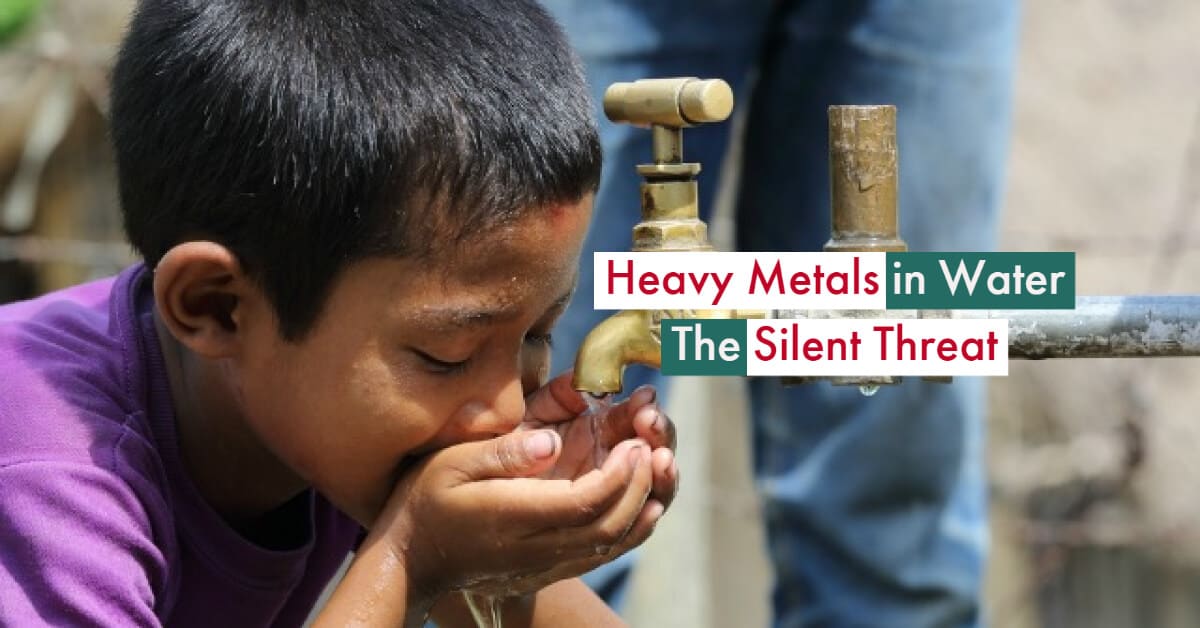
The Silent Threat: Why Heavy Metals in Water Deserve Your Attention

Water is essential for life, but contaminated water poses a great threat to your health.

Heavy metals are one such contaminant that is considered a silent threat to your health. Their presence in water may lead to life-threatening consequences.

Unlike other pollutants, even a small dose of some heavy metals has the potential to disrupt your body’s normal metabolic functions.

According to a report from the Centre for Science and Environment, 75% of river monitoring stations in India reported alarming levels of heavy metals.

But your groundwater must be safe.

If you thought so, the results from the groundwater quality tests are even more shocking.

Over 80% of the Indian population depends on groundwater and toxic metals were found in groundwater in almost all states of India.

In this blog post, you’ll explore the different heavy metals found in water, their effects on health, how to test for them, and ways to remove them.

List of Heavy Metals in Water

As per the scientific definition, heavy metals are defined as ‘elements with an atomic number higher than 20’.

For laymen, heavy metals are elements that have a high density and are toxic to humans beyond the recommended limits.

Here is a list of the most common heavy metals found in drinking water in India.

  • Lead
  • Mercury
  • Arsenic
  • Cadmium
  • Chromium
  • Copper
  • Iron

Sources of Heavy Metals in Drinking Water?

These metals can enter drinking water sources through natural processes, such as weathering of rocks and soil erosion, or through human activities like mining, agriculture, manufacturing, and improper waste disposal.

Heavy metals are naturally present in the earth’s crust. Rocks are a natural source of heavy metals like iron, copper, lead, arsenic, etc.

Effects of Heavy Metals in Water

Some have termed heavy metals as indestructible poisons.

And rightly so.

There are enough scientific studies to prove that the effects of heavy metals on human health can be severe, irreversible, and long-lasting.

Continuous and prolonged exposure results in the accumulation of these heavy metals in your vital organs, like the liver, kidneys, and brain. This leads to a range of serious and life-threatening health problems.

Some of the most common health effects of heavy metal exposure include cancer, nervous system damage, developmental problems, and reproductive issues.

Children, pregnant women, and the old population are highly vulnerable to the harmful effects of heavy metals.

Testing for Heavy Metals in Water

Testing for heavy metals in water is essential to ensure the safety of your drinking water.

You can get your drinking water tested for heavy metals in a water testing lab or do a preliminary investigation using a home testing kit.

Lab tests are generally more accurate as they can detect even minute traces of heavy metals in water.

On the other hand, home water testing kits are more convenient and affordable but the results may not be as accurate as lab tests.

How to Remove Heavy Metals from Water

Fortunately, there are several methods to remove heavy metals from water.

The most common methods include reverse osmosis and distillation.

Reverse osmosis is an effective method that can remove up to 99% of heavy metals from water.

Distillation is another effective method that involves boiling water and collecting the steam, leaving behind heavy metals.

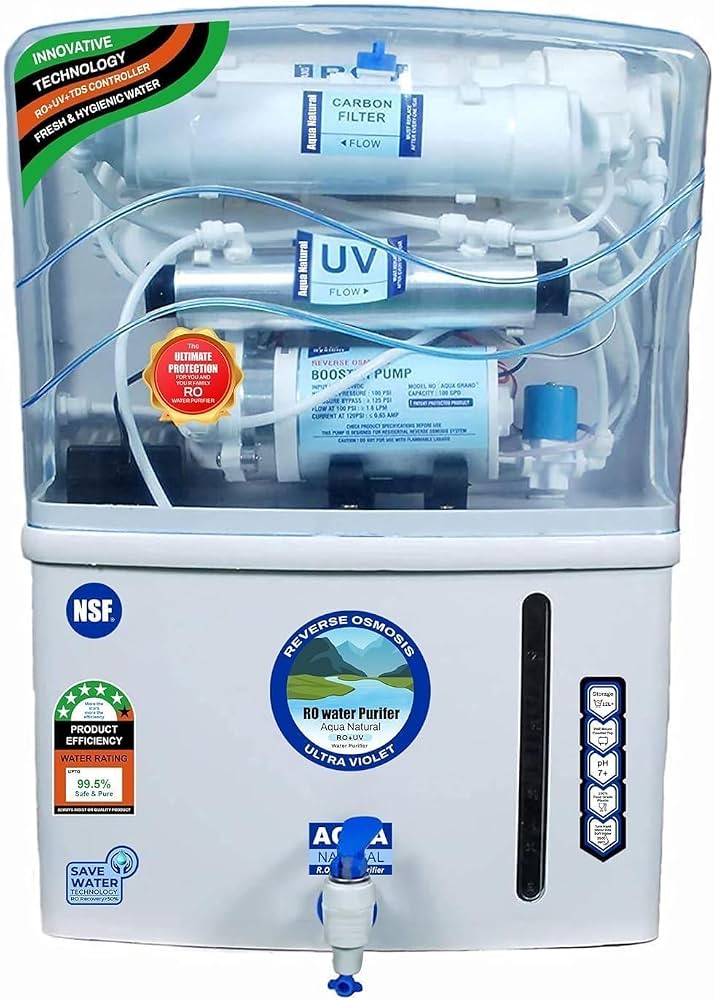
For homes and offices, a reverse osmosis water purifier is the most convenient, effective, and affordable choice to get rid of heavy metals in your drinking water.

Conclusion

Heavy metals in water are a serious threat to your health.

They can cause long-lasting health effects, including cancer, nervous system damage, developmental problems, and reproductive issues.

Testing for heavy metals in water is essential to ensure the safety of your drinking water.

Reverse osmosis is the most common and effective method to remove heavy metals from your drinking water.
By being aware of the risks of heavy metals in water and taking action to remove them, you can protect your health and well-being.

Frequently Asked Questions (FAQs)

What is the most common heavy metal found in water?

The most common heavy metal found in water in India is arsenic. It is estimated that more than 50 million people in India are exposed to unsafe levels of arsenic in their drinking water, particularly in the states of West Bengal, Jharkhand, Bihar, Uttar Pradesh, Chhattisgarh, Manipur, and Assam. Arsenic contamination in water sources is a serious public health issue in India, and India has made very good progress in addressing it through programs like Jal Jeevan Mission.

Which metal is toxic in drinking water?

Several heavy metals can be toxic in drinking water, but one of the most toxic is lead. Lead can cause a range of health effects, particularly in children and pregnant women, including developmental delays, lower IQ, and behavioral problems. Lead is commonly found in older pipes and plumbing fixtures and can leach into drinking water over time. Arsenic and Mercury are also highly toxic and very dangerous.

How do I know if my water has heavy metals?

There are several ways to determine if your water has heavy metals:

Water testing: The most accurate way to determine if your water has heavy metals is to have it tested by a certified water testing lab. A water testing lab can find out the presence and concentration of heavy metals.

Geographic location: Some areas are more prone to heavy metal contamination than others. For example, areas with a history of mining or industrial activity may have higher levels of heavy metals in their water. Agricultural areas known for misuse of fertilizers and pesticides are also known for high levels of heavy metals in groundwater.

If you suspect that your drinking water may have heavy metals, get it tested in a lab and install a reverse osmosis system.

What are the top 5 heavy metals?

The top 5 heavy metals found in water that are of concern to human health are Lead, Arsenic, Mercury, Cadmium, and Chromium.